Online Reporter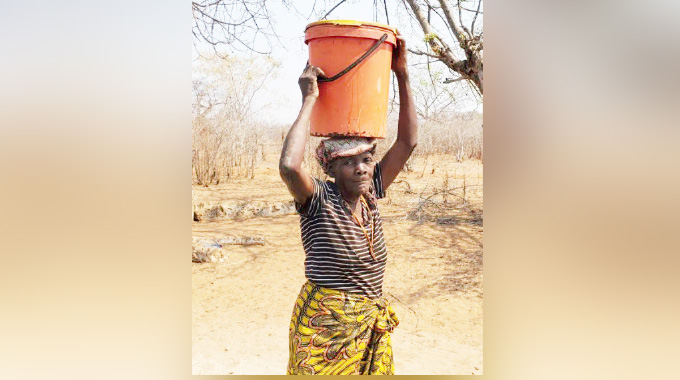
Theseus Shambare, Features Writer
“MWAPONA… Tapona kabotu (how are you, we are fine)”, a familiar Tonga greeting once said without thought now echoes with triumph and meaning.
In Chemba Village, Binga District, these words are no longer a casual exchange; they are a declaration of victory over heat, hunger and hardship.
“Tapona kabotu,” smiled Ms Matilda Munsaka, executive secretary of the Twalibambila Women’s Group, beneath the broad shade of a Mukoka tree where villagers meet to plan their next steps.
For generations, the Tonga people have lived by the pulse of the Zambezi River — planting, fishing and surviving its moods.
But as climate change tightened its grip, the rains grew erratic, the sun harsher and the river’s rhythms cruelly uncertain.
Fish gradually varnished, crops failed, livestock perished and hunger became a permanent resident.
Hope seemed to dry up like the riverbeds — until a partnership brought water, knowledge and unity back to life.
A project rooted in people
Since 2022, the Climate Smart Resilience (CSR) project — implemented by the Zimbabwe Red Cross Society (ZRCS) in partnership with the Finnish Red Cross (FRC) and Danish Red Cross (DRC) — has been transforming lives across Binga District.
Its approach is holistic, blending clean water access, inclusive sanitation, health and nutrition education and income-generating projects, all grounded in climate-smart agriculture.
It is not just aid — it is empowerment.
In Siansundu Village, Gogo Bwime Mudenda (88) knows that transformation better than most.
For years, she walked more than six kilometres every morning for a single bucket of water from a borehole that spewed hot, salty water.
“We had no choice,” she recalled, balancing an orange bucket on her head.
“Even when my legs were painful, I kept walking.”
That struggle ended when the CSR project extended a 3,5-kilometre water pipeline from the main line drawing from the Mlibizi River directly into Siansundu Village.
“Now I fetch water from my doorstep,” she said, her face softening into a grateful smile.
“At my age, that is a miracle.”
Clean water now flows where despair once stood — and with it came dignity, health and new opportunities.
But water alone does not define resilience.
The CSR project ensures that access and dignity extend to all — especially persons with disabilities who are often left behind in development work.
According to the ZimStat “Functioning” module of the population census, about 9,2 percent of Zimbabwe’s population (approximately 1,2 million people) live with functional difficulties in domains such as seeing, hearing, walking, self-care and communication.
Yet nationwide many of these Zimbabweans experience exclusion: inaccessible public infrastructure, lack of inclusive sanitation, fewer livelihood opportunities, and marginalisation in planning and decision-making.
The CSR initiative has deliberately built over 20 inclusive toilets (with ramps, handrails and climate-resilient features) across Siansundu, Flunga and Chemba, and linked water, sanitation and hygiene (Wash) services with livelihood interventions targeted at persons with disabilities — ensuring that the most marginalised are not just counted, but are participants in the future.
“Before, people with disabilities depended on others to relieve themselves in the open,” said Ms Spiwe Sibanda, ZRCS District Field Officer.
“Now, they have privacy, safety and confidence. That is dignity in action.”
These toilets are also climate-resilient, designed with raised slabs and sealed pits to prevent contamination during floods.
Each facility tells a quiet story of independence — of how small design changes can restore big human rights.
And for those living with disabilities, inclusion goes further.
They receive small livestock, poultry units, or access to community grinding mills, ensuring they too earn an income and contribute to local growth.
Water, sanitation and livelihood now move in harmony — proving that climate adaptation must be inclusive to be sustainable.
Life in motion
Back in Chemba Village, life hums with new energy.
Clean water now feeds vegetable gardens, irrigates intwasa plots and sustains livestock even in long dry spells.
Women gather at boreholes not to queue for hours, but to plan their next business ventures.
Youth manage water schedules for community projects, learning the value of conservation and accountability.
Water is no longer a burden; it is a backbone.
Sanitation is no longer an afterthought; it is part of progress.
And dignity flows as freely as the water that now sustains this once-forgotten corner of Binga.
Twalibambila: “We are prepared to conquer”
Under the ancient Mukoka tree, the Twalibambila Women’s Group — whose name means “We are prepared to conquer” — gathers with laughter and pride.
“Mwapona!” Ms Munsaka shouts joyfully. The crowd responds, “Tapona kabotu!”
“We are ready to fight hunger, disease and poverty,” Ms Munsaka said.
The group started by pooling money through a revolving fund, then built a chicken co-op, piggery, and a grinding mill with support from the Red Cross.
“Before, we waited for rains and prayed,” Ms Munsaka said.
“Now, even if the rains fail, our projects sustain us.”
They grow drought-tolerant small grains such as millet and sorghum through intwasa — conservation farming that traps moisture and improves yields.
The same grains feed their chickens, linking crops, nutrition and enterprise.
“Our chickens eat what we grow,” said Mr Christopher Munsaka, who helps manage the mill.
“What they produce feeds our families and pays school fees.”
For Mr Test Nyoni (29), the group’s mill operator, employment came not from migration but from innovation.
“We used to travel far for work,” he said, wiping flour from his hands.
“Now the community depends on us — and we depend on ourselves.”
Sinsimuka Youth: A wake-up call
Ten kilometres away, the Sinsimuka Youth Group has become another engine of change.
Led by Mr Siphosami Chuma (33), Ms Vivian Saba and Ms Chipochashe Mudenda, operate a grinding mill and grow drought-tolerant grains that sustain both people and poultry.
“People come from miles away. We mill their grain and earn an income that feeds our families,” said Mr Chuma.
For these young farmers, climate change is no longer an excuse — it is an invitation to act.
“We are producing, selling and surviving sustainably,” Mr Chuma said.
“We have learned to turn challenges into opportunities.”
Disability and dignity in motion
Just outside Flunga, another group reminds everyone that resilience must be shared.
There, persons with disabilities operate their own grinding mill — an enterprise born out of courage and inclusion.
Mr Winders Mleya (46) lost both legs and one arm in a crocodile attack in 2022.
Beside him works Messers Japhet Munguli and Robert Mkombwe, both visually impaired.
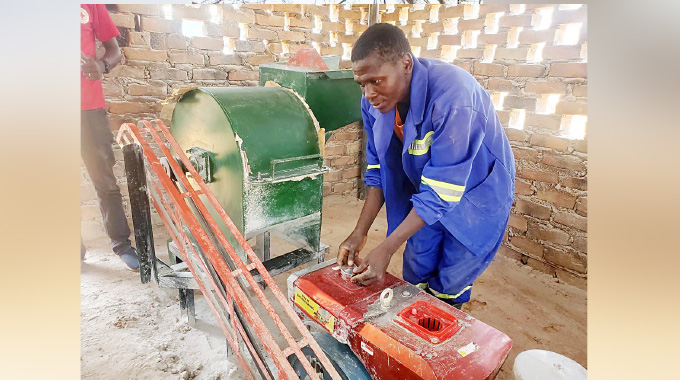
“Before, life was impossible,” said Mr Mleya softly.
“Now, the mill gives us income, dignity and independence.”
“We are proof that resilience is for everyone,” added Mr Munguli.
“Disability no longer means dependence.”
The science of survival
Across Chemba and Flunga, resilience is not a slogan — it is a system.
Intwasa plots, small-grain fields and poultry houses feed each other in a loop of sustainability.
Manure enriches the soil, small grains feed poultry and poultry products fund education and health.
“When women, youth and persons with disabilities are included, resilience multiplies,” said Ms Sibanda.
“Enterprise, health and education reinforce each other. That is the science of survival.”
What began as a community project now mirrors Zimbabwe’s National Development Strategy 1 (NDS1) and the Sustainable Development Goals (SDGs) — combining climate action, gender equality, clean water and economic empowerment.
From Siansundu’s pipeline to Chemba’s chicken co-ops, and from inclusive toilets to thriving youth mills, the message is the same: resilience begins at the grassroots.
A new dawn
As the sun sinks behind the Zambezi escarpment, Chemba comes alive with the hum of grinding mills, the cluck of chickens and the laughter of women counting their earnings.
Children play near clean water taps.
Elders rest without fear of thirst.
And under the Mukoka tree, Ms Munsaka raises her hand in greeting.
“Mwapona… Tapona kabotu,” she says.
Once, it meant “we are fine.” Now, it means something deeper.
It means we have conquered.