Online Reporter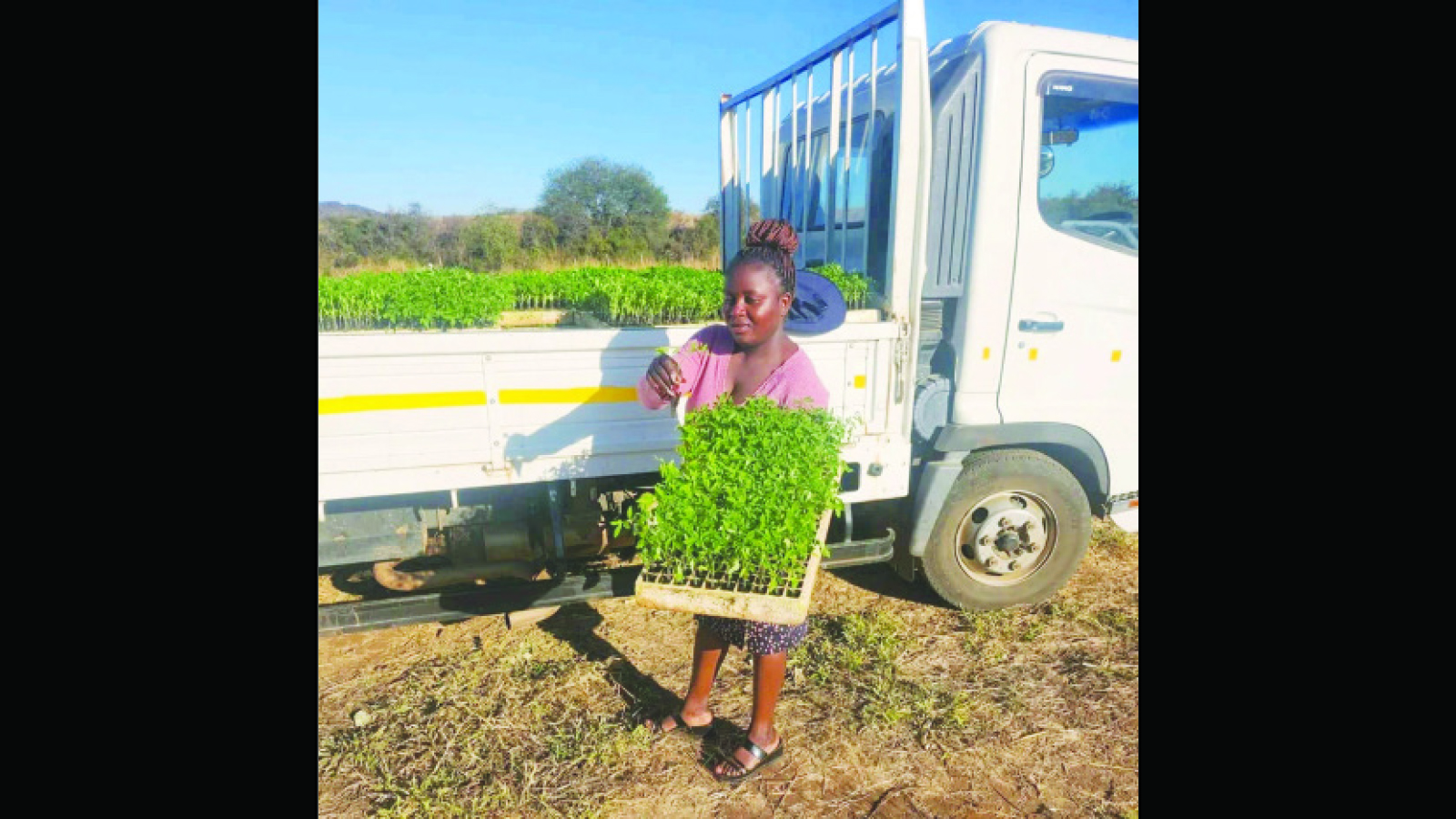
Theseus Shambare
Features Writer
WHEN people hear the name Zvishavane, they picture the rumbling of earthmoving machines, chrome dust and mining scars that cut across the semi-arid Midlands town.
Agriculture hardly comes to mind, especially crop farming.
After all, this is Agro-ecological Region V, the driest and most unforgiving of Zimbabwe’s farming regions, where drought is routine and only livestock with costly supplementary feed can survive.
But tucked away in Maduyu Village, under Chief Mafala, a quiet agricultural revolution is defying this narrative.
It is neither a revolution of machetes nor mining syndicates that Zvishavane is often associated with.
Instead, it is a story of tomatoes, cabbages and resilience, led by a woman whose determination is as fertile as her fields.
From vendor to visionary
Sibusisiwe Nyakunhuwa, a 38-year-old mother of two, knows what it means to fight for survival.
Her surname, Nyakunhuwa, means “the one who smells” in Shona, and as a child she was teased relentlessly.
Yet she has turned that name into one associated with abundance.
Between 2016 and 2019, Sibusisiwe worked as a vegetable vendor, deftly balancing baskets of produce on her head through Zvishavane’s mining streets.
“I started selling vegetables door-to-door until I set up a small table in town,” she recalled, as she shared her journey with The Herald.
“But because Zvishavane is dominated by miners, vegetables were always in short supply. Sometimes I would travel to Masvingo to bring tomatoes for resale.”
Those struggles planted the seed for a bigger vision.
Four years ago, she began cultivating a six-hectare plot in Zuderburg Resettlement, about 20 kilometres from town along the Masvingo–Bulawayo highway.
Last year, she grabbed news headlines when she consistently harvested at least 120 crates of tomatoes weekly, generating around US$2 500 every week.
With better systems and improved yields, her income has since doubled.
Her customers now range from household buyers and shops in Zvishavane to vendors who buy wholesale for resale across the Midlands Province.
“Agriculture is a business,” she said with conviction. “Once you treat it like one, results follow.”
What makes Sibusisiwe stand out is her embrace of climate-smart farming practices.
In a district where rainfall is erratic, she invested in a solar-powered borehole that feeds into a drip irrigation system.
“Without irrigation, nothing survives here. With drip, I save water and still get high yields,” she explained, pointing to rows of cabbages and tomatoes thriving under the harsh sun.
Her methods mirror global adaptation strategies.
The Food and Agriculture Organisation (FAO) notes that water-efficient systems can increase yields by up to 300 percent in semi-arid regions compared to traditional flood irrigation.
Nationally, climate-proofed agriculture is gaining momentum.
According to the Ministry of Lands, Agriculture, Fisheries, Water and Rural Development, more than 3,5 million farmers adopted Pfumvudza/Intwasa conservation farming in 2023/24, cushioning the nation against drought.
Farming beyond herself
Sibusisiwe’s journey is not just about her own survival as it has transformed her community.
She now employs 10 permanent workers and dozens more during planting and harvesting.
Village Head, Takawira Maduyu said her efforts are reshaping livelihoods.
“What she is doing has changed our community. Women are now even doing mikando (rotational savings clubs) using money earned from their farms. It has brought dignity to families who once relied only on gold panning,” he stressed.
Mai Nyasha, one of her workers, testified: “I used to struggle to pay my children’s school fees. Now I can do it from what I earn here.”
Another one, Mercy Gangara, added: “This farm gave us a lifeline. We no longer just survive, we live.”
Local action, national vision
Sibusisiwe’s fields may be modest, but her story ties into a bigger picture.
Zimbabwe’s Horticulture Recovery and Growth Plan (HRGP), launched in 2020, seeks to restore horticulture as a top foreign currency earner.
The Government projects the sector to reach US$1.2 billion by 2025 and US$2 billion by 2030.
With over 80 percent of farmers being smallholders, it is key to include them in empowerment programmes.
Professor Obert Jiri, permanent secretary in the Ministry of Lands, Agriculture, Fisheries, Water and Rural Development, said Sibusisiwe’s model embodies the plan’s spirit.
“What we are seeing in Zvishavane is precisely what the Horticulture Recovery and Growth Plan is about — equipping smallholder farmers, especially women and youths, to lead climate-smart, high-value production. With such initiatives, horticulture alone can contribute more than US$2 billion by 2030.”
Zimbabwe’s horticulture sector is steadily regaining ground as a key foreign currency earner. According to ZimTrade, horticultural export earnings have risen sharply, with exports currently averaging about US$80 million annually.
One of the fastest-growing sub-sectors is berries.
Data from ZimTrade shows that blueberry exports alone surged from US$11 million in 2020 to US$50 million in 2024, a 351 percent increase in value, with volumes climbing from 2 503 tonnes to 6 240 tonnes over the same period.
The land question
For all her achievements, land remains Sibusisiwe’s greatest challenge.
Six hectares are not hers, but part of her uncle’s resettlement plot which she rents.
After falling victim to fraudsters masquerading as land agents, she remains on the waiting list for official allocation.
Earlier this week, President Mnangagwa launched the long-awaited title deeds programme for farmers, handing beneficiaries what he called “the paper of ownership.”
For Sibusisiwe, it was both inspiring and sobering.
“I keep my fingers crossed,” she said. “One day, I hope to be among those holding that paper. With security of tenure, I can expand production, employ more people and contribute even more to food security.”
However, for now, she can legally enter into a secure government-monitored joint-venture with her uncle.
“Provisionally, I will use the joint-venture framework, but my dream is to get larger land; I see myself with potential to be bigger.”
A seed of hope
From a woman carrying vegetable baskets on her head to one who now loads trucks bound for markets, Sibusisiwe has redefined what is possible in Zvishavane’s dusty plains.
Her farm is more than a business — it is a beacon of climate resilience, community empowerment and women’s determination.
As the sun dips over her green rows of tomatoes, they tell a different story of Zvishavane, not of chrome dust and degradation, but of renewal and hope.
“This is more than farming,” she reflected, surveying her crops. “It is proof that even in the harshest places, life can flourish.”