Online Reporter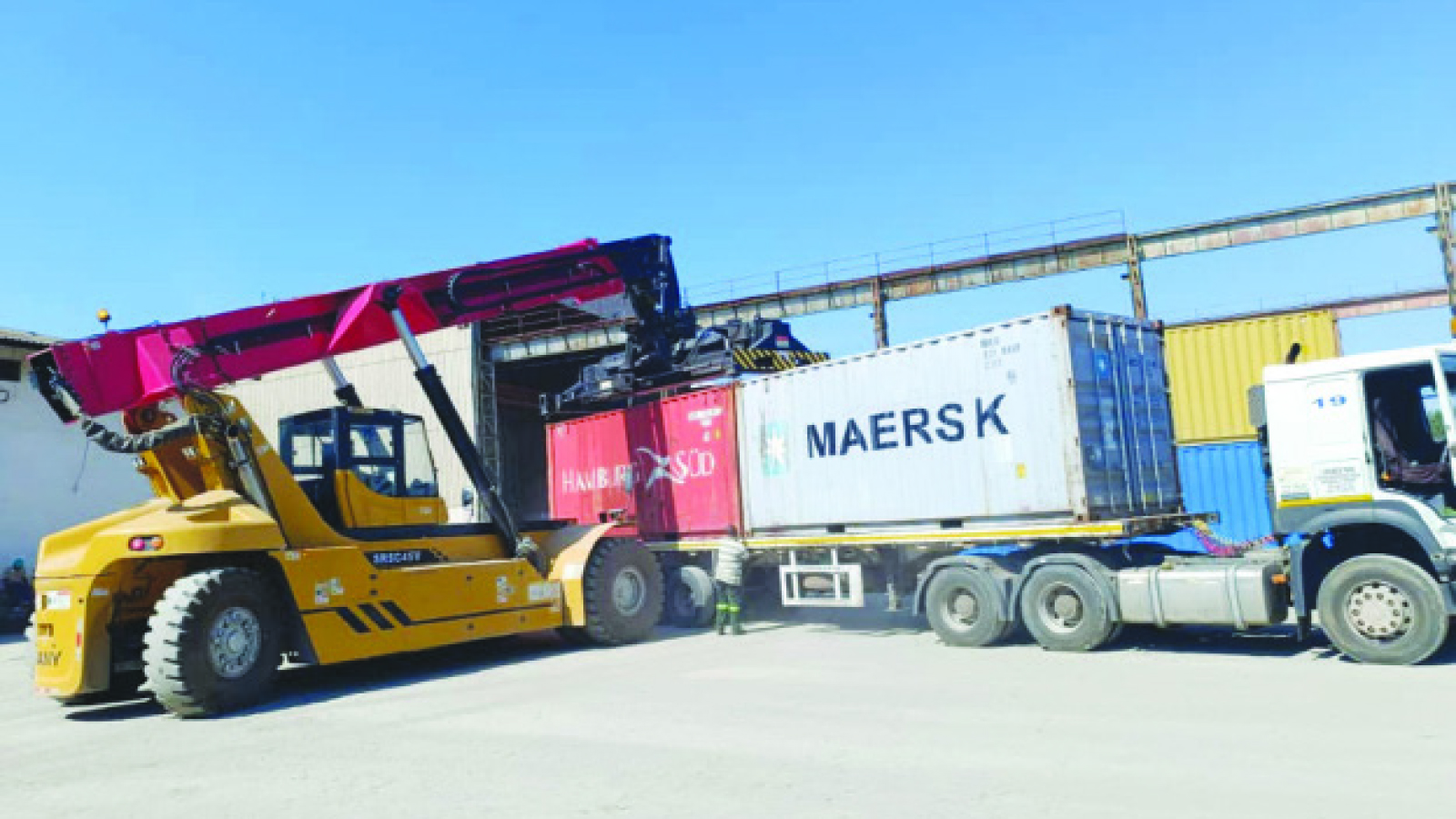
Yeukai Karengezeka
Features Correspondent
FOR more than 20 years, Jacob Sengwe has been behind the wheel of a cross-border truck, ferrying goods from Harare to the Port of Beira and back.
His route rarely changes, but the experience has. He remembers the long, frustrating hours spent at the Mutare Dry Port, sometimes days waiting for customs clearance, security checks, or paperwork that seemed to vanish in the shuffle.
“We used to sleep in the trucks,” he says, shaking his head slowly.
“No lights. You would queue from morning till midnight, and still not get cleared. It was tough.”
Beside him, fellow driver Praise Nyamadzawo nods.
He is newer in the game, just under a decade in, but he, too, has stories of breakdowns in communication, lost documents, and nights passed with one eye open to guard against fuel theft.
“You never felt safe,” he recalled. “Even if you got here early, you would wait for two, three days. And during physical inspection, some of your goods could just disappear.”
But today, things are different. The lot where they used to park on loose gravel and mud is now paved and brightly lit.
Security cameras blink silently above and under every section of the port, hence reducing cases of theft. The scanning process that once took hours now takes minutes.
For Sengwe and Nyamadzawo, that change has been nothing short of life-changing.
Mutare Dry Port, strategically located near the Forbes Border Post and linked directly to the Port of Beira, has long been a critical stop in Zimbabwe’s trade corridor.
But for many years, it struggled with outdated systems, poor infrastructure and limited capacity. That began to change around 2013 when the port partnered with the Zimbabwe Revenue Authority (ZIMRA), modernising operations and repositioning itself as a key intermodal logistics hub.
Since then, the dry port has undergone a dramatic change, one built not just on technology, but on listening to the very people who use it every day.
Mr Lawrence Takawira, the general manager, knows the old complaints well.
“We used to rely entirely on manual systems, books, pens and phone calls. Every truck that came through needed several steps, all done by hand,” he says.
“That created room for mistakes, delays, and frankly, corruption. We had to rethink everything.”
Now, with the upcoming launch of a new terminal operating system, truck drivers like Sengwe will no longer have to stand in long queues just to register their vehicle.
Every detail from truck ID to booking status is entered once, digitally, and can be accessed at any checkpoint within the port.
“It means I can come in, get scanned, get cleared, and leave sometimes within the same day,” Sengwe said with a smile.
The port has also invested in infrastructure to support round-the-clock operations.
Ramps for faster physical inspections have been built, new security systems installed, and fuel theft, once rampant, has been all but eliminated.
“Just having lights at night makes a huge difference,” Nyamadzawo said. “Now, I don’t feel like I have to watch my fuel tank every second.”
What makes the new Mutare Dry Port work is not just the technology. It is the people-first approach, an ethos that puts users like truckers, clearing agents, and small business owners at the centre.
Critical Government agencies, including ZIMRA, the Ministry of Agriculture, EMA, and the Zimbabwe Defence Forces, now operate side by side within the port. This means cargo is cleared, inspected, and processed faster and more securely than ever before.
“The collaboration here is what makes it work,” Takawira explains.
“We brought everyone under one roof to create transparency and accountability and to serve the people better.”
With bonded warehouses, general storage, customs services, and truck parking, the Mutare Dry Port now supports not only regional trade, but also local livelihoods.
Leo Pack, supervisor, Mr Trust Makurumure, has seen business efficiency improve dramatically.
“We no longer have to worry about our trucks sitting idle for days,” he says. “Time is money. And thanks to the upgrades, we are saving both.”
The port’s commitment to sustainability is also growing. A standby generator keeps things running during power cuts, and a solar installation project is underway to reduce reliance on the national grid.
As Sengwe finishes his tea and prepares to hit the road again, he looks over the concrete lot where his truck is parked.
“It’s funny. We didn’t think we would see a change in our time. But here we are.”
And for truckers like Sengwe and Nyamadzawo whose livelihoods depend on efficiency, safety, and trust, the transformation of Mutare Dry Port is more than a policy win or an infrastructure project.
It is a return of dignity to their daily work and a reminder that progress often starts with the people on the ground.