Online Reporter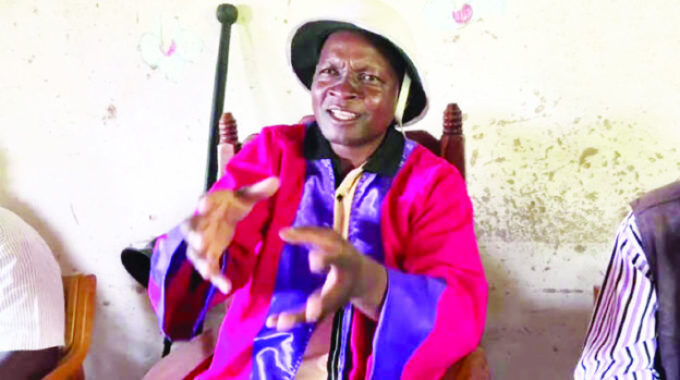
Tendai Gukutikwa
Weekender Reporter
A BITTER land dispute has erupted in Mutasa after a man returned home to reclaim property he insists was only temporarily lent to a family now refusing to vacate.
The wrangle, now before Chief Mutasa’s community court, pits relatives against a family that has occupied the contested land since 1994.
Lovemore Radonha told the court the land was never permanently surrendered, but merely loaned out by his late mother while the rightful heirs were away.
“We were four siblings, but everyone else has since passed on. I am the only one left to pursue this matter. My late mother who was a traditional healer allowed Munyaradzi Tekere to use our uncle Matthew’s land in the 1990s. The arrangement was never meant to be permanent,” said Radonha, adding that he returned from Marondera in 2024 to reclaim the land.
“When I came back, I advised them to stop farming because we wanted to use it as a family. Instead of engaging us, they rushed to Headman Chidawanyika, who ruled that they could not be stopped because the land was theirs,” he said, insisting the occupants had mistaken a gesture of temporary assistance for ownership.
“What I know is that my mother simply asked them to use the land for a while. The land belongs to my uncle,” he added.
But the dispute took another twist when Radonha’s uncle, Stanley Nyamadzira, claimed ownership of the land, saying he had entrusted it to Radonha’s mother when he left the village years ago.
“That land is mine. When I went to work in the city, I left it under her custody. I trusted her to safeguard it until I returned,” said Nyamadzira, accusing Radonha of making decisions over land he did not own.
“Radonha has sold the land to someone else, yet it belongs to me. He has no right to dispose of it,” he charged.
Munyaradzi Tekere, however, strongly rejected claims that he received the land through a private family arrangement, setting the stage for a heated battle before Chief Mutasa’s court.
“I was allocated that land in 1994 by Village head Sanyamandwe. I did not get the land from Radonha’s mother as he is suggesting. The village head told me that the land was vacant,” said Tekere, claiming he was formally introduced to the local traditional leadership, and has occupied the land for decades.
“I was introduced to the headman of the area, and I have been paying my taxes ever since. If the land belonged to someone, why would I have settled there?” he asked.
He said when he moved onto the land, there were no visible signs of prior occupation.
“There were no houses or structures. There was nothing to show that people had lived there before. It was virgin land,” said Tekere, adding that he knew Radonha’s family as neighbours, and was warmly received by them when he arrived.
“I was introduced to Radonha’s parents and they welcomed me. That is why I am shocked that he now claims that the land belonged to his late mother.
“Over the years, I invested in developing the property. I built a kitchen and established my homestead. This is where my family has stayed for years,” he said, further recounting a setback in 2010.
“In 2010 someone burnt my three thatched huts, and I lost everything. Villagers later helped me rebuild a kitchen, and that is where I still stay today,” said Tekere.
Tekere said objections to his occupation of the land only began a few years ago.
“In 2018, Radonha’s uncles came saying I had to leave because the land was not mine. They said I had crossed into their boundary. They showed me the line they claimed was the boundary, and I stopped farming beyond that point. In 2021 they started again, and even now they continue saying the land belongs to them,” said Tekere.
Chief Mutasa noted that the dispute involved competing claims of inheritance.
Given the complexity of the matter and the need to verify historical ownership and boundaries, as well as the role of previous village leaders, he adjourned the case to a later date.