Online Reporter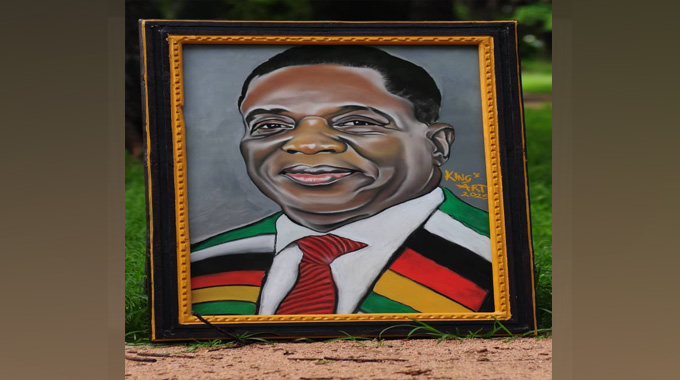
Mbulelo Mpofu, Zimpapers Arts and Entertainment Hub
Ngqika Sayi is not just a young artist; he is a rising force whose work is redefining national portraiture. Working in Bulawayo, this 21-year-old talent has achieved what many only dream of; his hyper-realistic canvases of revered Zimbabwean leaders now occupy prominent space in national museums. Entirely self-taught, his journey from a difficult childhood to capturing the nation’s heroes on canvas is a riveting saga of dedication, spiritual resolve, and a mother’s fierce love.
Born in Pelandaba, Sayi’s early life offered no hint of the artistic path he would follow.
“My journey into art wasn’t one of privilege or access but of pain, faith, and purpose,” he reflects. An early family separation saw him sent to live with relatives in rural Binga, where the classroom was replaced by the open field.
Formal schooling was an impossibility. I herded cattle every day. Life was rough. A cow once stepped on me and left a scar I still carry — a mark of those hardships.”
A life-changing intervention came with his mother’s return.
“She fought for me to come back to town. Family resistance was strong, but she stood firm.”
He re-enrolled in school but the transition was acutely painful.
“By then, I couldn’t read or write. I was behind, misunderstood, and placed in a special class. I questioned whether I belonged.”
Sayi’s transformation began not with a brushstroke but with a moment of deep faith.
“One day I picked up my mother’s Bible and prayed: ‘Lord, help me read and understand.’ Not long after, I started reading.”
The illustration that first captivated him was a depiction of Jesus.
“I picked up a pencil and tried to draw Him. That was the moment my art journey was born.”
Drawing became his silent sanctuary. Entirely devoid of formal training, he sketched at every possible opportunity.
His foundational support was singular and resolute.
“My mother has been my greatest supporter. She raised me alone, paid my school fees, bought my first pencils and paints. My art is a gift from God, but also a testimony to her love.”
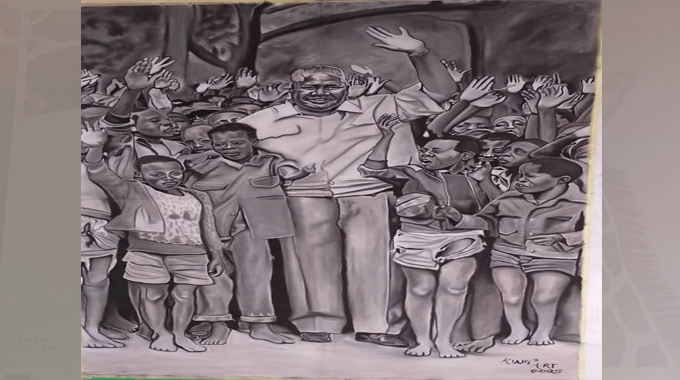
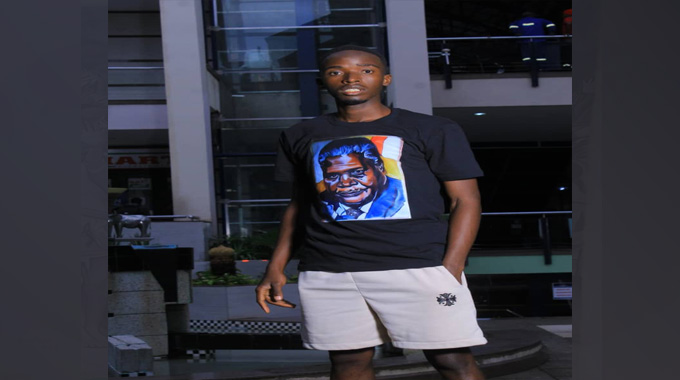
Sayi was drawn to portraying the revered figures whose legacies had shaped modern Zimbabwe. Chief among them was the late Vice-President, Dr Joshua Nkomo, affectionately known as Father Zimbabwe.
“He inspired me not only for his national legacy but for his love for children and unity.”
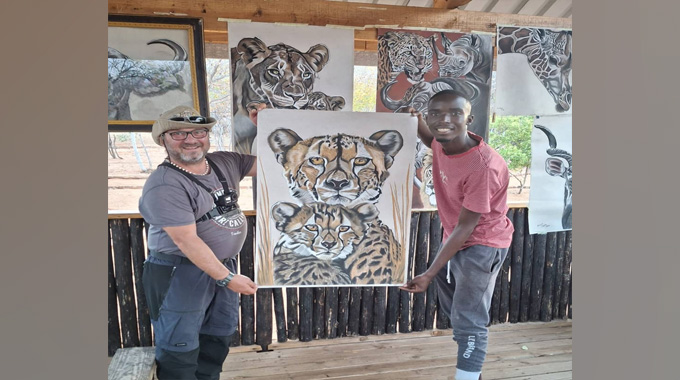
With encouragement from Mr Ndlovu of Blue Lagoon offices and Mr Moyo, Sayi’s portrait of Dr Nkomo was finally exhibited at the Joshua Mqabuko Nkomo National Museum.
“I’ll never forget seeing schoolchildren connecting with the painting. When Dr Nkomo’s daughter saw it and shared her emotional response, it was a moment I’ll always treasure.”
The work now commands a position at the museum’s main entrance, and Sayi has since painted a powerful mural of the late Dr Nkomo and Mama Mafuyana.
“I often dream about them before painting — as if I’m spiritually connecting with their presence.”
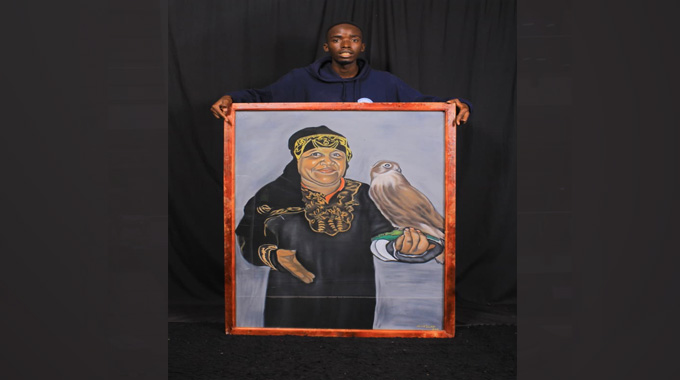
His portrait of President Emmerson Mnangagwa, in turn, is rooted in deep patriotism.
“He is my President, a symbol of leadership and resilience. I believe in honouring leaders while they’re still alive. Through my art, I wanted to capture his role in Zimbabwe’s present history.”
Beyond national figures, Sayi’s subjects range from leading businessmen and military personnel to stunning wildlife. His criterion is simple: the story.
“What draws me to a subject is the story behind the face. Every subject must carry a message, a spirit that speaks beyond the canvas.”
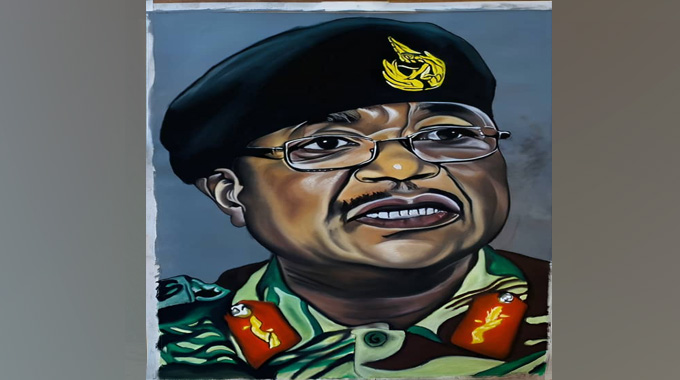
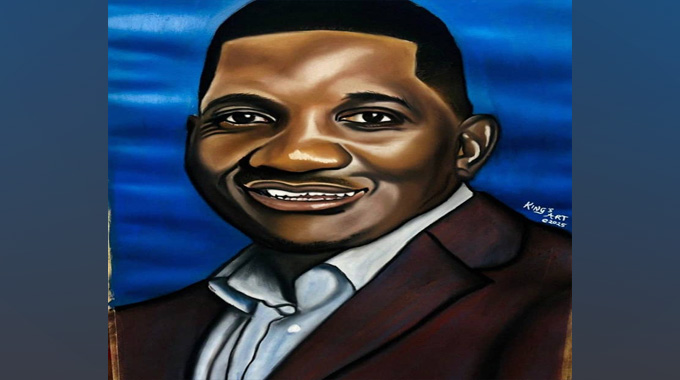
His portrait of entrepreneur Scott Sakupwanya is a testament to this philosophy.
“His journey from the streets to becoming a major entrepreneur represents determination. I wanted to capture that drive.”
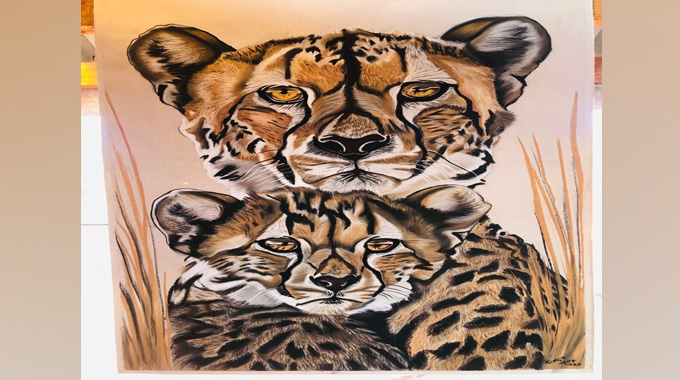
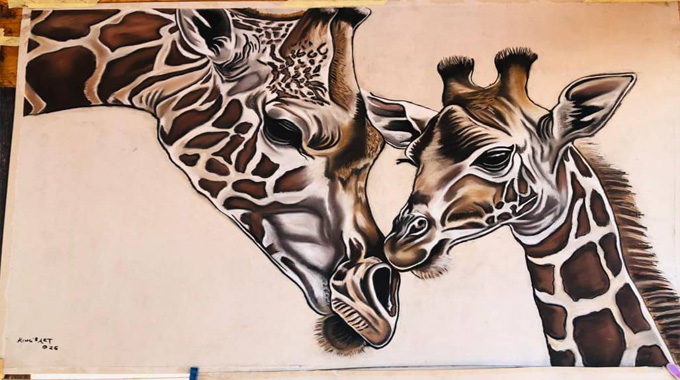
Military subjects are chosen for their symbolism of courage and sacrifice, while wildlife is his profound celebration of Zimbabwe’s natural heritage.
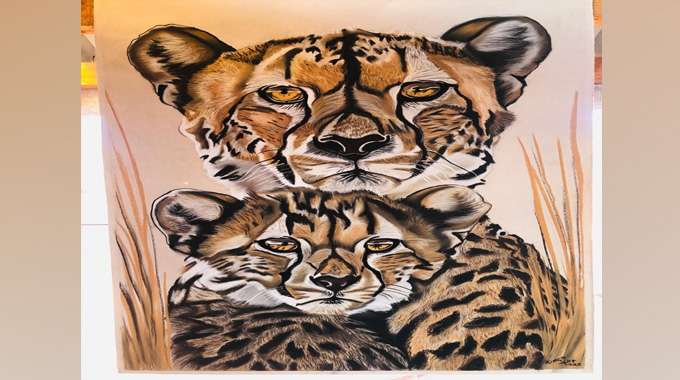
“Animals carry raw emotion. Their eyes tell stories. Whether it’s leaders or wildlife, my goal is for people to feel something real. Every portrait is a story frozen in time.”
Despite his mounting recognition, the financial reality remains a crushing constraint.
“Breaking into the Bulawayo art market is challenging. A small studio at the National Gallery of Zimbabwe in Bulawayo costs around US$100 a month — difficult to sustain without sponsorship.”
His developing brand, Kings Art, requires approximately US$20 000 to realise its full potential. Key necessities include a reliable van to transport fragile artworks safely, professional materials such as Winsor & Newton oils, acrylics, soft pastels, and the digital access vital for international commerce.
“Even US$2 500 would help immediately — materials and stable WiFi. I’ve lost opportunities because of poor internet access.”

Acknowledging the limitations of his current base, Sayi has begun a strategic shift toward the thriving tourist economy of Victoria Falls.
“Earlier this year, I exhibited there for two months. I connected with visitors from Spain and Germany who were especially drawn to my wildlife pieces — many said the animals looked alive because of their eyes.”
A major opportunity is now emerging: his grandmother has acquired a house in Victoria Falls.
“We plan to turn it into the permanent home of Kings Art — a place to live, work, and host exhibitions, workshops, and cultural exchanges.”
A Spanish client has already expressed interest in bringing a group next year for a unique wildlife-art experience.
“They want to connect with Zimbabwe’s nature through painting, and I’ll lead the programme.”
However, financial constraints are slowing the necessary renovation and setup. Yet, Sayi’s determination is unyielding.

“With the right support, this space can foster cultural exchange, empower youth, and contribute to tourism. The foundation is there — now we’re believing to bring the vision to life.”
For Ngqika Sayi, every piece of work is a contribution to Zimbabwe’s evolving visual narrative.
“My art tells Zimbabwe’s story — past and present. Whether I’m painting national icons, wildlife, or everyday people, each brushstroke becomes a voice or a memory for future generations.”
He sees artists as crucial custodians of national identity.
“Painting figures like Father Zimbabwe or His Excellency Mnangagwa honours those who shaped our history. Wildlife pieces speak to the soul of Zimbabwe — our natural pride and heritage. Artists are visual historians. We preserve stories textbooks may not tell.”
His mission is clear, potent, and inspiring: “My purpose is not just to paint what I see, but to awaken what others may have forgotten or never seen.” — @MbuleloMpofu