shloboe boe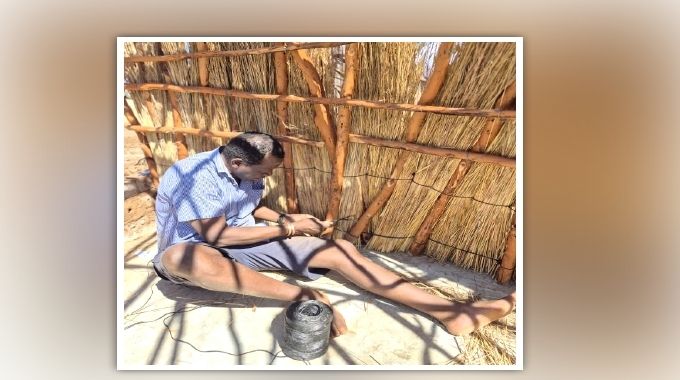
Bruce Ndlovu Zimpapers Writer
IT is a sunny, quiet morning in rural Inyathi. Winter has stripped most trees of their leaves, and those that stubbornly cling to their branches have lost the colour and verve they possessed only a few months ago.
As they precariously hang on, it seems only a matter of time before they join their fallen comrades on the ground. Standing amid this display of seasonal change and renewal is Professor Solwayo Ngwenya: clinician, statistician, epidemiologist and the recently appointed substantive Chief Medical Officer at Mpilo Central Hospital.
Despite the many titles that accompany his name, Prof Ngwenya does not have the scalpel on his mind that morning. Neither is he preoccupied with the challenges he knows are waiting on his desk at the country’s second-largest referral hospital.
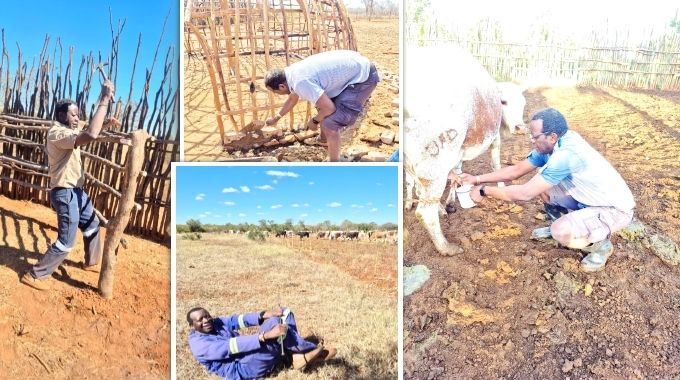
Instead, his attention is fixed on his cattle, their grazing pastures and, as the end of winter draws closer, the approaching rainy season.
His interests would come as a surprise to many, who might expect one of the country’s most accomplished medical professionals to be far removed from the dust of rural Inyathi. Yet for Prof Ngwenya, the plough is as much a part of his life as the scalpel.
For Prof Ngwenya, the journey from the cattle kraal to the operating theatre was never meant to be a one-way trip. While many of his peers left behind the rhythms of rural life as they climbed the academic and professional ladder, he deliberately chose to hold on to the lessons that first shaped him as a child.
“I stayed true to my roots because I realised that many Africans abandoned their culture once they became urbanised and embraced Western lifestyles. In the process, they also discarded many of the positive traditions that had sustained our communities for centuries. I’m simply reviving what my ancestors practised and preserving the habits that enabled them to survive and thrive on this continent long before the arrival of colonialism,” he said.
His philosophy was cultivated long before lecture theatres, medical school and hospital wards entered his life. Around evening fires in rural Insiza, a young Solwayo learnt lessons that no textbook could teach.
“When I was as young as five, our parents taught us life lessons through folktales shared around the fire. Those stories shaped the way I saw the world and grounded me in our traditions from an early age. So, when I moved to town and received a formal education, I never lost my identity because I had already been taught what it meant to be African. That foundation stayed with me,” he said.
“We know that education is important, and I’m excited to be educated, but I never lost that foundation because I was lucky enough to have a father who groomed me on my basics and where I came from. Your father teaches you everything about life and different ways of doing things, then you come to town, meet a friend and throw away all that learning and heritage? I don’t think that’s wise.”
Those lessons remain visible in the way he lives today. When the working week ends and the demands of Mpilo Central Hospital momentarily loosen its grip on him, he gladly exchanges hospital corridors for open fields, polished shoes for gumboots and the constant buzz of Bulawayo for the quiet sounds of the countryside.
His day in the village begins before sunrise.
“I wake up in the morning and my routine depends on whether it’s summer or winter. I usually prepare the cattle for the pastures. I milk the cattle if milk is needed at home and, if the herd boy is free, he accompanies the cattle to the grazing lands. However, if there are household chores to be done, like preparing the fields, ploughing or planting, I also do that as well.
“We do this until the cattle return in the evening. We then count them and, after we are done, we go and sit by the fireplace, tell stories and so forth.” It is a routine that many would regard as physically demanding, yet Prof Ngwenya believes it offers rewards that modern urban life often cannot.
“So, I desire to reconnect because there are some beneficial things. Rural life is quite simple and less stressful. The diet is also very good for health, and there’s the nostalgic connection to the past.
In the forest, there are plants, animals and so many things to see. It’s really a very good environment.
“This rural lifestyle keeps the body fit because the food is not full of chemicals. It’s quite good. The lifestyle also keeps your body active and in mint condition.”
He worries, however, that many Zimbabweans who leave their rural homes in pursuit of education and employment in the city rarely make the journey back.
“I see that many people, once they are educated, flee and they never return to the rural areas, which is not good,” he said.
To some, his deep attachment to tradition might appear to sit uneasily alongside his standing as one of Zimbabwe’s foremost medical professionals. Prof Ngwenya, however, sees no contradiction.
For him, there has never been a choice between the scalpel and the cattle kraal. Each has sharpened the other, proving that one can save lives in the hospital without losing sight of the traditions and values that first gave life its meaning.
“For me, there are no conflicts between tradition and modern medicine. When it comes to practice, I strictly practise modern medicine. I’m not a traditional healer. I only follow my culture. I guess if I were a healer, there would be some kind of conflict because one would be taking African medicine and comparing it to Western medicine.
“I’m not a traditional healer, but I’m a culturalist who believes in tradition.”
That distinction, he says, has allowed him to embrace scientific excellence without abandoning the customs that shaped him.
“I’ve always embraced my culture because I never lost any of it. I’ve always had guidance from my ancestors and I guess we can see the results from what they have given me. I don’t see the reason why I should throw it away. Being a professor is a title that I have to live with, but your tradition is what you are.”
Perhaps nothing captures that philosophy better than the title he jokingly gives himself.
“I believe I’m a celebrated herd boy because I looked after cattle from the age of five until I was 22. When I was in school, I would take my books with me while I herded cattle and study under a tree. I mostly did this during school holidays so that I wouldn’t struggle with revision during the school term.”
As dusk settles over Inyathi, the cattle drift back into the kraal one by one. Prof Ngwenya counts them with the same precision he brings to the operating theatre. Tomorrow he will return to Mpilo Central Hospital, where lives await his steady hands. But tonight, beneath the vast Matabeleland sky, he is simply the celebrated herd boy he has always been.


 Online Reporter