Vusumuzi Dube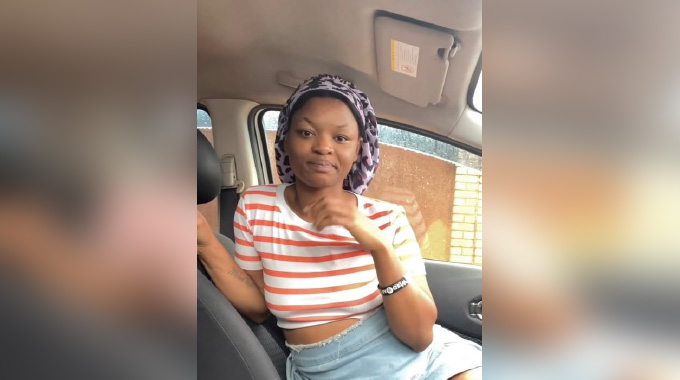
Bruce Ndlovu, [email protected]
UNTIL recently, if you asked most Zimbabweans what the phrase “view once” meant, they would have pointed to the WhatsApp feature that allows users to send photos, videos and voice notes that disappear after being opened.
For many, this was the universally accepted definition of a relatively new social media function — one that had not previously caused much concern.
Recently, however, the phrase has taken on darker and more controversial connotations. Mention “view once” today and it is likely to provoke giggles, concern or outright anger in some circles.
Almost overnight, the term became a source of national shame and debate, following the rise of a social media page belonging to a user known as Queen Nadia, which has become the object of widespread obsession.
Broadcasting from her bedroom, car or wherever she can film, Queen Nadia’s fleeting and explicit X-rated content has, for many, come to symbolise the excesses and dangers of social media.
To authorities, she represents not only a moral concern but also a potential violation of the law.
“The Authority reiterates that all broadcasting and digital content consumed within Zimbabwe is subject to the country’s legal and constitutional framework, irrespective of the platform through which such content is distributed,” the Broadcasting Authority of Zimbabwe said in a statement last week.
“In as much as freedom of expression is guaranteed to all Zimbabweans under Section 61 of the Constitution of Zimbabwe, such freedom must be exercised responsibly, with due regard for the rights of others as provided for under Section 86 of the Constitution.”
The statement was a rebuke of a growing phenomenon that has found defenders among Zimbabweans who believe Queen Nadia is merely exercising her constitutional right to freedom of expression.
If content creation is reduced to a numbers game, then Queen Nadia has — to the disgust of many — found a winning formula.
Within a few months, she amassed more than three million followers on Facebook, with her content reportedly attracting over a billion views. In one post, she revealed that a single video had generated 122 million views, earning an estimated US$1 142,37 (about R18 430).
In 2026, nudity appears to have a thriving market, particularly on Facebook.
Yet Queen Nadia’s rise has also revived debates about what happens when content creation goes off the rails.
Long before smartphones allowed people to upload bite-sized clips of their private parts for likes and comments, some Zimbabweans had already discovered the shock value of nudity — and used it to capture national attention.
The Fichani twins and the return of the nhembe
Perhaps proving that provocative nudity is not the preserve of women, the Fichani twins — Tafadzwanashe and Tapuwanashe — once captivated Zimbabweans with a stunt that sparked debate beyond the country’s borders.
After spending two years in the United Kingdom (UK) studying, the twins returned home following the arrest of one of them on fraud charges, which led to their deportation.
During their time in the UK, they claimed the Lord had spoken to them, revealing what they described as the error of modern clothing. Western attire — suits, trousers and accessories — had to be abandoned, they said, as they were divinely instructed to revive the nhembe or traditional loincloth.
Back in Harare, the twins stripped the gloss from affluent suburbs such as Mount Pleasant, walking around semi-naked with their buttocks exposed.
They rejected what they viewed as Western inventions, including chairs and beds, opting instead for what they believed to be Africa’s authentic way of life.
The sight of the two men roaming the streets nearly naked became a national talking point, even after their arrest for public indecency. To some, the Fichani twins were immoral madmen intent on dragging the country back to the Stone Age.
To others, they were rebels standing firm in defence of African traditions.
After spending two weeks in prison, the then 22-year-olds were released, this time clad in clothes that covered their more sensitive body parts.
In 2012, the twins told Zimpapers they had since settled down, each marrying and starting families with two children apiece. Now living on a farm between Banket and Chinhoyi, they said they had fully embraced their spiritual calling.
Tapuwanashe became chief of protocol at a spirit medium’s sacred shrine near Lion’s Den in Mhangura, Mashonaland West, while Tafadzwanashe lived with the medium’s chief aide, Sekuru Makamure.
“We pray here with Ambuya and Sekuru in the traditional way and every Saturday we gather to pray. We even use traditional snuff in church,” said Tafadzwanashe.
“Every day I pray because there is a voice telling me to return fully to traditional dress and beliefs, but this world will not understand my brother and me. I wanted to live like John the Baptist, surviving on grasshoppers and wild honey, but the world will not accept it. It is extreme and it makes me emotional, but I have no choice. I have to do what the world expects.”
Vimbai Zimuto and the politics of naked Art
While Zimbabwe often celebrates musicians for the power of their voices rather than their physical appeal, artistes such as Betty Makaya — a demure singer with angelic vocals — have long won admiration for both their music and perceived moral uprightness.
They are the women mothers want their sons to marry and pubescent boys dream about.
Then came Vimbai Zimuto.
In 2019, the musician caused a national stir after releasing a series of nude photographs that dominated social media conversations. While many local artistes consciously project themselves as role models, carefully avoiding explicit imagery, Zimuto charted a different path.
Her images, shared openly online, left little to the imagination and attracted widespread condemnation.
Unmoved by criticism, Zimuto insisted that her nudity was an expression of art rather than obscenity.
“Who is asking society to normalise anything here?” she said at the time.
“There are many things we have normalised without question. Child marriages are one of them. You claim to be conservative, yet you practise these things. That is why I do not speak much — you are not ready for the truth, hiding behind witchcraft and pretending to be morally upright. Imika imi!”
A courtroom protest that shocked the nation
In 2014, Merlin Mukwendi of Mkoba suburb sent shockwaves through Zimbabwe when she accused her husband of raping her, at a time when the country was still grappling with the concept of marital rape.
The allegation sparked intense public debate, with some defending the accused husband and others rallying behind Mukwendi.
The controversy, however, took a dramatic turn when Mukwendi later confessed before Magistrate Morgan Nemandire that she had fabricated the claim.
After the magistrate called for her imprisonment for lying under oath, Mukwendi stunned the courtroom — and the nation — by stripping completely naked in protest of the ruling.
The act sent shockwaves across the country and added another unforgettable chapter to Zimbabwe’s long and complicated history with nudity in the public sphere.


 Online Reporter