Online Reporter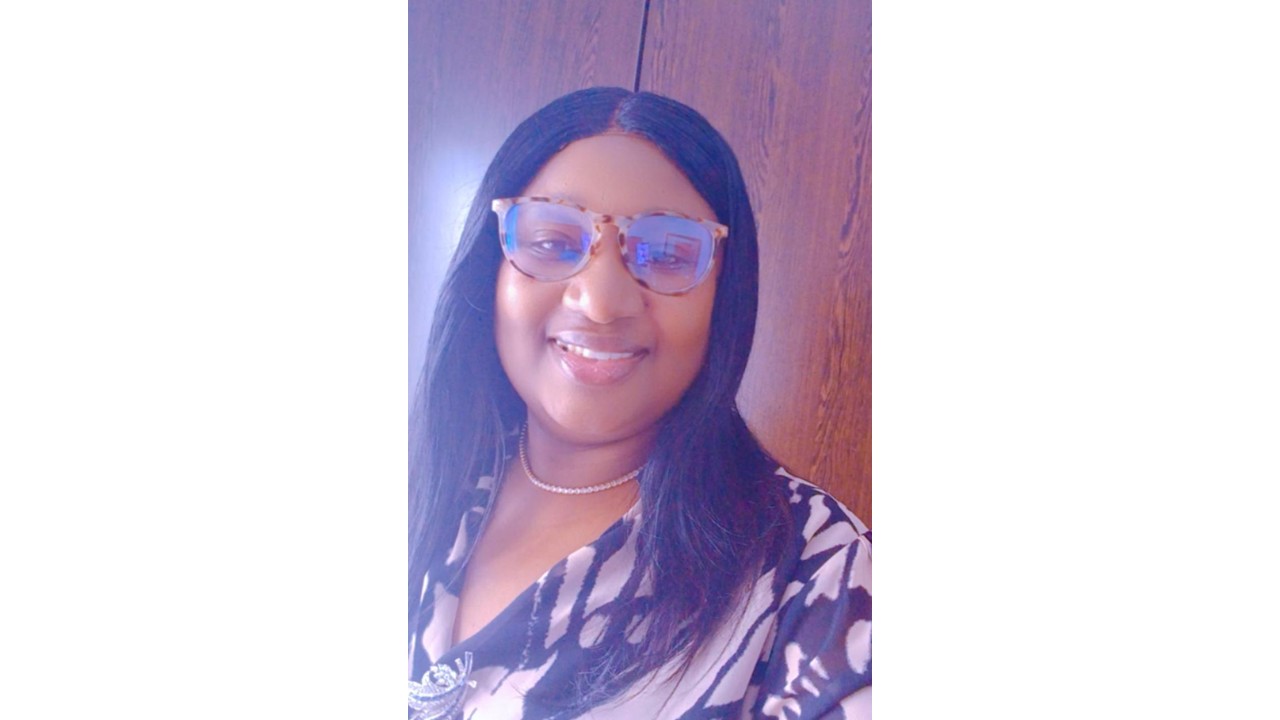
Dr Thandiwe Chidzungu (PhD)
What would I tell my five-year-old self? That where you come from will never determine where you end up. Your background is part of your story, but it does not write the ending.
I was that child who refused to be left behind. My sister Busi — her full name is Sibusisiwe — and my late brother Nkust, Nkululeko, were already at the local primary school. When I started Grade One, my little brother Godie, Godfrey, was born. Just like that, I lost my title as the last-born. In isiNdebele we call the last-born icinathunjana. In Shona it is gotwe. I was not ready to surrender that title without a fight!
I am a blend of Shona and Ndebele. I am still not entirely sure what that makes me, except a proud daughter of two rich and vibrant cultures.
The day I registered myself for preschool
It was 1981. One morning, I decided my mother’s watchful eye was not watching closely enough. I slipped out of the house and walked 300 metres to Magwegwe Preschool near our home. The gate was never locked. Those were different times. Life was communal and safe. Every man was a brother, father, uncle or grandfather. Every woman was a mother, aunt or sister.
I walked straight to the teacher in charge. Let us call her Mrs Mkandla, if memory serves me correctly. I told her I had come to register because I wanted to learn. She asked where my mother was.
“At home,” I replied.
She asked my age. I stood tall and declared, “Four years old.”
She handed me the registration forms and told me to bring my mother the following day. I walked home beaming as though I had conquered the world. When I gave my mother the forms, she scolded me. I did not care. I had achieved what I set out to do — I had secured a chance to ask for a place at school.
That evening, my father came home and my mother told him the story. To my surprise, he supported me. He completed the forms, and together we returned them to the school.
There were only a few months left before the December holidays. Because I was still underage, I was placed in the afternoon class for a short period. The following year, I joined the regular class. In the end, I spent two years in preschool. That stubborn determination paid off.
From Magwegwe to the world
In 1983, I started Grade One at Magwegwe Primary School. I was among the top-performing pupils. However, by Grade Seven, circumstances at home had changed. Family challenges made it more difficult to focus on schoolwork, and my results began to decline.
Between 1990 and 1993, I attended Townsend Girls’ High School, one of Zimbabwe’s leading multiracial girls’ schools. After that, I completed my Advanced Level studies at a private college before training as a teacher at Hillside Teachers’ College.
In the early 2000s, I graduated with a teaching diploma and was posted to a rural school. Yet I never stopped learning. Through distance education, I completed my undergraduate degree in 2005.
We had no computers and no internet access. I studied by candlelight because the school had no electricity. Armed with little more than books and determination, I completed every assignment and passed every course.
Those seven years of teaching in Zimbabwe laid the foundation for everything that followed. I would never trade that experience for anything.
The learners were disciplined, respectful and eager to learn. Teaching brought me genuine joy. I remain especially proud of my Geography classes at Nejambezi and Gebhuza High Schools.
To the classes of 2003, 2004, 2005, 2006 and 2007 — many of you are achieving remarkable things today. You continue to make me proud.
A new chapter in South Africa
I later moved to South Africa, where I taught in high schools for nine years. During that time, I returned to university and studied Natural Science Education through UNISA, graduating cum laude. That achievement opened the door to the University of the Witwatersrand, where I pursued both my Master’s and PhD studies. While at Wits, I also worked as a tutor and lecturer.
In 2023, I graduated with a PhD in Geography from Wits. In 2024, I began my research career at the University of Johannesburg. My work focuses on teacher education and issues that affect all of us today: climate change, the just energy transition, education for sustainable development, and the Sustainable Development Goals. I also explore how teachers understand these topics and how effectively they are equipped to teach them.
Why I tell this story
“Ilizwe lakhiwa ngabanikazi balo” — “A nation is built by its own people.” My journey has left me with a deep sense of responsibility to give back to the country that raised me.
Years ago, I was a columnist for UMthunywa newspaper, where I wrote Asixoxeni Bomama lo Sis Thandiwe. Through that column, I shared the real-life stories, challenges and triumphs of women. The response taught me a powerful lesson: storytelling gives a voice to those who are too often unheard.
That work continues today. My focus is the girl child — her education, her health and her dreams. I want to tell her story and help create opportunities that support and empower her. Because when a girl learns, an entire community grows.
Lessons from a township girl
If you ask me what shaped me, I will tell you it was three things: determination, resilience and the belief that I could dream beyond my circumstances.
Growing up in Magwegwe taught me the value of community. Neighbours looked out for one another. That spirit sustained me through long nights of studying by candlelight and years of examinations.
Losing my “last-born” title to Godie taught me that change is inevitable. You can resist it, or you can adapt and discover new ways to shine.
Teaching in rural schools taught me that excellence is not determined by resources. Those learners had very little, yet they possessed discipline, commitment and a hunger for knowledge. Every day, they reminded me why I had chosen the profession.
A message to every girl reading this
Your background does not define you. Poverty, a crowded home, a lack of electricity, or being a blend of different cultures — none of these things can prevent you from succeeding if you are determined to move forward.
Start where you are. Use what you have. Ask questions, even if it means walking through an unlocked gate to do so. Seek out teachers, parents and mentors who believe in you. My father believed in that four-year-old girl. Someone will believe in you too.
And when you reach the top, turn around and help someone else climb. That is how we build nations. That is how we change the story for the next girl.
My journey as a social scientist is far from over. In many ways, it feels as though it is beginning anew, even as it continues. One thing, however, remains certain: I will keep telling stories. I will keep advocating for the girl child. Because every girl deserves the opportunity to write her own ending.
To every mother, aunt, teacher and sister reading this — thank you for being the unlocked gate for a child like me. To every girl — your story matters. Tell it. Live it. And never allow anyone to convince you that your beginning defines your limits.
*Dr Thandiwe Chidzungu holds a PhD in Geography from the University of the Witwatersrand. She researches teacher education, climate change and sustainable development at the University of Johannesburg.