


 Online Reporter
Mehluli Sibanda, Analysis
I cannot even begin to describe the feeling when South African referee Paul Mente blew the final whistle at Mandela National Stadium in Kampala, Uganda, last Saturday.
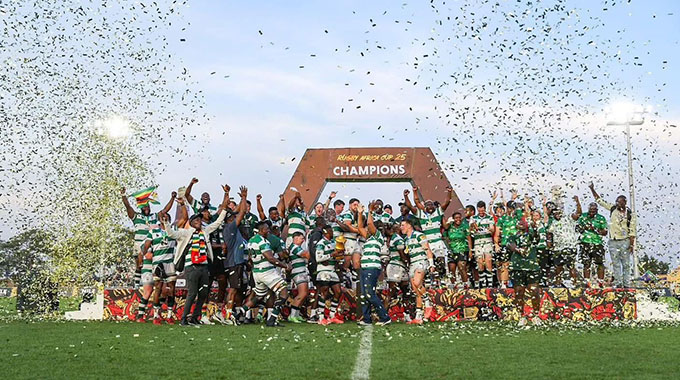
The end of the match confirmed Zimbabwe as the winners of the Rugby Africa Cup and with that, they qualified for the 2027 Rugby World Cup in Australia.
Zimbabwe held on for dear life to a 30-28 triumph over old nemesis Namibia to make a return to the Rugby World Cup since 1991.
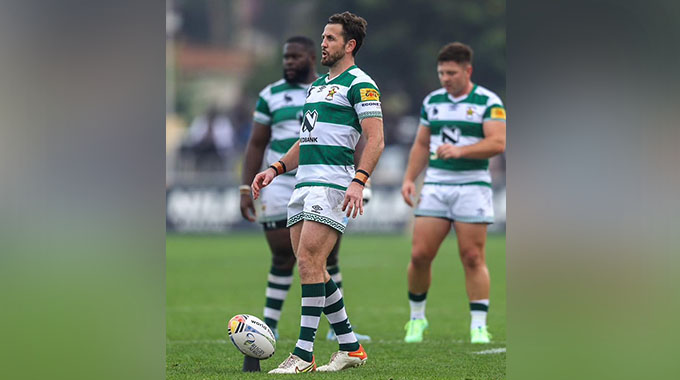
The victory brought many years of near-misses, the most recent being 34-19 semi-final loss to Namibia, in France.
After over three decades of absence, Zimbabwe’s famous green and white hoops are making a return to a global tournament.
Over the years, Zimbabwean rugby fans have been called “International Orphans” for celebrating the success of the South African Springboks. I am one of those who backed our neighbours in international rugby, after all three of the four World Cups won by the men in green and gold were achieved with Zimbabwe-born players in those squads.
Adrian Garvey, who was born in Bulawayo and went to Plumtree High School, was part of the 1995 team that won it at Ellis Park Stadium in Johannesburg.
Bobby Skinstad, another Bulawayo-born lad, was there when the Boks lifted the Webb Ellis Cup for the second time at Stade de France in 2007.
Tendai “Beast” Mtawarira, our last gift to South Africa, was a member of the victorious team in 2019 when the tournament was held in Japan.
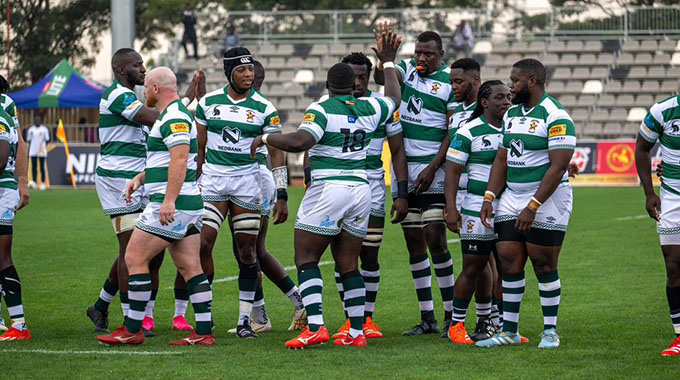
While celebrating the success of the Springboks, I never stopped believing in our own Sables. I knew that one day they would qualify for the World Cup and I am so happy this has happened in my lifetime.
I am so glad that I persevered with the Sables and now I am part of the millions of Zimbabweans celebrating our return to the World Cup.
I was herding cattle in the village way back in 1991 when Zimbabwe last made an appearance at the World Cup. To be honest, the only sport I knew back then and cared about was football, I had no idea there was a game played with an oval shaped ball.
Even when I moved to Bulawayo and got to know about rugby, I saw it as this rough sport where you needed new clothes after every training session.
I thank journalism and particularly my time at Sunday News for exposing me to rugby. I still recall covering my first international match when Zimbabwe played and drew 22 all with Madagascar at Hartsfield Rugby Ground, on 12 August 2006.
Zimbabwe were not at their best those years, despite being blessed with players such as Cleopas Makotose. That was the year they lost 14-10 to Zambia in Lusaka.
Brendan Dawson, a member of the Sables squad at the 1991 World Cup, was charged with turning things around when he took over from Chris Lampard in 2007.
The 2009 Rugby Africa Trophy South in Gaborone, Botswana, served as the turning point for Zimbabwean rugby.
I still recall Botswana rugby was on its way up at the time and they were promised huge sponsorship if they had beaten Zimbabwe. Of course, the Sables prevailed 23-3 over the Vultures to lift the trophy.
Years of rebuilding under Dawson in 2011 brought success over Kenya and Uganda, sides that had made huge strides over those years. Zimbabwe won the 2012 Africa Cup with success over Uganda in Tunisia.
By 2014, Dawson had assembled a formidable squad to challenge for 2015 Rugby World Cup qualification, when the qualifiers were held in Madagascar. Just like the current squad, players with Zimbabwean roots were roped in.
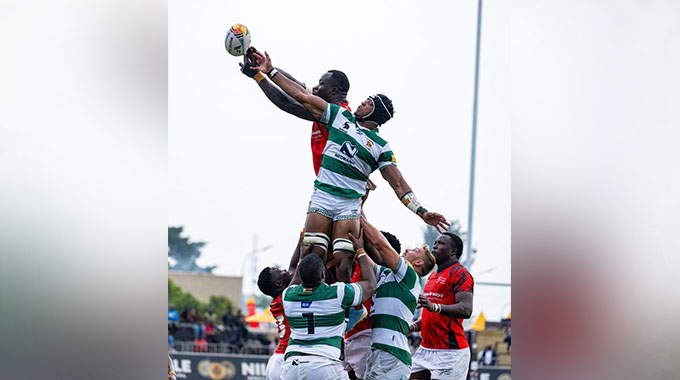
Zimbabwe started off brightly by demolishing Madagascar 57-22. They let a 17-10 half-time lead slip through their fingers to lose 24-20 to Namibia before seeing off Kenya 28-10.
It was that victory over Kenya which came back to haunt the Sables. A debate persisted for years on whether Guy Cronje, the Zimbabwean No 10, should have booted the ball into touch rather than take three points.
The feeling was that Zimbabwe should have called for a scrum or gone for a lineout when they won a penalty with five minutes to go. That would have allowed them to push for a fourth try, which would have seen them achieve victory with a bonus point.
While the Sables slayed the Simbas, they did not get a bonus point. Namibia turned on the power in their last match and hammered Madagascar 89-10.
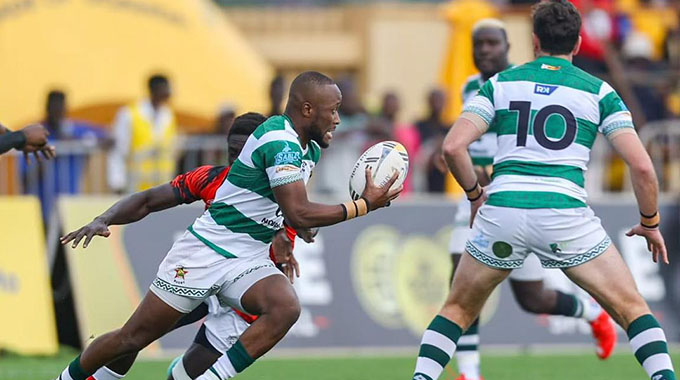
With the two teams finishing tied on 10 points, the Namibians secured top spot on points difference. Zimbabwe went on to face Russia in the repechage play-off, a match they lost 23-15 to end hopes of going to the 2015 Rugby World Cup.
Following that heartbreak, the game went on a downward spiral when Dawson was removed as coach.
Efforts to qualify for the 2019 World Cup saw the Zimbabwe Rugby Union engage Peter de Villiers as coach for the 2018 campaign. It turned out to be a disaster with Zimbabwe winning one of five matches, as Namibia secured the African automatic slot.
Dawson returned for his second stint as coach with the mandate of qualifying for the 2023 World Cup in France. He fell short again, with Namibia standing in Zimbabwe’s way and the legend was replaced by Piet Benade in March last year.
Benade made a huge impact last year by beating Namibia in the semi-finals and then Algeria in the final. Over the years, I have carefully noted that Namibia always upped their game when it mattered the most, so I did not make much of their defeat in 2024, as this year was of utmost importance.
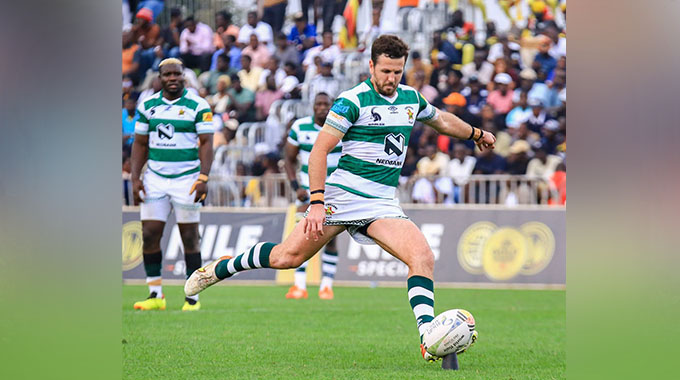
I had those fears when the Sables faced the Welwitschias in the final last Saturday. Thanks to technology, I was glued to my phone following the action thousands of kilometres away.
I have seen things go wrong for Zimbabwean teams over the years. I still recall in 2015 when the Cheetahs, the sevens version of our national rugby team, agonisingly came close to qualifying for the 2016 Rio Olympics.
Zimbabwe were leading 17-14 with seconds to go in Kempton Park, but Dennis Ombachi, with a fresh pair of legs, left the Zimbabwean defence for dead with a try for the Kenyans to steal it 21-17 right at the end.
In 2018, our cricket team suffered a shock defeat at the hands of the United Arab Emirates at Harare Sports Club, to miss out on the 2019 World Cup in England.
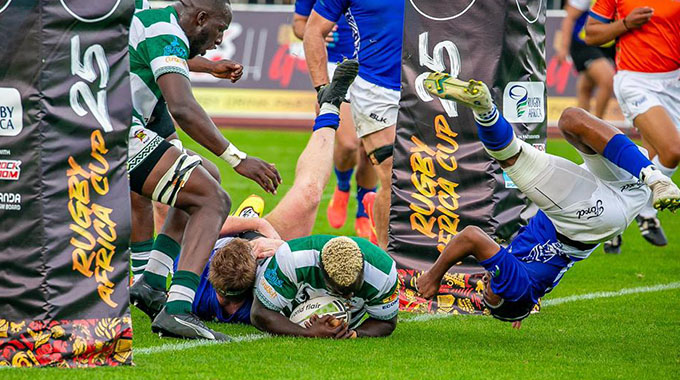
All these thoughts were racing through my mind as I watched that final against Namibia.
I had to pinch myself when the final whistle went off to make sure that I was not dreaming.
I am so proud of captain Hilton Mudariki and the rest of the players for doing us proud. I still remember when Mudariki made his debut for Zimbabwe at the Middelburg Sevens in 2013 with his spiky hairstyle.
Mudariki has now grown into a man capable of leading the team to World Cup qualification.
While we celebrate qualification, here is a sobering thought. Namibia went to the World Cup seven times and lost all the 26 matches they played at the tournament.
This shows how tough it is playing at the World Cup. Zimbabwe lost all six matches in their previous World Cup appearances, in 1987 and 1991, so we have a mountain to climb.
Qualification for the World Cup will unlock funding from World Rugby for the team’s preparations. The corporate world is also expected to stampede in supporting the team ahead of the global event.
I would urge the Zimbabwe Rugby Union to continue seeking more players eligible to play for Zimbabwe who are playing in better leagues. Now that the team has qualified for such a huge tournament, players will make themselves available, and if they are playing in some of the top leagues in the world, there is no reason for not selecting them.
We need as much depth for the squad for us to avoid going Down Under just to make up the numbers. We have to compete and pick up one or two wins for us to make an impact.
Zimbabwe’s qualification was boosted by the presence of Ian Prior, the sharpshooting No 10 who was voted Player of the Tournament on Saturday.
While Prior was born in Australia, his mother is Zimbabwean, which made him qualify to pull on the Sables jersey.
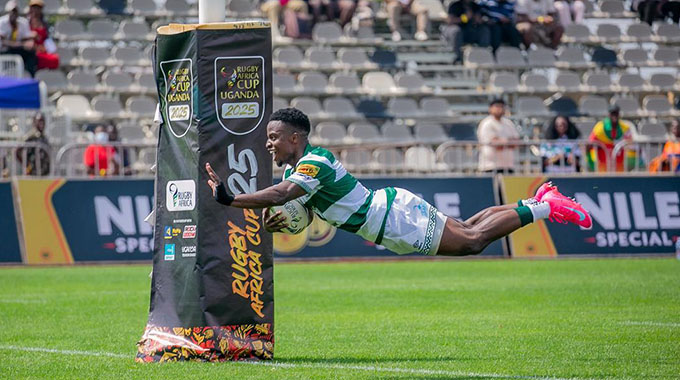
Tapiwa Mafura, the versatile backline player, who slices through the opposition like a hot knife cutting through butter, at some stage entertained hopes of playing for South Africa. Mafura, who was born in Hwange, set the South African rugby scene alight when playing for the North-West University in the Varsity Cup, eventually gave up on that dream of playing for the Springboks when he made his debut for Zimbabwe at the end of 2021.
Mafura has made a huge difference to the Sables backline with his ability to occupy any position at the back, as he did slot in at fly half in the final last year when Prior went back to Australia.
Maybe Mafura can convince lock Darrien Landsberg, his team-mate at the Golden Lions in South Africa, that the Sables need him to enforce the scrum in the second row. Just like Mafura once did, Landsberg also has aspirations of donning the green and gold, but now that Zimbabwe have qualified for the World Cup, he should have a change of heart.
Investing in a strong local league is also crucial. At the moment, our domestic competition is not up to scratch and there is a need to strengthen that to give locally-based players a great chance to prepare for the World Cup.
Infrastructure should not be forgotten as well. Hartsfield in Bulawayo to my knowledge is the only venue that was built specifically for rugby in the whole country and it’s sad to see it in such a deplorable state.
The Bulawayo City Council, the owners of that piece land, must work together with the lease holders, Bulawayo Metropolitan Rugby Board, ZRU and other stakeholders to bring Hartsfield back to life.
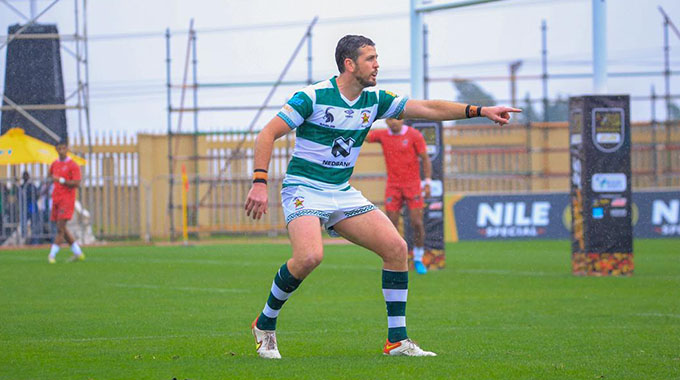
This is a moment for the rugby community and the entire Zimbabwe population to come together and take our game to the next level.
As a father of boys who are passionate about sport, I am glad that my sons can now have players they can look up to as they pursue their rugby careers. Mudariki and his team-mates have given us something to celebrate as
Zimbabweans, and we can only hope this is a sign of better things to come for Zimbabwean sport.
Hopefully, all our sporting teams can draw inspiration from the Sables and make us proud when they take to the field. In a few months, our cricket team will attempt to qualify for the 2026 ICC T20 World Cup, to be held in India and Sri Lanka, with those qualifiers on home turf.
Namibia and Uganda, who denied Zimbabwe a spot at the 2024 tournament, again pose a serious threat, and we can only hope that the Chevrons will be filled with the same fighting spirit we saw from the Sables in Uganda.
n Mehluli Sibanda is a former Sunday News Sports Editor now based abroad. He writes in his personal capacity.



