Online Reporter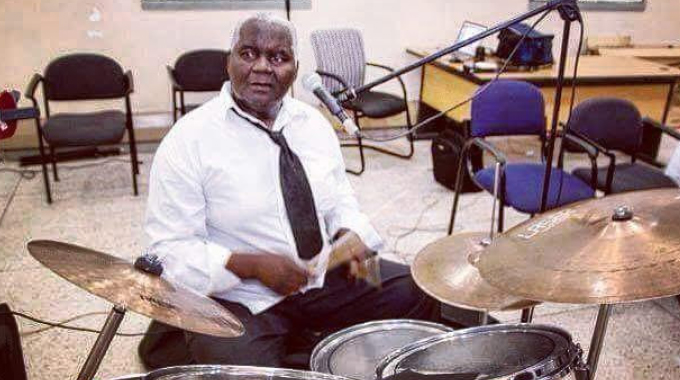
Bruce Ndlovu, Sunday Life Reporter
BACK in the mid-1970s, as the cries of revolution and change crackled all around Zimbabwe, Wells Fargo made a song titled “Watch Out, Freedom is Coming.”
The situation in the country was already tense.
Thousands of young people were fleeing the country in droves as Zimbabwe (then Rhodesia) experienced a “brain drain” of its best minds at a time when the economy was already struggling.
In response, authorities became increasingly heavy-handed, seeking to crush a revolutionary spirit that had taken firm root, especially among the youth. While their eyes remained fixed on the movement of guerrilla forces, Rhodesian security czars also monitored the world of entertainment.
Wells Fargo, a group founded by Ebba Chitambo, had captured the attention of the authorities due to its unique ability to attract both Black and white audiences.
In an era where colonial powers steadfastly maintained segregation, such integrated scenes were regarded as “unbecoming” and “subversive.”
As the battle for the soul of Zimbabwe reached a crescendo, the release of the song Watch Out, Freedom is Coming acted like a gallon of oil dropped onto a raging inferno. It did not take long for the track to attract the wrong kind of attention.
“The song Watch Out was originally titled ‘Watch Out, Freedom is Coming’,” recalled Wells Fargo frontman Ebba Chitambo.
“We wrote it during the struggle, around 1974. We used to play it live under the original title, which got us into trouble with the police on several occasions.”
At a time when radio was the lifeblood of every recording artiste, Chitambo and his group found themselves in a difficult position. While they sought airplay, their song had become a hot potato for broadcasters, who eventually banned it completely. For the track to gain any traction, the band was forced to rename it and sanitise the lyrics that the authorities found most offensive.
“So, a few years down the line, we were called up for recording and had to change the lyrics because the first version was not allowed. It was banned from the radio. So we changed the lyrics and then it was called Watch Out Big Storm is Coming. It’s an old one — recorded around 1975 or 1976, if I recall correctly,” Chitambo said.
A few years ago, the song got a new lease of life after being picked up by a United States-based recording label.
It is now featured in the film Don’t Let’s Go to the Dogs Tonight, a child’s heartfelt recollection of the last days of Rhodesia.
With the movie now on Netflix, it completes a remarkable turnaround for a song that was once banned in Chitambo’s own country.
For Chitambo, the journey of Watch Out, Freedom is Coming from censorship to global recognition is as surreal as it is satisfying.
“The song is also on an Oprah Winfrey production, which is a TV series. The good thing now is I can actually watch these things on Netflix. They are all there. It is not like before, when you would just hear the song is in a movie and it would take forever to watch it. Now I can watch it, and it is good for me.
“But for it to get into the movie, it was re-released on an American label a few years back, about six or seven years ago, on Now Again Records in Los Angeles.
“They published it there, so it earns quite a lot of royalties. When a song is published, they have a department that goes around selling music to films, adverts and many other platforms.
“I think that’s where the people from Don’t Let’s Go to the Dogs Tonight heard it. Next thing, I get an email saying they’re interested in the song. I said no problem, and they used it. We got our royalties for that.”
Long before it found its way onto international screens, the song was crafted in modest surroundings by a group of young men driven more by passion than resources.
Chitambo remembers the sessions at McDonald Hall in Mzilikazi, where a track that would define one of Zimbabwe’s most iconic groups was born.
“I do remember the making of the songs. That I can never forget. We were very young and very ambitious. Rock was our main music in those days. I was starting this group, Wells Fargo and I only had Handsome Mabhiza on guitar at the time. I was showing him what I wanted to do and Watch Out was one of the songs on that list.
“We were working from McDonald Hall. There was a big room on stage which was our band room. Josi came along from Zambia. He was interested in what we were doing. I had played with him earlier in another group before he left for Zambia. He came in and brought Neva on bass. That is how it all started. But when we eventually recorded, Josi Ndlovu had left to join Eye of Liberty.”
He continued:
“He actually called us up to Harare for that recording. When we went there to record Watch Out, the original version was struck off radio. It was banned by the Rhodesian Broadcasting Corporation, so we had to redo it for it to be accepted.
“But people always knew it as Watch Out, Freedom is Coming. That is how we used to play it live. Even when we recorded Watch Out Big Storm is Coming, people still knew it by the original name.”
Decades later, the same song is riding a wave of rediscovery, driven largely by changing listening habits abroad.
“A lot of people overseas are going back to vinyl. They miss that sound, the crackle of vinyl records.
I think that is what has sparked interest in old music. People are looking for something that sounds good on vinyl.
“I think that’s how these guys came to me about our music. I got an email asking if they could sell the rights for a re-release to a Spanish label and we agreed. We want to see how far that will go.”
For Chitambo, the renewed interest has also highlighted stark differences between the local and international music industries, particularly in terms of compensation.
While local artistes often have to struggle for their dues, the process is far smoother with international companies.
“There is a big difference when it comes to royalties between what we do here and what is offered overseas. This contract I have was a negotiated settlement; it was not just dumped on me. You get options and can reject what you do not want.
“Having the music published is also beneficial because you get paid simply for it being published. From time to time, you receive royalties on top of what you earn from sales each year.”
As the song continues to find new audiences across continents and platforms, Chitambo believes its journey holds an important lesson for a new generation of Zimbabwean musicians.
“I think our young guys should make music with global appeal. They can make it locally, but they must think globally. We buy music from other countries, including music in languages we do not understand.
“Do not make music that will only make people in Bulawayo happy. Be serious in your writing and production and everything will work out.”
Ends//…