

 Online Reporter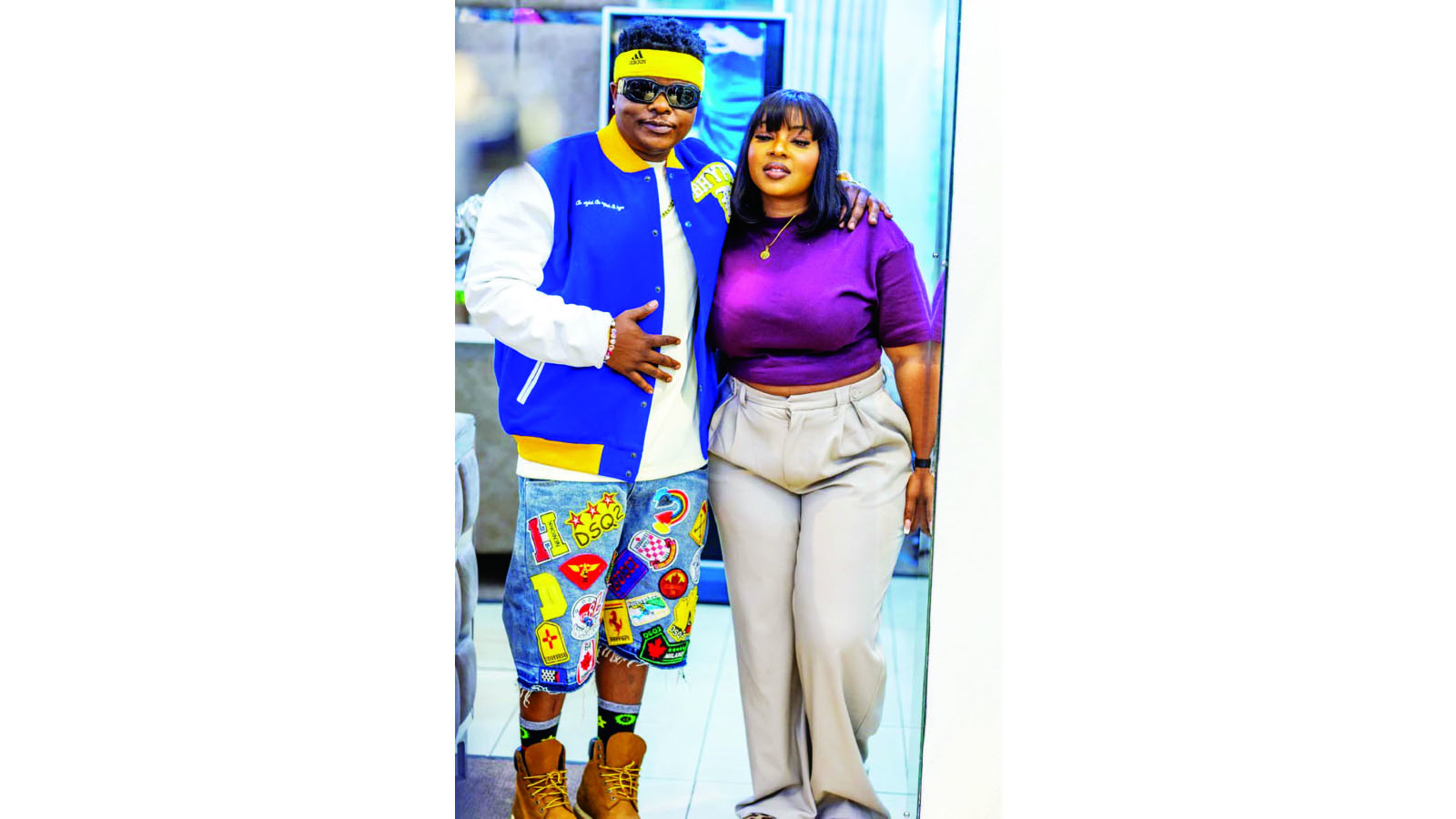
Langalihle Mhiti
VIMBAI “Vee MK” Makanha is living her dream — she has styled football icons Lionel Messi and Vinicius Junior and worked with Jason Derulo and Davido.
This was not part of her dreams when she left Zimbabwe to work in Dubai.
All that she was in search of was a good job in the hospitality industry, financial stability and global exposure.But, in the heart of Dubai, a city famed for its skyscrapers and cutting-edge fashion, her path took an unexpected turn.
Now, Vee’s portfolio today stretches across Africa and around the world. “I went to Dubai working as a hotelier,” she said. I was in the hotel industry but I didn’t find it paying as much as I wanted it to. “That is when I started looking for other opportunities.”Dubai offered her more than work. It offered direction. Through a chance opportunity, Vee was taken in by Be Hype Store, a street-style fashion brand. The company recognised something in her that she had never labelled as a professional skill.
“They took me in as a stylist. That is how my styling career began. I did not plan it. It just happened because someone saw what I did not see in myself.”
From there, her journey in styling took shape, grounded in a visual language that felt instinctively familiar, hip-hop street style, especially from the late 90s and early 2000s.
“I represent hip-hop culture,” she said.
“My signature style is 90s and 2000s street style. That is where I get my inspiration and creativity. The baggy silhouettes, the sneakers, the chains, the jackets. It is not just clothing to me. It is culture. It is history. It is identity.”
She does not just dress clients to look good.
She dresses them to say something.
“I have worked with Major League. I have worked with Asake. I have worked with Davido. I have worked with Jason Derulo.
“I have worked with Swae Lee. I have even styled footballers like Vinícius Júnior and Messi.I styled Costa Titch for two years when I was in Dubai.”
Vee’s style influences reflect the culture she represents. “I love Teyana Taylor. Her style is impeccable. She represents street style with confidence.
“She gets it because she is a 90s kid.”
Returning to Zimbabwe after building her identity abroad came with challenges.
The culture of working with stylists in the local entertainment industry was still growing. Vee noticed immediately that many artists did not understand the role of a stylist in shaping their brand.“These artists, they do not give enough credit to their stylists,” she said.
“People will comment saying, ‘we like your outfit,’ but the artist will never mention who dressed them. When I came back home there was no culture of acknowledging the stylist’s work.”
She described it as a “mammoth task” to get artists to understand that styling is not about simply buying clothes.
“Styling is not just putting two pieces of clothing together. It is every detail on the body.
“From the hair, to the accessories, to the colours, to the background of the shoot. Everything must make sense together. “That is styling.”
Still, she continued to show the value of professional styling through her work, especially with high-profile artists. One of her most memorable experiences was styling Jah Prayzah, a musician known for his fitted, tailored appearance.
“Jah Prayzah was so used to dressing a certain way. Tight fitted clothes, polished looks. Changing him completely was exciting for me,” she said.
“When he tried the first street style look, the feedback was amazing. People loved it. They were clapping. They were saying positive things.
“That moment was special for me because I saw the power of transformation.”
She describes her experience with King 98 as one that felt naturally aligned. “King 98 embodies the style I style with. He is a hip-hop artist. His music matches the look. Working with him is always a vibe.”One of Vee’s biggest advantages as a stylist is her personal wardrobe. While working in Dubai, many brands provided her with exclusive pieces to promote, including Michelin Nails, Headgear Classics, and Be Hype itself. These clothes became the foundation of her styling tool kit. “I accumulated my wardrobe over the years in Dubai. Some of the pieces are very exclusive and futuristic. They were not yet seen in Zimbabwe. “When I came back, I could not just wear them outside because people were going to stare at me and wonder what was going on.
“So I decided to style with them instead. I use my pieces to build looks for my clients.”
When preparing for a fashion shoot, Vee begins with the concept. “We draft a shoot treatment first. Then I match looks to the concept.
“If it is an event, I consider whether it is day or night and send options so the artist can choose what they are comfortable with. Whatever they pick, that is the final look we go with.”
She also admires Nigerian stylist Ugo Mozie and designer Roman Djago, whom she worked with in Dubai. “Roman Djago actually follows me on Instagram. I styled him before. His work inspires me a lot.”Her guidance for emerging stylists is simple, direct, and rooted in discipline.
“Pay attention to detail. Detail is everything. From the hairstyle to the background colour.
“People wear pink on pink on pink with a pink background and wonder why the picture looks confusing.There has to be contrast. There has to be intention.”
She also emphasises the importance of consistency in identity. “Find your niche and stick to it. Do not be everywhere. I stick to street style.
“If someone wants evening gowns, I tell them straight, I do not do that. I want to do what I will be proud of looking at.”Her next step is regional expansion. “I want to expand into Southern Africa first. Zambia. South Africa. Then Nigeria. After that, we see. “We are not limiting God. Los Angeles or New York is the goal.”
Her journey is proof that style can be a form of storytelling. It can communicate identity, confidence, culture and vision.
“For me, styling is purpose,” she said. “It is how I speak without using words.”


 Blessing Chizhande