Online Reporter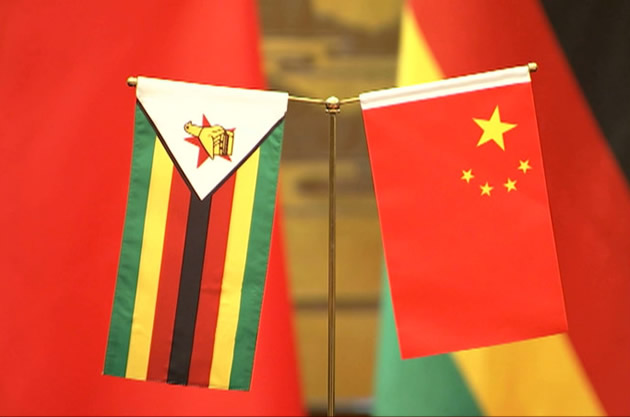
Mafa Kwanisai Mafa
Correspondent
IN just three decades, the People’s Republic of China has undergone a transformation that has shaken the foundations of Western hegemony. It has risen from a nation once broken by foreign gunboats and addiction to become the world’s second-largest economy, the epicentre of global industry, and the most formidable non-Western superpower in modern history.
Yet this ascent has not been forged through war, occupation, or plunder. Instead, China has presented the world with a model of sovereign advancement—rooted in cultural pride, technological self-determination, and strategic defiance of imperialist dictates.
For a country like Zimbabwe, still bearing the scars of settler colonialism and economic sabotage, China’s trajectory is not only enlightening—it is revolutionary.
Where the West seeks to dominate through destabilisation and dependency, China exemplifies empowerment through internal strength and international cooperation. Zimbabwe’s second liberation will not emerge from Western ballot boxes or Bretton Woods prescriptions, but from the furnace of nationalist will and socialist reconstruction. Let China’s experience be our North Star.
Breaking the chains of historical subjugation
When imperial powers could not match the value of Chinese goods, they resorted to parasitism. They flooded Chinese society with narcotics — not for healing, but as a weapon of war: a slow, psychological and cultural assault designed to erode the soul of a proud civilisation.
When the Chinese resisted, the response was not diplomacy, but bombardment. Western powers etched humiliating treaties into the flesh of the Chinese nation, stripping it of ports, pride, and sovereignty.
Fast forward to today: the same powers that once floated opium into Chinese harbours now attempt to stifle its rise through tariffs, tech blacklists, and economic warfare. The enemy has changed weapons, but not intentions.
This is the lesson: the West never accepts true independence unless it is feigned or conditional.
Zimbabwe, too, has felt the bite of this imperial dog. Our land reform — a necessary correction of historical theft — was not met with applause, but with sanctions and smear campaigns. When we stood up to reclaim what colonialism had stolen, the empire responded with economic sabotage.
Like China, we must boldly and unapologetically declare to the world: never again.
The arsenal of peace: Military might without aggression
China’s re-emergence as a military power has left Western strategists uneasy. But this is not the rise of a new conqueror — it is the return of a sleeping dragon to its ancestral post.
Long before Europe mastered metallurgy, Chinese inventors had harnessed saltpetre, wielded early cannons, and developed battlefield technologies centuries ahead of their time. What we witness today is not a sudden surge, but a renaissance.
Unlike the West, which uses its arsenals to bomb nations into submission, China uses its strength to prevent war, not provoke it. It builds ports, not prisons; highways, not no-fly zones.
This doctrine of defence through deterrence is one Zimbabwe must embrace. As long as we rely on others for the defence of our sovereignty, we remain vulnerable to external manipulation.
Zimbabwe must invest in indigenous defence industries, just as China has invested in home-grown technology and cybersecurity. Sovereignty without defence is an illusion.
Science as the new liberation struggle
In every critical field — from AI to biotechnology, from renewable energy to quantum computing—China has not begged for Western charity. It has cultivated its own ecosystems of innovation, often outspending the West in real terms.
Meanwhile, the United States and its allies dismiss these gains as theft. But it is not theft they fear—it is parity. They are terrified of a non-Western civilisation matching, and then surpassing, theirs on the global stage. They are desperate to preserve their monopolies — whether in information, pharmaceuticals, or finance.
Zimbabwe must take heed. Our universities must not remain colonial appendages recycling Western syllabuses. They must become centres of revolutionary knowledge production. We must fund research that speaks to our soils, our climate, our people. We must build technological self-sufficiency as if it were a matter of national security—because it is.
Taiwan and the anatomy of a nation undivided
Taiwan is not a fringe issue for China. It is the scar tissue of imperial fragmentation. For centuries, it was part of the Chinese cultural and political body, only to be torn away by colonial machinations and gunboat diplomacy.
For China, Taiwan is not merely a strategic interest — it is kin, identity, and unfinished business.
This is more than geopolitical posturing. It is about restoring the integrity of a civilisation wounded by Western scalpels.
Zimbabwe, too, must understand the danger of division. Our nationhood must not be for sale — whether through secessionist rhetoric, comprador elites, or foreign-aligned NGOs undermining the State.
We must reject maps drawn in foreign capitals, ideologies funded by foreign embassies, and media narratives engineered to fracture our national unity. Just as China refuses to let Taiwan become a Western outpost, Zimbabwe must refuse to let its own soul be sold to the highest foreign bidder.
Harmony without hegemony: The Chinese alternative to empire
Where the United States floods the world with drone warfare, regime change, and economic coercion, China offers a radically different vision: infrastructure over intimidation.
The Belt and Road Initiative is not merely about trade — it is about constructing a new world order founded on mutual development rather than exploitation.
Unlike the International Monetary Fund, China does not demand that nations starve their people in exchange for loans. Unlike NATO, it does not require countries to bomb their neighbours in pursuit of illusory security.
The Western world order is crumbling because it is built on violence, deception, and theft.
The Chinese model is rising because it is grounded in cooperation, respect, and shared progress. Zimbabwe must align itself with this new tide. We must forge partnerships that honour our sovereignty and reject those that seek to recolonise us through debt, dependency, or digital domination.
Our future lies not in begging former colonisers for crumbs, but in standing shoulder to shoulder with fellow Global South nations as we chart a new course.
Deng Xiaoping and the revolutionary doctrine of non-submission
“We value friendship,” Deng Xiaoping once said, “but we treasure autonomy more.”
That principle has guided China’s rise: a fierce defence of self-rule, even in the face of isolation or pressure. China did not sell its soul for World Bank ratings or Davos applause. It walked its own path — often alone, but always with its head held high.
Zimbabwe must embody this same ethos. Our revolution was not fought so we could become a neo-liberal experiment or a Western puppet. It was fought for land, for dignity, for control over our own destiny. Let us not trade that birth right for Western aid packages or ideological supervision.
Zimbabwe’s call to the future
China has proven that a nation humiliated by the West can rise from the ashes, forge a new identity, and become a beacon for others. It has shattered the myth that only the West can modernise, only the West can lead, only the West can innovate.
Zimbabwe must learn — and act. We must abandon the illusion that our salvation lies in Western approval or Western funds. Instead, we must invest in our people, assert our sovereignty, defend our land, and re-imagine our role in a multi-polar world.
Our revolution is not over. It has merely entered a new phase. And in this phase, let China be a comrade — not a master; an inspiration — not a model to copy blindly.
The struggle continues.
And this time, we fight not just for freedom from colonial chains, but for the freedom to shape our own future.
Will we rise with the East’s red dawn, or be buried beneath the rubble of the West’s crumbling empire?
The choice is ours. — The Patriot



 derick.khumalo