

 admin
admin
Gibson Mhaka
LIFT Sibanda (45), a villager from Dopota in Ward 17 of Hwange East in Matabeleland North province said he had since abandoned farming as a primary source of livelihood because of elephants which were always invading his plot devouring the planted maize before it reached maturity.
“We often encounter elephants roaming our area when we go outside. These roaming elephants have forced us to abandon cultivating crops. Imagine — for years now, herds of elephants from the nearby Hwange National Park have invaded our fields, devouring our maize crops before they reach maturity. They always wander into our backyards and several people have been either killed or maimed and entire food harvests destroyed overnight,” said Sibanda, reflecting resignation in the face of this ongoing struggle.
The situation has since left Sibanda with the responsibility to find other food sources to feed his family of five.
“We’re not just worried about wild elephants. Lions are also a threat to our livestock. I lost four cattle myself, and just three months ago, a lion killed my neighbour’s cow,” added Sibanda.
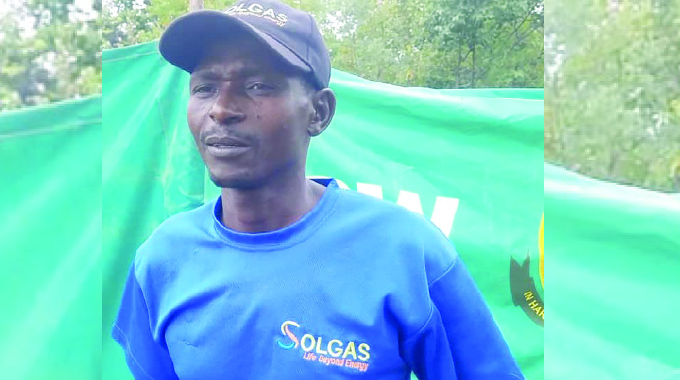
After years of confronting the elephants, Sibanda is running out of patience and wants immediate solutions, not more policies or programmes that may take time to show results.
While misunderstood from a distance, for communities that live at the edge of protected areas like Hwange National Park, human-wildlife conflict is real and destructive. It’s a daily struggle with devastating consequences.
The frequency and intensity of human-wildlife conflicts are increasing by the day, particularly in areas adjacent to protected areas. In some places, communities have endured decades of wildlife attacks which have become part of their daily experiences.
In some cases, the threat of crop damage may cause locals to feel more hostile towards an entire wild species, even if the source of conflict is coming from just one or a few individuals.
Environment, Climate Change and Wildlife Minister, Dr Sithembiso Nyoni said about 35 people died while 80 others were injured due to human animal conflict last year with communities close to the Hwange National Park being the worst affected. She said the increase in wildlife population continues to be a threat to lives in communities near parks.
“Zimbabwe continues to face numerous challenges of increased human-wildlife conflict that threaten people’s safety and their livelihoods. In 2023 alone, more than 35 people were killed by wildlife and more than 80 were injured,” said the minister.
“The consequences of human wildlife conflict are more serious in wildlife areas such as communities around Hwange National Park. People lose livestock and crops and yet these are an important part of their livelihoods and incomes, apart from themselves losing lives,” said Dr Nyoni.
Research has shown that many contemporary efforts to mitigate conflict are unbalanced, offering deterrents against wildlife rather than providing novel solutions to underlying problems.
To address the plight of Sibanda and fellow villagers in Dopota, Ward 17, Hwange East, the Zimbabwe Parks and Wildlife Management Authority (Zimparks) has partnered with the International Fund for Animal Welfare (IFAW) to curb human-wildlife conflict.
Their strategy involves using cutting-edge Global Positioning System (GPS) technology to track elephant movements around communities bordering Hwange National Park. The technology comes in handy, with experts anticipating that the construction and completion of the Gwayi-Shangani Dam, less than 50km east of the Hwange National Park will alter elephants’ movement and curb human-wildlife conflict within the surrounding communities.
After learning about the programme, Sibanda expressed hope that this initiative by Zimparks and IFAW will significantly address the long-standing human-wildlife conflict affecting villagers.
“Human-wildlife conflict is a thorn in our flesh for us villagers here. I lost four cattle, and every year when I planted crops, elephants destroyed them. We heard that Zimparks and IFAW are now collaring elephants to monitor their movements. We believe this will help us as villagers because when elephants approach our area, they can be easily detected, and swift action can be taken,” said Sibanda.
Another villager Gedion Dube (76), an elephant attack survivor said if the exercise is implemented properly, it will go a long way in resolving some of the silent conflicts affecting the families of the victims.
“In 2021, elephants trampled me, fracturing my right knee. Though I’ve recovered, walking and supporting my family through work is difficult. Proper implementation of this programme would greatly help resolve the unspoken struggles faced by victims’ families,” said Dube.
According to ZimParks, the elephant population in the game park is more than 50 000, far beyond its holding capacity of at least 15 000. Zimparks principal ecologist, Daphine Madhlamoto who is part of the research team and operation outlined the goals of the collaring exercise. These include monitoring elephant movements, habitat use, and their overall utilisation of the landscape.
“So we will be checking these collared elephants online and we will be able to track their movements and identify the resources they utilise outside the game park boundaries. This allows us to alert communities when elephants move into communal areas, thereby preventing potential conflicts. Additionally, we can monitor interactions between humans and elephants to gain valuable insights for future management strategies,” said Madlamoto.
She explained that the collaring exercise is particularly important given the construction of the Gwayi-Shangani Dam as the game park relies on artificial water sources, elephants may be more likely to venture outside protected areas in search of water.
“This region has a growing elephant population. Since the Hwange National Park relies on artificial water sources and with this increasing elephant population, there’s also a concern about the upcoming Gwayi-Shangani Dam. As elephants are highly dependent on water, a permanent lake at Gwayi-Shangani may attract them, leading to more elephants moving outside protected boundaries in search of water. This could significantly increase human-wildlife interactions,” she said.
According to research jumbos are greedy and a single elephant consumes up to 200 litres of water a day and around 400kg of tree leaves and bark causing great distress to already impoverished subsistence farmers.
IFAW’s programme manager for landscape conservation, Dr Henry Ndaimani, said their goal was to study how elephants use the area north-east of Hwange National Park and to gain insights into their current use of this landscape and how it might change once the Gwayi-Shangani Dam is complete.
“Our objective is to understand how elephants utilise the area northeast of the park. This area is crucial because it’s experiencing significant changes: human settlements are expanding, agricultural activity is increasing, and developments like the expanding Gwayi-Shangani Dam are underway. We believe these changes will likely alter the movement patterns of elephants and other wildlife. By collaring and monitoring the elephants, we hope to gain insights into their current use of this landscape and how it might change once the dam is complete. If our monitoring is successful, we can develop an early warning system to alert communities when elephants are approaching crop fields, allowing them to take preventive measures. This information is vital for maintaining a stable elephant population and a healthy ecosystem,” said Dr Ndaimani.
National Elephant Co-ordinator at ZimParks, Nobesuthu Ngwenya said recent studies confirm that elephants spend much of their time outside protected conflict with humans. This exercise will undoubtedly contribute to protecting elephants and the people who live and work near them, fostering a future where humans and nature can live in harmony.



 Blessing Chizhande
 Online Reporter