Online Reporter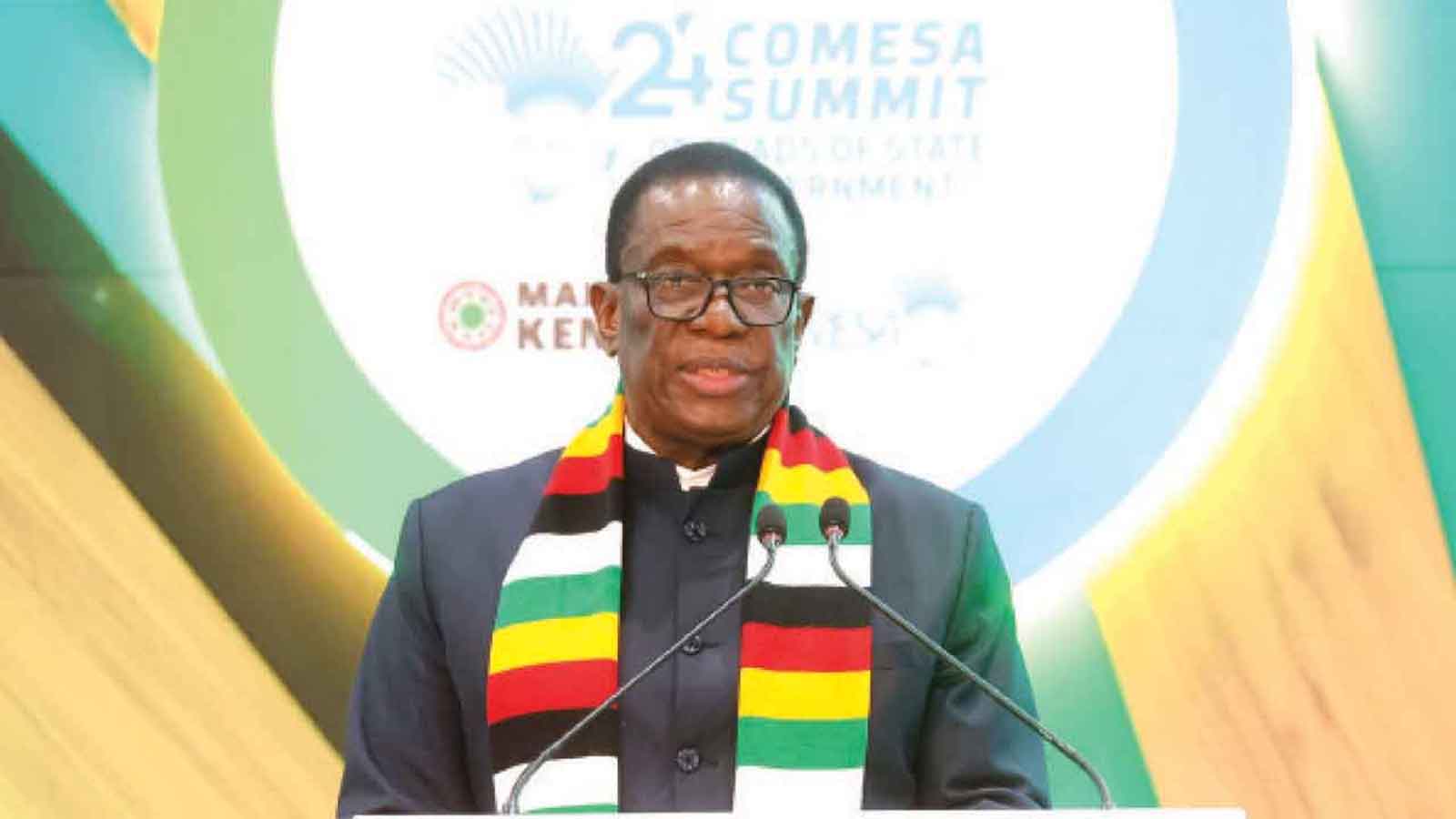
Gibson Mhaka-Zimpapers Politics Hub
ZIMBABWE’s participation at the 81st session of the United Nations General Assembly comes at an important juncture in the country’s international engagement, with Harare preparing to host the 25th Common Market for Eastern and Southern Africa (COMESA) Summit next month.
At first glance, the two events belong to different spheres.
The United Nations is the principal global multilateral platform, bringing together countries from across the world, while COMESA is a regional economic integration bloc.
But for Zimbabwe, the two engagements can be viewed as part of a wider diplomatic and economic continuum using international relations to advance national interests, strengthen regional cooperation and create opportunities for trade, investment and economic development.
This makes the country’s participation at UNGA81 more than an annual diplomatic ritual. It provides an opportunity for Zimbabwe to engage potential partners, articulate its foreign policy priorities and strengthen relationships ahead of assuming a more prominent role in regional integration when it hosts the COMESA Summit in Harare from October 19 to 22.
The 25th COMESA Summit will be held under the theme, “One Market, One Future: Advancing Inclusive Industrialisation, Investment and Regional Integration in COMESA.”
The agenda is expected to cover industrialisation, regional value chains, investment, trade and the state of regional integration.
The timing is, therefore, significant.
The message coming from New York should not end at the United Nations headquarters. It must find expression in Harare when African Heads of State and Government, business leaders, investors, development partners and other stakeholders gather for the COMESA Summit and related business engagements.
This is where diplomacy and economic policy intersect.
Foreign Affairs and International Trade Ministry spokesperson Mrs Philisiwe Chidawanyika said Zimbabwe’s participation at UNGA81 was anchored in the country’s constitutional obligations.
“Zimbabwe’s participation aligns with Section 12 (2) of our Constitution, which mandates the State to promote regional and pan-African cultural, economic and political cooperation and integration through regional and international organisations dedicated to peace, well-being, and progress for the region, continent and humanity,” she said.
Section 12(2) of the Constitution indeed provides for the promotion of regional and pan-African cultural, economic and political co-operation and integration, as well as participation in international and regional organisations dedicated to peace and the well-being and progress of the region, continent and humanity.
In that sense, Zimbabwe’s engagement at the United Nations and its leadership role within COMESA are not separate undertakings.
Both speak to the constitutional requirement for the country to participate actively in regional and international organisations.
But beyond the constitutional obligation lies a practical economic question: how does Zimbabwe convert diplomatic engagement into opportunities for its people and productive sectors?
This is where the theme of UNGA81 becomes particularly relevant.
The theme, “Restoring Trust, Managing Transformation: A United Nations that Delivers for All,” places emphasis on rebuilding confidence in multilateralism while managing changes confronting the international system.
The UN General Assembly President’s programme identifies peace and security, inclusive development, climate action, rights and protection, innovation and inclusive global governance among its priorities.
There is a striking connection between this approach and the agenda Zimbabwe will take into the COMESA Summit.
Trust, transformation and delivery are equally important to regional economic integration.
A regional market cannot function effectively without trust among member states, predictable rules, cooperation between institutions and confidence among businesses and investors.
Likewise, industrialisation cannot be achieved simply by signing agreements.
It requires countries to translate regional commitments into production, investment, infrastructure, value chains, market access and opportunities for businesses.
This is where the phrase “One Market, One Future” acquires practical meaning.
The COMESA Summit theme places inclusive industrialisation, investment and regional integration at the centre of the bloc’s economic agenda. The summit will also provide a platform to discuss regional value chains in sectors including critical minerals, agriculture and manufacturing.
For Zimbabwe, therefore, the diplomatic engagements taking place in New York should complement preparations for the economic conversations that will take place in Harare.
The country has an opportunity to present itself not only as a participant in international diplomacy, but as a potential destination for investment and a partner in regional value chains.
Zimbabwe’s diplomats can open doors, but the productive sectors must ultimately walk through them.
This means linking diplomatic engagements with the needs of manufacturers, miners, farmers, exporters, tourism operators and small and medium enterprises.
For instance, discussions around investment at the international level can be followed by concrete engagements at the COMESA Business Forum, where investors and business leaders will have an opportunity to interact with policymakers and explore opportunities arising from regional integration.
COMESA says the Business Forum, scheduled ahead of the summit, will bring together policymakers, investors, business leaders, development partners and academia to discuss ways of accelerating industrialisation, catalysing investment and deepening regional integration.
This provides an important bridge between diplomacy and commerce.
The value of international engagement is ultimately measured not only by the number of meetings held or statements delivered, but also by what those engagements produce.
Can they help open markets for Zimbabwean products?
Can they attract investment into manufacturing, mining, agriculture, energy and tourism?
Can they facilitate technology transfer and access to finance?
Can they help Zimbabwean companies enter regional value chains?
These are the practical questions that give economic diplomacy its meaning.
The same applies to Zimbabwe’s forthcoming tenure on the United Nations Security Council. Zimbabwe’s two-year term begins on January 1, 2027, providing another platform for the country to participate in discussions on international peace and security.
Zimbabwe is also scheduled to hold the Council presidency in June 2027 under the established rotation.
Mrs Chidawanyika said the UNGA participation would also provide an opportunity to “build trust, strengthen cohesion, and lay the groundwork for Zimbabwe’s upcoming tenure on the UN Security Council”.
That diplomatic responsibility can add another dimension to Zimbabwe’s international profile.
But the broader objective should remain the pursuit of national and regional interests through constructive multilateral engagement.
Zimbabwe’s positions at UNGA81 including peaceful coexistence, the peaceful resolution of disputes, sovereign equality of states, reform of global governance structures, climate action, pandemic preparedness and achievement of the Sustainable Development Goals also speak to the wider development challenges facing African countries.
For a developing economy, these issues are not abstract diplomatic concepts.
Climate change affects agriculture and water security.
Pandemic preparedness affects economic continuity and public health.
Global governance reform concerns the representation and voice of developing countries in institutions that shape international economic and political decisions.
And sustainable development remains closely linked to investment, infrastructure, technology, jobs and improved livelihoods.
It is therefore possible to see a clear line running from New York to Harare.
At the United Nations, Zimbabwe is engaging at the global level on the rules, partnerships and challenges shaping the international system.
At COMESA, the focus shifts towards translating regional cooperation into a functioning market capable of supporting investment, industrialisation and trade.
The two levels can reinforce each other.
The UN provides the broad diplomatic space in which Zimbabwe can strengthen relationships and articulate its interests.
COMESA provides a more immediate regional economic platform through which some of those relationships and policy objectives can be translated into commercial opportunities.
For Zimbabwe, hosting the COMESA Summit should therefore not be regarded simply as another item on the international calendar.
It presents an opportunity to bring the country’s diplomatic, trade and investment objectives into the same conversation.
The Government’s responsibility will be to ensure that the visibility generated through international engagement is followed by practical programmes, while the private sector will need to identify and pursue opportunities emerging from regional market integration.
This is particularly important as COMESA seeks to strengthen regional value chains and deepen intra-regional trade.
The ultimate test of the “One Market, One Future” vision will be whether businesses can actually move goods, services, capital and ideas more efficiently across borders.
Similarly, the credibility of the UNGA81 theme will depend on whether multilateral institutions can demonstrate that cooperation produces meaningful results.
For Zimbabwe, these two conversations converge around one central idea: engagement must produce outcomes.
The journey from New York to Harare is therefore more than a change of venue.
It is a movement from global diplomacy to regional economic implementation.
UNGA81 offers Zimbabwe a platform to strengthen its international relationships and articulate its priorities.
The COMESA Summit offers an opportunity to turn that diplomatic capital into stronger regional partnerships, investment, trade and industrial cooperation.
If those two tracks are effectively connected, Zimbabwe’s participation in the global multilateral system can complement its regional economic ambitions ensuring that diplomacy is not an end in itself, but part of a broader effort to expand economic opportunities and deepen regional integration.