

 admin
admin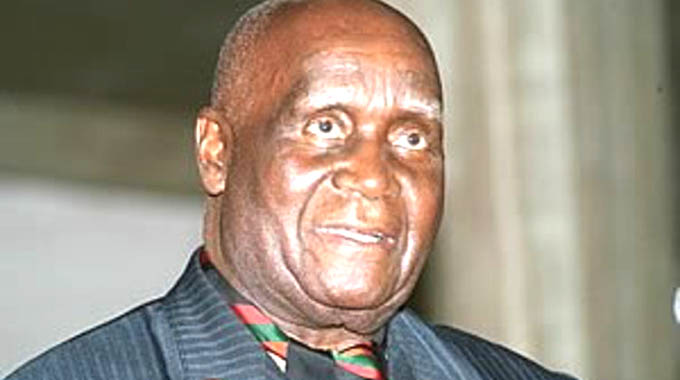
The Herald 6 November 1979
PRESIDENT Kaunda of Zambia and President Nyerere of Tanzania are reported to be ready to fly to London to put pressure on Britain in an attempt to break the impasse at the Zimbabwe-Rhodesia conference over transitional arrangements.
Sources in Dar-es-Salaam say that late last week Mr Robert Mugabe and Mr Joshua Nkomo sent a message to Dr Nyerere. It asked what the Frontline States position would be if the PF (Patriotic Front) stood firm in refusing to accept either a two-month transition, or leaving intact of the Zimbabwe-Rhodesian armed forces, as proposed by Britain.
Dr Nyerere sent a message to them on Friday promising full support for the PF on these issues. He also spoke to the Australian Prime Minister Mr Malcom Fraser, and the Jamaican Prime Minister Mr Michael Manley, on the two points.
Dr Nyerere and President Kaunda are ready to fly to London, but not necessarily on the same time.
These tactics are reported to have been agreed in principle by telephone after Mr Manley had stopped over in London last week. He is known to have telephoned Lusaka and Dar-es-Salaam after seeing British prime minister Margaret Thatcher.
Tanzanian officials are confident that, if necessary, full Commonwealth support could be secured for demands that the interim period should be closer to the six months proposed by the Patriotic Front.
For this reason, Tanzanian officials remain optimistic that despite the current impasse at Lancaster House, Britain, faced with international pressure, will back down on this issue and the talks will be able to move forward.
LESSONS FOR TODAY
Today marks the 57th anniversary of the formation of the Organisation of African Unity (OAU), now African Union. The continental body was a major arbiter in Zimbabwe’s attainment of Independence, 40 years ago.
The Frontline States leadership that included Dr Kenneth Kaunda of Zambia, Mwalimu Julius Nyerere of Tanzania and Sir Ketumile Masire of Botswana, played leading roles in ensuring that the warring parties reached an agreement, that would lead to Uhuru. They were the midwives of the democratic process and remain so through the regional bloc — SADC.
The Lancaster House Agreement was a constitutional agreement crafted not just by the warring Rhodesian parties, but it involved a number of international interests, considering that the Conference was held a few months after the Commonwealth Heads of Government Meeting, held in Lusaka, Zambia during the second half of 1979.
One of the most contentious issues at the talks was the land question. Land was the major bone of contention because whoever had property rights to it had the ability to unlock the country’s economic wealth. But the 2013 Constitution has made it clear that the land reform programme is irreversible.
For historical information contact:
Zimpapers Knowledge Centre at Herald House on:
+263 8677 004323;
+263 0242 795771
E-mail: [email protected]



 Online Reporter