Online Reporter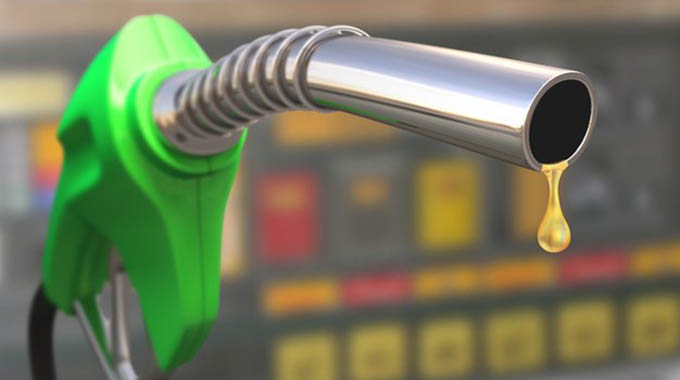
Martin Kadzere, [email protected]
ZIMBABWE’S energy sector recorded a strong performance during the first four months of 2026, driven by an unprecedented surge in diesel, petrol and Liquefied Petroleum Gas (LPG) consumption, signalling intensified industrial production and changing domestic energy use patterns.
Latest sector statistics from the Zimbabwe Energy Regulatory Authority (ZERA) up to April 2026 show that national energy consumption has reached record levels, which analysts attribute to strong growth in the mining, construction and agricultural sectors, alongside a significant household shift towards alternative fuels.
Heavy industrial sectors continue to underpin national fuel demand, with diesel consumption — the primary fuel powering mining logistics, road construction and rehabilitation, and heavy manufacturing — surging to approximately 489,2 million litres between January and April this year, up from 402 million litres during the same period last year.
The four-month usage has already exceeded Zimbabwe’s entire annual diesel consumption for 2010, which stood at 424,08 million litres.
Data shows uninterrupted monthly growth since the turn of the year, beginning at 100,7 million litres in January.
This marked the first time monthly diesel demand crossed the 100 million litre threshold.
Volumes rose steadily to 109,4 million litres in February and 128,6 million litres in March, before reaching an all-time monthly record of 150,5 million litres in April 2026.
Analysts say the sharp increase in diesel consumption reflects productive utilisation, particularly within Zimbabwe’s transport-intensive economic structure, where road freight dominates the movement of mineral outputs and construction materials.
At the same time, consumer and commercial mobility have maintained equally strong momentum.
National petrol demand during the first four months of 2026 stood at 216,5 million litres, up from 175 million litres over the corresponding period in 2025.
The four-month total has already surpassed the country’s entire annual petrol consumption for 2009, which stood at 208,34 million litres.
Petrol consumption opened the year at 52 million litres before surging to a record-breaking 62,12 million litres in February — the highest February consumption level recorded in the entire 18-year dataset.
Although March eased slightly to 49,53 million litres, April 2026 rebounded strongly to close at 52,83 million litres.
Fuel consumption is widely regarded as a reliable barometer of productive economic activity, with sustained high intake levels often signalling growth across key sectors of the economy.
According to analysts, the current trajectory points to a rapidly expanding national vehicle fleet and sustained commuter demand, building on the momentum established in 2025 when annual petrol consumption reached an all-time high of 712,9 million litres.
Despite the escalating conflict in the Middle East, which has triggered global supply disruptions and pushed international fuel prices up by more than 30 percent, Zimbabwe’s domestic fuel consumption has remained resilient.
Both fuel products posted substantial month-on-month increases, with national petrol usage rising by 6,7 percent in April compared to March, while industrial diesel consumption surged by 17 percent, defying the global energy shocks that have persisted since the outbreak of conflict in February.
Zimbabwe National Chamber of Commerce (ZNCC) chief executive officer Mr Christopher Mugaga acknowledged that while rising fuel consumption reflected increased economic activity and a growing number of vehicles on the roads, other critical factors were also driving demand.
“This trend should not be attributed solely to increased economic activity. For diesel, we must remember that persistent power outages have forced companies to rely heavily on generators for backup power, which consumes vast amounts of fuel and significantly drives up demand,” Mr Mugaga noted.
He added that geopolitical tensions had also influenced local market behaviour.
“The reason volumes have sustained despite the crisis in the Middle East is that companies have likely taken strategic positions to stock up on fuel, fearing imminent supply chain disruptions.”
Economic analyst Mr Enoc Musara said another major factor sustaining high fuel consumption was the expansion of mechanised agriculture.
“The accelerated adoption of farm mechanisation has fundamentally altered the sector’s energy profile. As more farmers transition to mechanised tillage, combine harvesting, and localised irrigation networks to secure yields, agriculture has emerged as a key driver of diesel consumption.”
Alongside the liquid fuel boom, the LPG industry has evolved from an emerging fallback option into a mainstream energy pillar.
Driven by years of electricity grid constraints and a deliberate shift towards cleaner alternative energy sources, annual LPG consumption has surged by 580,2 percent over the past decade.
Figures show that annual gas demand rose from 19,78 million kilogrammes in 2015 to 134,54 million kilogrammes in 2025, with volumes nearly doubling between 2024 and 2025 alone.
The strong growth momentum shows no signs of slowing, with Zimbabweans consuming a staggering 43,4 million kilogrammes of gas between January and April 2026.
Remarkably, the country consumed more LPG during the first four months of 2026 than it did during the entire 12 months of 2020.
April 2026 alone recorded a substantial 13,1 million kilogrammes, establishing a strong baseline ahead of the high-demand winter heating season.
Data also shows that after reaching 90,1 million litres in 2016, annual paraffin demand collapsed to just 1,5 million litres by the end of 2025, largely due to widespread consumer migration towards LPG.
The downward trend continued firmly into 2026, with the country recording zero consumption in both January and March before posting a modest 163 684 litres in April, bringing the cumulative four-month total to just 203 364 litres.
This confirms that paraffin has effectively been reduced to a niche fuel largely reserved for specific industrial applications.
Meanwhile, cumulative four-month volumes of Jet A1 fuel reached 29,5 million litres.
Analysis shows that after rising from 27,19 million litres in 2015 to a pre-pandemic peak of 75,14 million litres in 2018, the aviation sector suffered a severe contraction due to global travel restrictions before staging a significant post-pandemic recovery that culminated in a record 95,2 million litres in 2024.
Although annual volumes moderated slightly to 85,3 million litres in 2025, the strong start to 2026 — characterised by a monthly peak of 8,8 million litres in January, a slight seasonal slowdown through February and March, and a rebound to 7,9 million litres in April — reflects sustained international flight frequencies, expanding domestic tourism and increased regional commercial air traffic.