admin
admin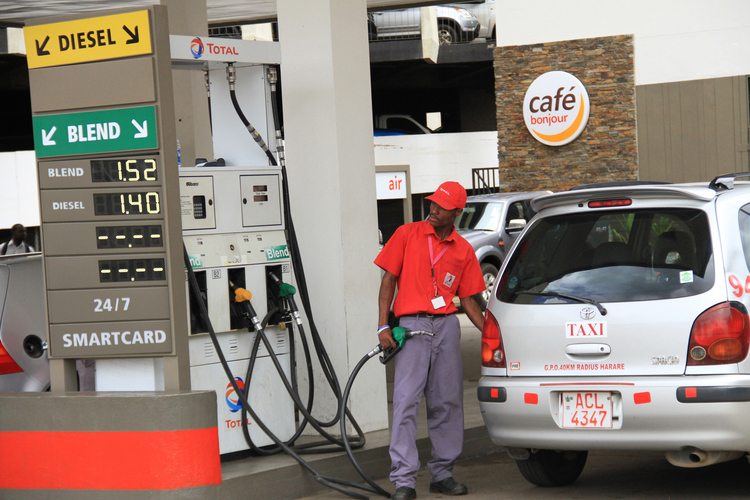
Zimbabwe is on the verge of adopting a raft of recommendations aimed at bringing sanity to the petroleum sector where pricing formulas have been shrouded in secrecy.
The country recently embarked on a study to ascertain the pricing model of local petroleum products with an aim to formulate a pricing policy that ensures that customers are not ripped off.
Experts are said to have concluded their research and are preparing a report that is expected to be finalized before the end of this month. The preliminary report was initially expected at the end of October.
Last week, Zimbabwe Energy Regulatory Authority (Zera) chief executive officer, Engineer Gloria Magombo told The Sunday Mail Business that the delay in publishing the preliminary report had been due to the desire to allow more participants “from across the country to submit their responses to the consultant”.
“As such, the date for publishing the preliminary report of the survey was extended, with the report now expected around mid to end of December 2015.
She said after the presentation of the report, a stakeholders’ workshop would be held to explain the pricing models.
“A stakeholder workshop will be convened to share the report during the first quarter of 2016,” said Eng Magombo.
The Authority hired a South African consulting company – Genesis Analytics – to conduct the study in September this year following an outcry by consumers who felt cheated.
Late last year, motorists and Government were outraged when international fuel prices plummeted by 40 percent between June and December, but without a reduction of the cost of local petroleum.
With huge fuel price differentials of up to 10c per litre, Government reacted by saying that the country’s petroleum sector was distorted.
Market watchers weighed and said that there were cartels manipulating prices in the industry.
During the launch of the petroleum pricing study in September, the permanent secretary in the Ministry of Energy and Power Development, Mr Partson Mbiriri said Government was unhappy that when fuel prices went down on the international market, the benefit was not quickly transferred to local consumers as it happens when prices trek upwards.
Fuel prices were higher in Harare and fairly cheaper outside Harare when the product is stored in Msasa, Harare, meaning there were less transport costs incurred.
Government said it expected fuel prices to be two cents or three cents higher in locations further away from Harare because of the higher costs arising from longer distribution distances from Msasa.
Mr Mbiriri said some players were using their “significant influence” to hold fuel prices at “artificially higher levels” when they “know that it is feasible” to lower the prices of their fuel even by as much as seven cents per litre.
The price distortions has seen Government ordering petroleum industry players to reduce petrol and diesel prices by seven cents and five cents respectively, as a way of addressing the economic variables that directly impact on the country’s competitiveness.
Petrol prices are currently pegged at between US$1,29c and US$1,34c per litre, down from a high of US$1,51c.
Diesel is trading at between US$1,07c and US$1,18c.
According to the pricing policy, applicable profit margins for fuel wholesale and retail are now 6c per litre instead of the seven percent that was operational.
The existing pricing policy, contained in Statutory Instrument 100 of 2015 titled “Petroleum (Fuels Pricing) (Amendment) Regulations 2015 (No.2)”, brings Zimbabwe at par with its regional peers.
Meanwhile, Eng Magombo said the fuel industry has generally remained stable on the back of low crude oil prices on the international market.
She added that given the stability between September and November 2015, fuel prices are not expected to change significantly in the near future.
A barrel of crude oil was going for US$41,56c as of last week, with estimates suggesting prices will rise to US$47 a barrel in the next 12 months.


 Online Reporter