admin
admin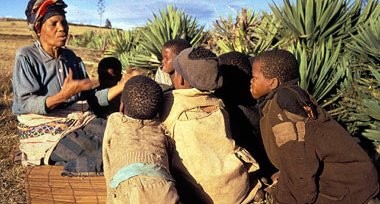
Friday Lessons with Sir Mwanyisa
Greetings learners, parents and guardians!
Welcome to your Visual and Performing Arts weekly lessons brought to you by your favourite newspaper, The Manica Post.
Learners are expected to have an exercise book and a pen to write the work given as exercises.
Parents or guardians are encouraged to assist learners with special needs.
This week our topic is on pre-colonial theatre of southern Africa.
Have you ever imagined how our ancestors entertained and educated their young children?
The period before colonisation is called pre-colonial.
There were many forms of theatre, including story-telling.
Let us look at pre-colonial theatre.
The word theatre is used to refer to the activity of writing, performing or organising plays and performances.
You should take note of the fact that the same word is also used to refer to a place or building used for performing plays.
During the pre-colonial era, traditional communities engaged in various forms of theatre.
Theatre formed part and parcel of their culture.
Southern African communities practiced story-telling, song and dance.
Story-tellers were skilled people, usually the elderly.
Stories were told by elders during the evening, especially after harvest.
The stories would be as real as possible.
The stage for story-telling was a natural home setting.
Several stories were told, including folk tales, tragedy, comedy and tragicomedy.
The messages behind the stories were very important.
Let us go through some of the functions of story-telling in pre-colonial Zimbabwe.
Outlining taboos
A taboo is an act that is socially unacceptable in a given culture.
Taboos were important because they were set to help people to be morally upright.
Children were taught to respect the environment and conserve resources.
Some taboos are still being observed today, for example, marrying a relative, paying lobola in November and so on.
Entertainment
A common function of story-telling was to entertain the audience.
The verbal and non-verbal means of communication made stories more interesting and entertaining.
Character building
Stories were also told to change the way people think and behave.
In this way, stories helped in teaching, moulding and encouraging realistic thinking about different situations.
Language development
Part of story-telling was done to equip the young with specific language skills.
The young would acquire language competence through listening to stories.
Here, voice projection, diction, pace and volume was explored.
Passing on history
One way of keeping history and heritage was through story-telling.
The people would know about their past through family stories handed down from generation to generation.
Here is a task for learners to complete.
Allow learners to discuss, use textbooks and online platforms to research.
(i) What is a taboo?
(ii) State two examples of taboos not mentioned in this lesson.
(iii) List three functions of story-telling?
(iv) Name two traditional ceremonies that formed traditional theatre.
(v) Who is a narrator in story-telling?
(vi) What is the main message in a story called?


 Online Reporter