admin
adminAt the just ended meeting of ACP Ministers of Culture, it was indicated that there were responses from Southern African countries to the 9th European Development Fund call which closed at the end of last month.
Cited as one of the reasons for the absence of responses from the sub-region is the poor communication between government departments that receive these calls and that attend the ministerial meetings of ACP-EU and the cultural operators especially cultural institutions and cultural industries.
For the 10th EDF €14 million is expected to be dispersed to the successful project proposals.
A very critical aspect of this fund is the priority given co-operation project proposals.
That is why projects that get funded are often referred to as co-operation projects. Critically, therefore, is the understanding by applicants of this co-operation dimension.
In order to ensure that cultural operators, cultural organisations and institutions appreciate the nature of the ACP-EU support programme for the ACP culture sector, the call for proposals has spelt out the following as the objective of the support programme:
l Reinforcing the creation and production of cultural services and goods in the ACP states through an approach integrated with distribution networks
l Building the capacities of the culture sector professionals in the ACP states
l Improving the regulatory environment of the culture sector in ACP states
l Supporting an increased access to local, intra-ACP, European and international markets for the cultural goods and services of the ACP states
It is crucial to point out that applying for European Development Fund is a very demanding exercise.
Completing the 31-page application form demands time and consultation of several documents associated with specific cultural industry programmes or activities.
The Fund will, for example, require evidence that organisations applying for funding were set up by Acts governed by national laws of the countries concerned.
In this respect any legal entity whose statutes have been established in another country cannot be considered an eligible local organisation.
The sight of the application form can be intimidating.
The information required — detailed nature of the budget proposals and implementation timeframes are more complex than those required by many grants-making foundations which have supported many cultural groups and institutions.
This is why well-established cultural institutions, public cultural organisations dealing with cultural industries such as parastatal organisations are encouraged to apply.
In fact information from the application form shows the following categories of organisations that are eligible to apply: professional or industrial organisations, cultural organisations, networks, associations, federations, universities, local authorities, media organisations, commercial organisations research institutes, decentralised representatives of sovereign states, trade unions.
It is vital that those cultural operators, cultural entrepreneurs and cultural industrialists wishing to respond to the 10th EDF call for proposals obtain the details from : www.acpculturesplus.en/2012 calls for proposals. Those wishing to obtain applications forms should consult the website of the European Commission’s Director-General for Development and Co-operation Europe Aid.
Feedback: [email protected]


Online Reporter
- Herald
- August 1, 2026
- 128 views
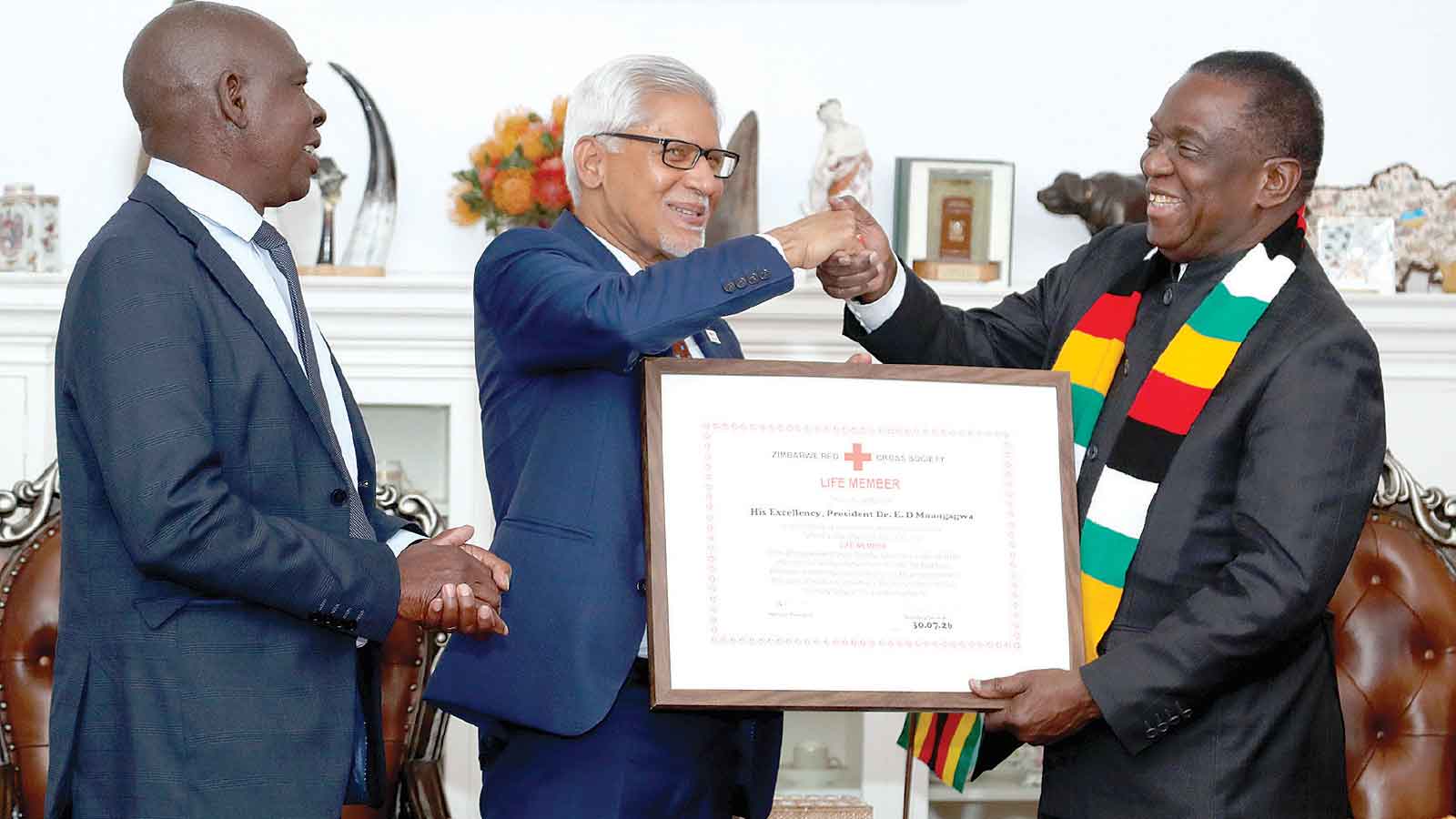
President honoured . . . Recognised as Outstanding Humanitarian by Red Cross
Wallace Ruzvidzo Herald Reporter President Mnangagwa has been recognised as an outstanding humanitarian by the Red Cross and has since successfully fulfilled all requirements to qualify as a Life Member…