admin
admin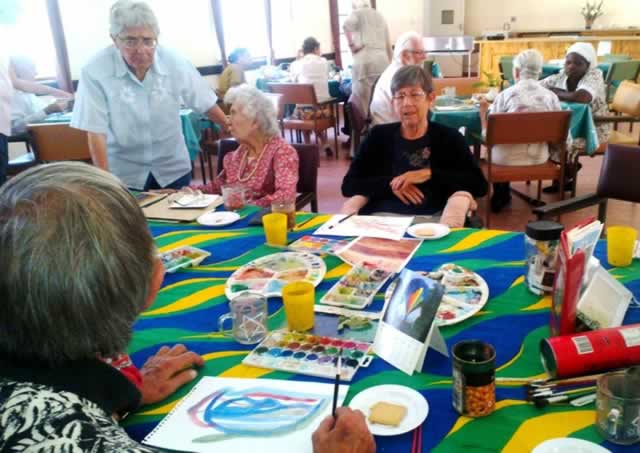
At The Gallery
Most Zimbabwean schools do not have art as a subject being offered either at primary or at secondary school level and to that extent, the few schools that pursue art as a subject are often lacking in terms of skilled instruction a proper syllabus and general support for the subject.
This is based on the belief that the pursuit of art in education will only be consummated as failure in life. This view however is wrong as art is the basis of creativity and the industry that goes with it.
The National Gallery of Zimbabwe’s Education Department implements its outreach programme as a way of reaching out to all outlying schools that are not able to access the National Gallery of Zimbabwe in Harare, Bulawayo or Mutare and do not have the financial resources set aside to make such visits. The goal is part of the National Gallery of Zimbabwe’s mission to uphold visual literacy and only through education of the general public can this objective be fulfilled.
The visions of the outreach programme falls under the National Gallery of Zimbabwe’s vision to bring visual literacy to underserved communities. There is an aim to enlighten these special interest groups such as rural schools, children’s homes and institutions for the disabled so that they are not excluded from the business of art and they can equally participate in art as a career as it provides life sustaining opportunities.
The outreach programme also uses art as a therapeutic tool as it serves as a means of expression for the participants.
The foundations of the outreach programme are set in the engagement of different stakeholders in the education sector such as Provincial Heads, Education Officers and teachers to understand the underlying benefits that come with instructing their students in art. The programme uses a multiplicity of variables such as health, social circumstance and talent to offer all beneficiaries of the programme a means of expression through art.
Teachers in remote locations are usually unequipped as to instructing art as a subject or even a pastime and so are furnished with important theoretical orientation aids such as the curriculum and creating art from practicing artists who team up with the National Gallery of Zimbabwe’s School of Visual Art and Design instructors so as to tutor the children in various techniques that are fundamental to art education.
The students form the most important factor in the equation as their reaction to a subject that is based on manual proficiency and creativity is a natural way for them to communicate.
The programme has visited schools and organisations such as Bindura Primary School, Good Shepherd Children’s Home and the Zimbabwe Alzheimer’s and Related Disorders Association’s Nazareth House where the interactions were successful. The children responded positively to the lessons provided and are constantly in touch in relation to assistance and resources for continuing their art education development programmes.
The outreach programme has also become instrumental in developing Zimbabwe’s artistic talent as from all visits a master list is created from visits to schools from which to select works for the National Gallery of Zimbabwe’s Tavatose/Sisonke Schools and Colleges Exhibition.
And as seen at last year’s first exhibition, school’s that were formerly sidelined in art now have the opportunity to exhibit in the country’s highest art institution. The creativity shown by schoolchildren in the Tavatose/ Sisonke Schools and Colleges Exhibiton gives the cause a greater purpose in the long run.
This year the Tavatose/Sisonke Schools and Colleges Exhibition will be running under the theme Celebrations with Mbira offering a platform for school children to contribute to the arts industry in their own language (drawing, painting, photography and three-dimension works) lending their voices to the crusade for popularising the Mbira. This exhibition provides schoolchildren from all over Zimbabwe with an opportunity to showcase works of art featuring different Mbira in terms of how they differ in the number of keys or tongues on each instrument.


 Online Reporter