

 admin
admin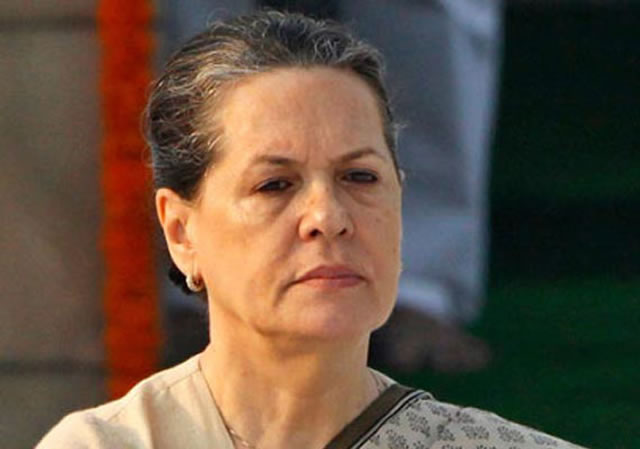

INDIA’S Sonia and Rahul Gandhi, leaders of India’s defeated Congress party, offered to resign yesterday after last week’s election debacle, but colleagues rebuffed their offer, a senior party figure said.“They both offered to resign but the party rejected it unanimously,” member of parliament Amarinder Singh told reporters after a meeting of the Congress’ top committee in New Delhi.
The Press Trust of India reported that the Congress Working Committee passed a unanimous resolution “expressing full faith in the leadership of Sonia Gandhi and Rahul Gandhi” after the meeting broke up.
The mother and son, members of South Asia’s most famous political dynasty, are facing unprecedented pressure from grassroots party workers and defeated ex-MPs over their failed campaign tactics.
Congress slumped to its worst poll result ever last Friday, winning just 44 seats in the 543-member parliament — less than a quarter of its tally in 2009 — as the opposition Bharatiya Janata Party swept to power with a landslide win.
Sonia, the 67-year-old Congress president, entrusted campaigning to vice president Rahul, whose lacklustre performance failed to convince voters that the party deserved a third term in power.
The defeat has raised questions over whether the dynasty can retain its grip over the left-leaning party which has produced three prime ministers and has run India for most of its post-independence history.
Meanwhile, India’s prime minister-elect Narendra Modi has taken to Twitter to thank fellow leaders in Japan, Russia, Sri Lanka, Nepal and Australia for their support, but one man still waiting for a reply is US Secretary of State John Kerry.
While Canadian Prime Minister, Stephan Harper has had two mentions and Russian President Putin received warm words yesterday, Modi has conspicuously made no reference at all to the leaders of the world’s most powerful democracy.
Washington, along with European powers, boycotted the 63-year-old for a decade and denied him a visa over religious riots that erupted in 2002 during his tenure as chief minister of Gujarat state.
Kerry tweeted congratulations to Modi on Friday after a landslide win for his Hindu nationalist Bharatiya Janata Party, saying he looked forward to “growing shared prosperity and security”.
President Barack Obama telephoned Modi, a keen user of social networks, but is yet to comment in person. He had warm words for his predecessor on Saturday, however.
As Manmohan Singh left office after 10 years in power in New Delhi, Obama called to tell him that there were “very few people in public life that I have admired or appreciated more”.
Modi has displayed no rancour publicly about his treatment by Washington, telling an interviewer earlier this month that foreign relations “should not and cannot be influenced by incidents related to individuals”.
But analysts are looking closely at how the world’s biggest democracies embrace each other with Modi in charge and following a highly damaging spat over the arrest of an Indian diplomat in New York in December.
Modi, writing on Twitter to his 4,2 million followers, addressed a message to Russian President Putin yesterday saying that he looked forward “to making our relations with Russia even stronger in the years to come.”
Japanese premier Shinzo Abe meanwhile was thanked for his good wishes, as were the leaders of Spain, Germany and France.
“Personally, I have a wonderful experience of working with Japan as CM (chief minister). I am sure we will take India-Japan ties to newer heights,” Modi wrote yesterday.
Spokespeople for Modi and colleagues in his Bharatiya Janata Party either declined to comment or were unable to speak when contacted by AFP.
With the West boycotting him, Modi made repeated trips to East Asia and diplomats say Modi may pay an early visit to Japan to meet Abe, a fellow nationalist elected on a platform of economic revival.
Modi was chief minister of Gujarat in 2002 when anti-Muslim riots broke out, leaving about 1,000 people, mostly Muslims, dead. — AFP.


 derick.khumalo
 Online Reporter