

 Online Reporter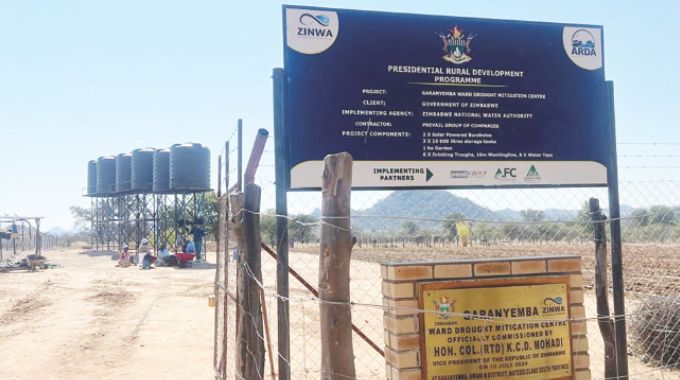
Sukulwenkosi Dube-Matutu, [email protected]
THE Garanyemba community in Gwanda District is banking on its drought mitigation centre to cushion households and protect livestock as Zimbabwe braces for a predicted El Niño weather phenomenon during the 2026/27 agricultural season.
Established in 2024 as a pilot project under the Government’s livestock drought mitigation strategy and Village Business Unit (VBU) programme, the centre has already transformed livelihoods by ensuring reliable water supplies, sustaining food production and protecting livestock during prolonged dry spells.
The initiative is now being hailed as a practical model for building climate resilience in drought-prone communities, with calls for its replication across the country and the Southern African region.
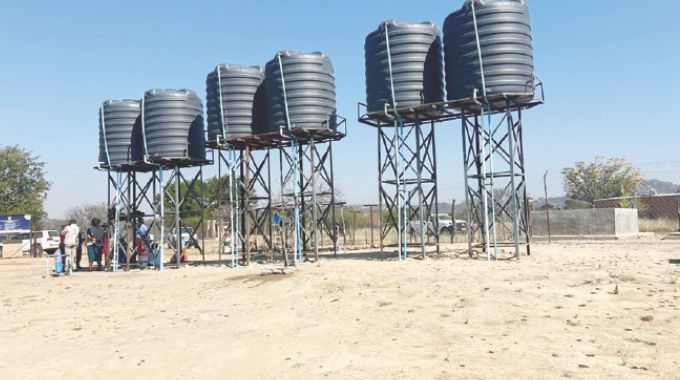
Built around Garanyemba Dam, the drought mitigation centre combines solar-powered boreholes, a two-hectare nutrition garden, livestock watering facilities, supplementary feeding troughs and cattle sale pens to support both crop and livestock production throughout the year.
The project aligns with the Government’s broader climate adaptation strategy aimed at strengthening food security and building resilient rural economies in line with Vision 2030 and the National Development Strategy 2 (NDS2).
Garanyemba Drought Mitigation Centre chairperson, Mr Mlamuleli Ndlovu, said the project had proved invaluable during the devastating 2024 drought, enabling families to safeguard their livelihoods.
“This project really helped us during the 2024 drought and it really helped us to preserve our animals. We are still proud owners of cattle, goats and donkeys as a result of this project,” he said.
“We were growing a variety of crops and after harvesting we would feed our animals. Government really came through for us and assisted us with stock feed and hay. We were getting some of the stock feed for free and some of it at a very low cost.”
Mr Ndlovu said without the intervention, many farmers would have been forced to spend large sums on commercial livestock feed or lose their animals altogether.
“Ordinarily we would have to fork out a lot of money to buy commercial feed. With the anticipated 2026/27 drought, we have started preparing to ensure that we can beat this phenomenon.
“While Government might assist us, the crops that we will produce will benefit our families and also our animals,” he said.
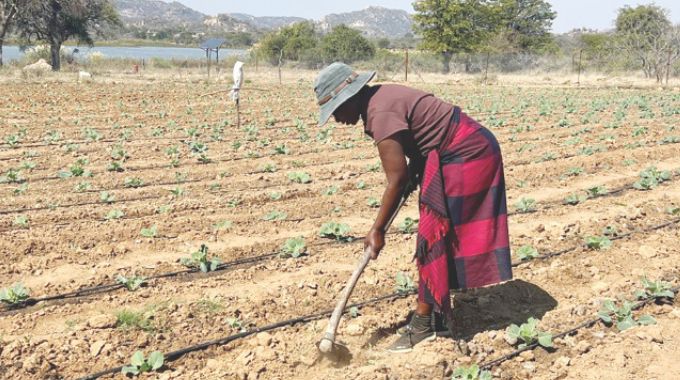
Besides livestock production, members are cultivating maize, cabbage and chomolia in the nutrition garden, improving household food security while generating income from surplus produce.
Committee member Ms Esnart Nkomo said the project had become an important source of both nutrition and income.
“The horticulture garden has assisted us with food for our families and income. We sell some of the produce within the community while traders also come to buy vegetables in bulk,” she said.
The project has 38 members and has also improved access to clean water for surrounding households.
During a visit to the centre on Tuesday, World Food Programme (WFP) deputy country director Mr Billy Mwiinga commended Government for adopting the Village Business Unit model, describing it as an effective approach to strengthening community resilience against climate shocks.
He said the organisation was shifting from emergency food assistance towards building sustainable livelihoods.
“As WFP, we have been assisting the food-insecure population on an annual basis. We have realised that this is not sustainable. We are now looking at a holistic approach to food security and resilience by addressing the entire food system,” said Mr Mwiinga.
“Where there is land, water, infrastructure and a market, communities can thrive. Going forward, our emphasis will be on strengthening these three building blocks. We want to see how we can support some of these Village Business Units that Government has established.”
Mr Mwiinga said the visit also provided an opportunity to engage communities and identify areas where WFP could help ensure the long-term sustainability of the projects.
He said the programme complements the National Development Strategy 2, which prioritises food security, climate resilience and environmental protection as key pillars of national development.
Agricultural Rural Development and Advisory Services (ARDAS) provincial director for Matabeleland South, Mrs Shupikai Sibanda, said Government deliberately established the first ward drought mitigation centre in Garanyemba because of the province’s vulnerability to recurring droughts.
She said the intervention had significantly improved livelihoods and inspired neighbouring communities to establish similar projects.
“We have seen progress and an improvement in livelihoods. These Village Business Units and drought mitigation centres are bringing income, improving food supplies and transforming communities,” she said.
“In Garanyemba, villagers have even gone a step further by establishing additional nutrition gardens nearby. We appreciate what Government is doing to change lives and gradually realise Vision 2030. We also value the support of partners such as WFP, which has established five Village Business Units across five districts in Matabeleland South.”
The success of the Garanyemba project comes as Government intensifies preparations for the 2026/27 summer cropping season following forecasts by the Meteorological Services Department indicating a high probability of an El Niño event.
Government has urged farmers to adopt drought-tolerant crops, expand fodder production, strengthen water harvesting and embrace climate-smart agricultural practices to minimise the impact of below-normal rainfall.


 Bongani Ndlovu