Online Reporter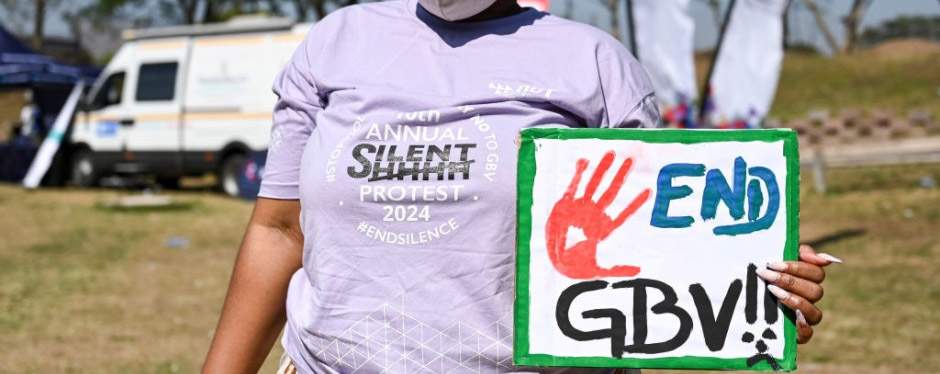
Tendai Gukutikwa
Health Reporter
THE scourge of Gender-Based Violence (GBV) leaves scars that extend far beyond bruises and broken bones, carving deep and often invisible wounds into the minds of survivors, a Mutare-based psychotherapist has warned, as churches increasingly step forward to offer refuge, healing and hope.
Speaking in an interview following a GBV awareness event held in the city recently, Dr Mazvita Machinga said trauma, anxiety and depression remain some of the most common and devastating consequences of GBV, yet they are frequently overlooked in favour of physical injuries.
“GBV causes deep mental health wounds. These are wounds you cannot always see, but they shape how a person thinks, feels and lives. Trauma, anxiety and depression are not side effects – they are central outcomes of violence,” said Dr Machinga.
Partnered with the Zimbabwe Council of Churches (ZCC), Psychotherapy Care and Counselling Services commemorated the final day of the 16 Days of Activism Against Gender-Based Violence.
The campaign ran from November 25 to December 10, linking the International Day for the Elimination of Violence Against Women to Human Rights Day – reminding many that GBV is not just a domestic or social issue – but a human rights violation.
Dr Machinga said survivors of GBV often present with psychological distress that can persist for years if untreated, affecting their ability to work, parent, trust and even worship freely.
“In our work, we see survivors who live in constant fear, who struggle to sleep, who relive their trauma daily. Some develop severe anxiety. Others fall into depression. Many blame themselves.
“These mental health injuries can be lifelong if society turns away,” she said, adding that one of the biggest barriers to healing remains silence, both within families and communities.
“Violence thrives in silence. When we tell survivors to keep quiet to protect families, reputations or institutions, we are protecting the violence, not the victim,” said Dr Machinga.
It is within this context that churches, she said, are emerging as critical partners in mental health and GBV response, particularly in communities where faith institutions are trusted and accessible.
“Churches play a pivotal role. They are places where people already go when they are broken, confused or searching for meaning. That makes them natural spaces of refuge and healing,” said Dr Machinga.
She said Psychotherapy Care and Counselling Services, works closely with churches because they provide more than physical shelter – offer emotional safety and moral grounding.
Dr Machinga said faith leaders are also uniquely positioned to challenge harmful beliefs that normalise violence or silence survivors.
“Sometimes violence is justified using culture or even scripture. That is why churches must be part of the solution, teaching respect for human dignity and rejecting any message that excuses abuse,” she said.
Beyond supporting survivors, she said churches are also contributing to the reformation of perpetrators, an often neglected aspect of GBV response.
“If we only focus on survivors and ignore perpetrators, the cycle continues.
“Churches can help perpetrators confront their behaviour, take responsibility and change,” she said.
The event, organised in partnership with ZCC, brought together representatives from over 25 denominations.
Dr Machinga said partnerships between mental health professionals and faith institutions are essential in a country where access to psychological services remains limited.
She said at Victoria Chitepo Provincial Hospital and through her counselling services, she continues to see a steady flow of GBV survivors in need of trauma therapy.
She stressed that early intervention can make a significant difference.
Dr Machinga urged the public to learn the signs of GBV and psychological distress and to act rather than look away.