Chronicle Editor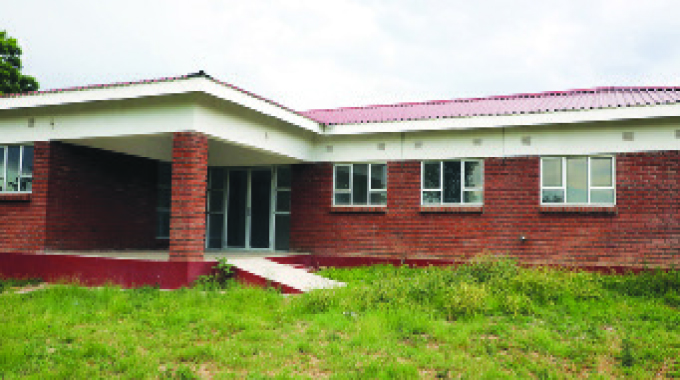
Sikhumbuzo Moyo, [email protected]
THE One-Stop Centre for Gender-Based Violence (GBV) survivors, located at Mpilo Central Hospital in Bulawayo, is set to open its doors to the public in the first quarter of next year.
The facility, which is 95 percent complete, is expected to help address the prevalence of abuse, especially sexual offences in the southern region.
Championed by the Government and its partners, the facility will improve the reportage of cases, enhance justice, and help survivors access legal and medical help as well as counselling.
Before its establishment, GBV survivors were being served from one of the wards within the hospital and not all services were available, which frustrated the victims.
Beneficiaries will also enjoy privacy as they will no longer need to go through hospital processes to access necessary services after being abused.
This comes at a time when Zimbabwe recently joins the rest of the world in commemoration the 16 Days of Activism Against Gender-Based Violence, which started from November 25 (International Day for the Elimination of Violence Against Women) until December 10, Human Rights Day.
This year’s commemorations ran under the theme; “Unite, Invest to Prevent Violence against Women and Girls.”
Official estimates indicate that nearly 40 percent of Zimbabwean women have experienced either physical or sexual violence at some point in their lifetime.
It has also been reported that one in three of these women experienced physical or sexual violence before reaching the age of 18.
Globally, an estimated 736 million women — almost one in three — have been subjected to physical and/or sexual intimate partner violence, non-partner sexual violence, or both, at least once in their life.
In Zimbabwe, Government remains committed to ending GBV in all its forms and efforts are being put in place to ensure that prevention and response services are available to everyone.
The One-Stop Centre will be run by the Ministry of Women Affairs, Community, Small and Medium Enterprises Development.
The acting Bulawayo provincial development officer in the Ministry of Women Affairs, Community, Small and Medium Enterprises Development, Mr Clayton Mharadzino said the centre will enable authorities to provide all the required services under one roof.
“We are going to house the ZRP Victim Friendly Unit, and someone who provides counselling services. The whole idea is that some of our GBV victims are not comfortable with just walking to the hospital or police,” he said.
“When they walk into a one-stop centre they are assured of professional support. If you take a GBV victim straight to a hospital, they might not feel comfortable to be seen by so many people.”
Mr Mharadzino an administrator employed by the ministry will be stationed at the centre while other service providers will be catered for by their own organisations.
“We expect to open the centre sometime during the first quarter of next year. The building has since been electrified and what is left is to finish plumbing,” he said.
The Bulawayo One-Stop Centre brings to eight the total number of such facilities established in seven provinces across the country.
Official statistics indicate that 1 511 women were assisted in 2021. The one-stop centres were classified as essential services at the height of Covid-19, and they continued to offer services to survivors during lockdowns.
Government also ran mobile one-stop centres as a way of bringing the services closer to the people.
Bulawayo Provincial Affairs and Devolution permanent secretary Mr Paul Nyoni said GBV has become a common problem in the country with most cases not being reported.
“The one-stop GBV intervention centre resolves that problem. Survivors and their families will visit a one-stop centre and receive all the services such as counselling, police and medical assistance. It is a very significant intervention by Government and other stakeholders,” he said.
Forms of GBV include intimate partner violence, sexual violence, child marriage, female genital mutilation, trafficking for sexual exploitation and female infanticide.
Girls and women may also experience GBV when they are deprived of nutrition and education.
In the past, GBV survivors were silenced due to costs associated with making reports, which gives perpetrators a way to continue abusing victims.



 Online Reporter