Judith Phiri [email protected]
ZIMBABWE’S economy has more than doubled in size since 2017, with nominal Gross Domestic Product (GDP) projected to reach US$66.4 billion this year and US$69.1 billion in 2027, Finance, Economic Development and Investment Promotion Minister Professor Mthuli Ncube has said.
The expansion has been driven by recoveries in agriculture, particularly tobacco, wheat and cereals, as well as strong performance in mining, including lithium, gold and platinum.
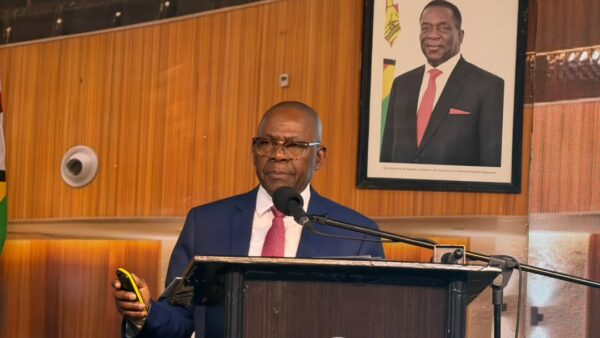
Speaking at the 2027 National Pre-Budget Seminar in Bulawayo on Wednesday, Prof Ncube said the growth reflected a significant expansion in economic activity and provided a foundation for the country’s long-term development ambitions.
He said Zimbabwe was also making progress towards attaining upper-middle-income status, having reached about 88 percent of the Gross National Income (GNI) per capita target of US$4 636.
According to the World Bank, the country’s GNI per capita is currently estimated at US$4 070.
“This is encouraging progress, but the remaining distance reminds us that our task is not simply to grow the economy in size. We must also deepen productivity, expand opportunities, create decent jobs and ensure that rising national income improves the livelihoods of ordinary Zimbabweans,” he said.
Prof Ncube said economic growth in 2025 was broad-based, with agriculture expanding by 27,9 percent, electricity supply by 14,9 percent, transport and mining by 10,4 percent each, while manufacturing grew by 5,1 percent.
He attributed the performance to improved energy supply, recovery from drought and strong export earnings.
Agriculture remains central to the country’s development ambitions because of its contribution to food security, employment, rural livelihoods and industrial development.
“In 2025, the sector rebounded strongly, recording growth of 27.9 percent. This recovery was supported by climate-smart farming practices under the Pfumvudza/Intwasa programme, alongside Government input support.
“Tobacco was among the notable performers during the year, with deliveries reaching 359 million kilogrammes by the end of September 2026. This performance highlights the continued importance of tobacco to agricultural output, export earnings and rural incomes,” he said.
Prof Ncube said the agriculture sector was projected to grow by five percent in 2026 but could face setbacks in 2027 due to the anticipated Super El Niño weather phenomenon, which is associated with an increased risk of drought.
To prepare for possible drought conditions, Government has adopted the 2026/27 Agric 6-Pillar Drought Plan, which includes strengthening the Strategic Grain Reserve and developing artificial intelligence-powered silos to build a reserve of 600 000 metric tonnes by October 2027.
The plan will involve purchasing grain from the 2025/26 summer harvest, the 2026 winter harvest and the 2027 winter harvest.
Prof Ncube said the strategy would also accelerate irrigation development and promote summer irrigated cereal production, alongside climate-proofing the Presidential Input Programme under Pfumvudza/Intwasa.
Financing would be mobilised through the National Enhanced Agriculture Productivity Scheme (NEAPS), the Agricultural and Rural Development Authority (ARDA), the private sector and self-financed models.
He said the plan also provided for increased imports, with households permitted to import basic goods until March 2028, while private-sector players could import cereals for food and animal feed.
On livestock drought mitigation, Prof Ncube said the measures would focus on ensuring adequate grazing and water for animals, strengthening early-warning systems and improving coordination with farmers and traditional leaders, including village heads, headmen and chiefs.
“Our approach is anticipatory, not reactive. A Super El Niño does not automatically mean drought, but Government is mobilising resources ahead of the shock from its own budget, banks, private contractors and off-takers, agricultural financing, insurance (including sovereign drought insurance) and development partners,” he said.