Bongani Ndlovu, [email protected]
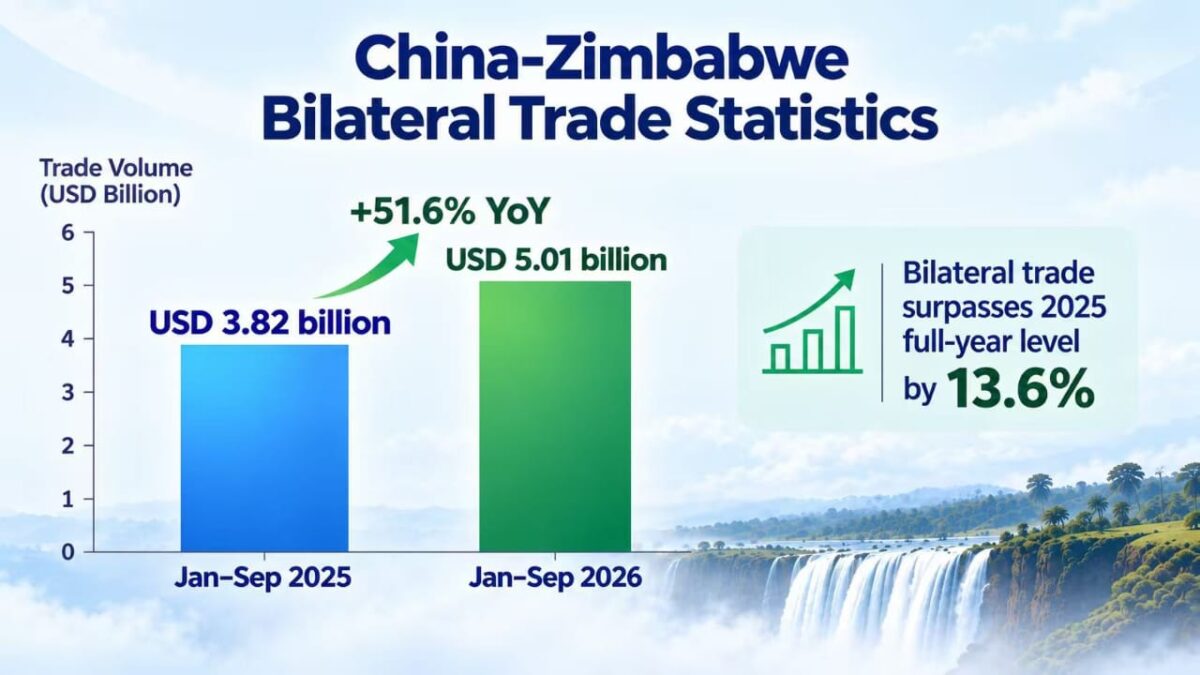
TRADE between Zimbabwe and China surged by 51,6 percent to US$5,01 billion in the first nine months of 2026, with tobacco exports and the entry of blueberries into the Chinese market highlighting opportunities for the country to expand its agricultural exports.
In a post on X, the Chinese Embassy in Zimbabwe said China Customs data showed that bilateral trade reached US$5,01 billion between January and September, representing a 51,6 percent increase compared with the same period last year.
The figures indicate that trade between the two countries has already exceeded the US$4,4 billion recorded for the whole of 2025.
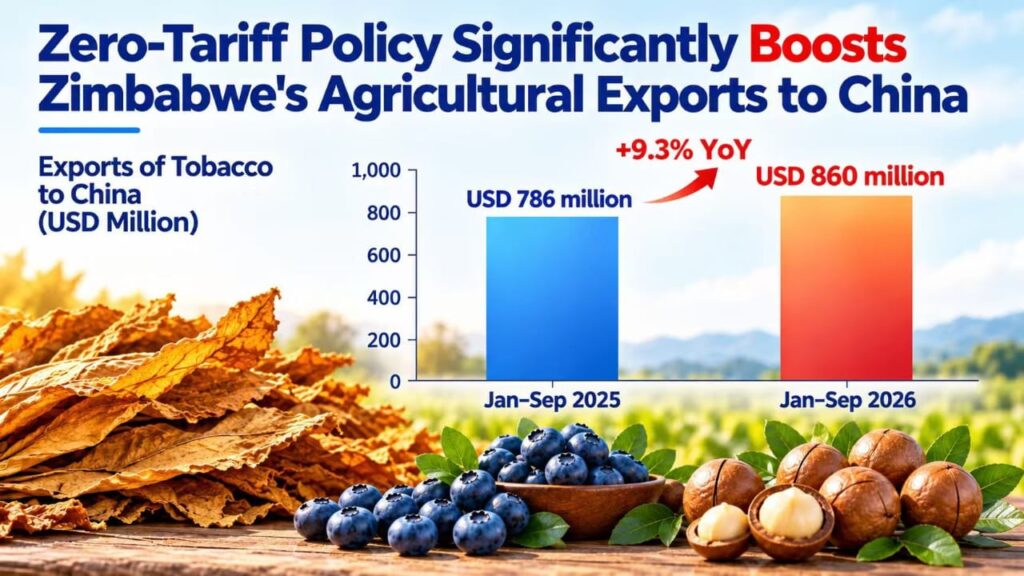
Zimbabwe’s tobacco exports to China reached US$860 million during the nine-month period, up 9,3 percent from US$786 million recorded during the corresponding period last year.
Another development was the entry of Zimbabwean blueberries into the Chinese market for the first time in July, opening another export destination for the country’s horticultural industry.
“China supports Zimbabwe in fully leveraging the zero-tariff policy to expand its exports. Deepened economic and trade cooperation continues to deliver shared prosperity for both nations,” the embassy said.
The growth in trade comes as China implements a zero-tariff policy for African countries with which it maintains diplomatic relations, creating opportunities for Zimbabwean businesses to access the Asian market.
The policy, which took effect on May 1, 2026, extends preferential zero-tariff treatment to 53 African countries. The current arrangement is scheduled to run until April 30, 2028, although exporters must meet applicable rules of origin and other import requirements.
For Zimbabwe, the initiative offers an opportunity to broaden its export base beyond established commodities such as tobacco and minerals, particularly through agricultural products with potential for further growth in China.
The first shipment of Zimbabwean blueberries to China followed a phytosanitary agreement between the two countries, which opened the market to the fruit.
The development provides local producers with an additional export destination at a time when Zimbabwe’s horticultural sector is seeking to expand production and reach new international markets.
However, access to the Chinese market does not automatically guarantee increased exports. Producers must still meet quality and food-safety requirements, comply with customs procedures and establish reliable transport and supply chains to deliver their products competitively.
The zero-tariff policy is part of broader efforts by Beijing to deepen economic and trade cooperation with African countries.
China has also pursued these objectives through the Forum on China-Africa Cooperation (FOCAC), established in 2000 as a platform for dialogue and cooperation between China and African countries.
The framework covers areas including trade, investment, agriculture, industrialisation, infrastructure and skills development. Its latest action plan for 2025 to 2027 sets out further cooperation in these sectors.
Zimbabwe’s economic relationship with China is also linked to the Belt and Road Initiative (BRI), which promotes cooperation in infrastructure, connectivity, trade and investment.
The two countries signed a memorandum of understanding on cooperation within the framework of the Silk Road Economic Belt and the 21st Century Maritime Silk Road in September 2018.
Chinese-backed projects in Zimbabwe have included the expansion of Hwange Thermal Power Station and upgrades to Robert Gabriel Mugabe International Airport, alongside investment in mining and industrial production.
The bilateral relationship was further elevated in September 2025, when the two countries established an all-weather community with a shared future, building on their comprehensive strategic and cooperative partnership.
China and Zimbabwe established diplomatic relations on April 18, 1980, and have since developed cooperation across trade, infrastructure, education, healthcare and other sectors.
The latest trade figures highlight the scale of their expanding commercial relationship, while the introduction of new agricultural products into China points to opportunities for Zimbabwe to diversify its exports.
For local businesses, the challenge will be to turn preferential market access into sustained export growth by increasing production, meeting international standards and moving towards higher-value products.
With the zero-tariff arrangement providing a new avenue for market access, the coming years will be important in determining how far Zimbabwean exporters can expand their presence in China and translate the growing trade relationship into wider economic benefits.