Judith Phiri [email protected]
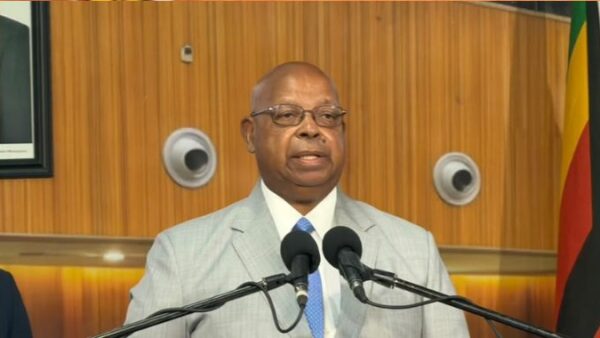
THE Government will sustain the implementation of structural reforms under the 2027 National Budget to strengthen economic stability, improve public sector efficiency and promote sustainable economic growth, Finance Minister Professor Mthuli Ncube has said.
The 2027 National Budget will be guided by the National Development Strategy 2 (NDS2), which seeks to accelerate the country’s progress towards the long-term development objectives outlined in Vision 2030 while responding to prevailing economic realities.
Speaking at the 2027 National Pre-Budget Seminar in Bulawayo on Wednesday, Prof Ncube said the focus would be on consolidating macro-economic stability, deepening the financial sector, promoting inclusive economic growth and driving structural transformation.
“To advance the economic transformation agenda as outlined in NDS2, Government will sustain the implementation of structural reforms aimed at enhancing public spending efficiency and promoting private sector-led growth.
“As we are consolidating gains achieved during the NDS1 period, the 2026 revenue strategy will take into consideration the need to attract and retain both domestic and foreign investment,” he said.
Prof Ncube urged Parliamentarians to ensure that ministries operated within their approved budgets, prioritised spending effectively and identified sustainable and efficient ways of mobilising revenue.
He said Government’s strategy would prioritise creating an enabling environment to attract and retain both domestic and foreign investment as the country builds on achievements recorded under the National Development Strategy 1 (NDS1).
Prof Ncube said the success of the economic transformation agenda would depend on collective efforts to identify and unlock high-potential sectors capable of sustaining growth and building a resilient economy that delivers long-term prosperity.
He said Government would continue pursuing fiscal consolidation in 2027, in line with NDS2 priorities, targeting an overall budget deficit of less than three percent of Gross Domestic Product (GDP).
The strategy would also ensure public resources were channelled towards programmes and projects that accelerate economic transformation, promote inclusive growth and improve citizens’ quality of life.
Prof Ncube said economic growth in 2027 was projected to moderate to 3,5 percent, down from the initial forecast of five percent.
He said the projection was based on several assumptions, including a potential strong El Niño weather phenomenon and an increased risk of drought, continued macro-economic stability and strong mineral export performance supported by favourable international commodity prices.
The 2027 National Budget will also prioritise infrastructure development and housing, agriculture and food security, climate and environmental issues, science and technology, digitalisation, innovation and human capital development.
“The focus will be on consolidating priority areas such as job creation, youth entrepreneurship and development, creative industry and culture. Regional development and inclusivity through devolution and decentralisation.
“Social development, gender and social protection and image building, international relations and trade. As well as good governance, institution building, peace and security. These priorities reflect Government’s commitment to inclusive, resilient and sustainable growth, notwithstanding the evolving global and domestic challenges,” he said.