Chronicle Editor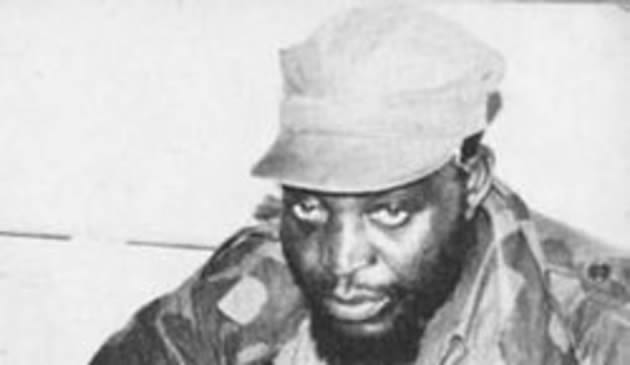
Fay Chung Correspondent —
Josiah Magama Tongogara was the military leader of ZANLA during the liberation struggle. He tragically died in a car accident on December 26, 1979 in Mozambique. This excerpt from Fay Chung’s book “Re-living the Second Chimurenga: Memories from the Liberation Struggle in Zimbabwe” tells more on the man who led the liberation forces against the Smith regime.
Josiah Tongogara led ZANLA to success. A military specialist, he was over six feet tall, with the upright and muscular figure of a soldier accustomed to the rigours of war and the stresses of prolonged periods of living in the bush.
Josiah Tongogara commanded both fear and love. Feared on the one hand by his enemies as an ambitious, ruthless, and implacable fighter, he was loved and respected by his supporters and followers as a faithful and caring leader, ever solicitous of his soldiers’ welfare; as a leader who deserved to be followed; as a leader to whom people entrusted their children and their lives.
Tongogara was able to command respect from both his enemies and his friends. No one could be indifferent to him. With a distinctive, pockmarked, light brown face, and greeny-brown eyes, his facial expression displayed seriousness and determination.
He was not someone you could laugh and joke with. Rather, he was someone who listened with deep concentration and seldom spoke, though when he did speak, he was animated, passionate, and articulate.
He had little time for the frivolous, and was often deep in thought. His mind was constantly concentrated on Zimbabwe: on the meaning of the liberation struggle, on the suffering of the people, and on the treachery of politicians and intellectuals.
He believed that he would die through the barrel of a gun — he had lived by the gun and expected to die by the gun. This constantly recurring theme in his conversation showed his preoccupation with death: he was prepared to die for Zimbabwe. He expected others around him to be prepared to do the same.
Tongogara displayed a very profound love for his family. Whenever he visited Dar es Salaam, he would phone his wife and children in Lusaka every evening, even though the outdated telephone system in both Tanzania and Zambia in the 1970s made this quite a feat.
His family obviously meant a great deal to him, all the more so when he was constantly separated from them by the demands of war. Telephone calls from Tanzania to Zambia in those days had to be routed through Britain, and those from Tanzania to Mozambique through Britain and Portugal.
This was in the period before satellite transmission. It also meant that telephone calls made by the dispersed Zimbabwean liberation movements could be monitored in both London and Lisbon.
Tongogara was surrounded by both admirers and enemies. His admirers called themselves the “veterans”, to distinguish themselves as the oldest group of freedom fighters. The veterans were generally hardened soldiers with very little formal education.
They were suspicious of, and even hostile towards the younger, more educated guerrillas who had joined the liberation struggle from the schools and universities after the mid-1970s. Their suspicions were further justified by the fact that the two major rebellions in ZANLA, that of the Nhari group and of the Vashandi or Workers’ group had been led by the educated.
Tongogara showed extreme concern for his followers, checking on the details of their housing, bedding, food, and milk for their babies. Whenever he visited a camp, he would make a full inspection, which would include examining the mattresses or more commonly the lack of mattresses for the camp dwellers.
He made one of his periodical visits to Pungwe III when my daughter Chipo was just over a year old. He checked out how much powdered milk I had for her. This was one of the very human touches that he commonly cultivated whenever he visited a camp where there were babies.
The loyalty of women was a potent political weapon that Tongogara valued and knew how to use. He understood how to win the loyalty of his followers by these little examples of solicitude. His followers trusted him and believed he placed their safety and welfare above his own.
Tongogara entered the liberation struggle as a lowly soldier. He received his military training in the Nanking military academy in China and forever held the Chinese as his mentors in morality as well as in military skills and strategies.
It was from the thoughts and practices of Mao Tse Tung that he learnt that the guerrilla must merge with the people. He taught his soldiers that they were never to mistreat the peasantry, popularly known as the povo, Portuguese for the people.
It was probably also from the Chinese that he learnt that it was essential to eliminate his enemies. He saw issues in black and white, and believed that those who opposed or betrayed the liberation struggle for Zimbabwe deserved to be executed and he did not flinch from playing the role of executioner.
Tongogara was not a highly educated man, having received only two years of secondary education. However, he had a brilliant mind, which had benefited from his military training. As a military specialist, he was able to deal with military issues in a highly sophisticated and creative way.
He was an avid reader, and eagerly sought to discuss serious political issues with us university teachers. He was thus very much respected by the many Zimbabweans then teaching or studying at the University of Zambia.
We were welcomed into his humble township house where we analysed and discussed possible scenarios for the future of the struggle and the future of Zimbabwe.
He was particularly close to Dzingai Mutumbuka, then a chemistry lecturer at the university and later the head of the ZANU education department and first minister of education after independence.
He was also very close to Simbi Mubako, who was a lecturer in the school of law and later minister of home affairs and a high court judge.
Tongogara died in a car crash in Mozambique in December 1979, only four months before the achievement of independence by Zimbabwe. The Land Cruiser in which he was travelling overturned while trying to overtake a lorry that was towing a large trailer.
As Tongogara’s car tried to overtake, the lorry swung to the left, but the attached trailer swung to the right, killing Tongogara instantly. He was sitting on the left-hand front seat beside the driver. The Land Cruiser overturned, but no other passenger was seriously injured.


 Online Reporter