admin
admin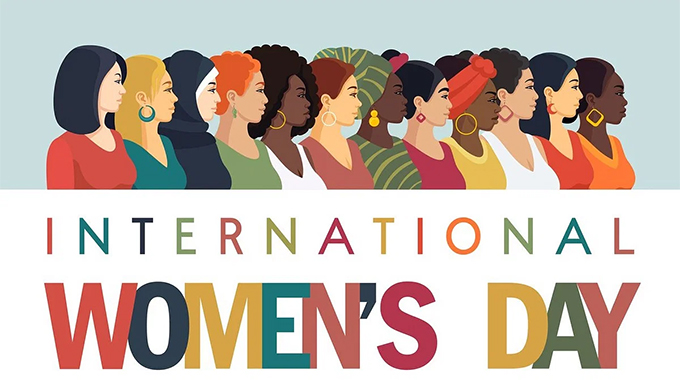
Rumbidzayi Zinyuke and Ivan Zhakata Herald Reporters
Government has reiterated the importance of putting in place strategies that promote gender equality as a way of fostering sustainable development in line with the National development Strategy 1 and the country’s Vision 2030.
Women Affairs, Community, Small and Medium Enterprises Development Minister Sithembiso Nyoni, in a speech read on her behalf by Deputy Minister Jennifer Mhlanga at the commemorations of the International Women’s Day in Harare yesterday, said gender equality was crucial for the sustainable development of any country
“As a country we have made some strides in achieving gender equality. Zimbabwe has a robust legal and institutional framework which promotes gender equality and women empowerment. The National Gender Policy provides for concrete measures and strategies to mainstream gender in constitutional and legal rights, economic empowerment, politics and decision making, health, education and training, gender-based violence, environment and climate change, media information communication and technology, disability and culture and religion.
“The strategies contained in the policy do not only unlock the potential of women but take deliberate efforts to address the gender disparities across all sectors. Although a lot still needs to be done in terms of promoting the participation of women in politics and decision making and other spheres of life,” she said.
The International theme for this year is “Gender equality for a sustainable tomorrow” with a national theme of “Gender mainstreaming and women empowerment in climate change and disaster risk management”.
In line with the theme, yesterday’s commemorations were focusing on how to achieve sustainable gender equality in the context of climate change, its impact on women and ways to mitigate it.
Minister Nyoni highlighted the importance of economically empowering women and girls as a sustainable way to achieve gender equality.
“This can be achieved through various empowerment programmes that my Ministry and partners provide, such as access to finance and markets, capacity building, provision of technology and workspace, amongst others,” she said.
She encouraged women to take advantage of the Africa Continental Free Trade Area which has created a large market for goods and services as well as investment opportunities.
UN acting resident coordinator Dr Esther Muia said gender equality was a critical economic issue for Zimbabwe which was directly linked to growth and poverty reduction outcomes.
She said out of the 5 million people living below the poverty datum line in Zimbabwe, 70 percent were women.
“The risk of engaging in negative coping strategies, as well as the risk of exposure to gender-based violence, is exacerbated in the Zimbabwe multi-hazard context,” she said.
Dr Muia called on Zimbabweans to ensure that women’s and girls’ health, rights and dignity were safeguarded, and critical infrastructure, protected, in every situation including during crises.
“Women must be drawn into the economic mainstream. The consequence of a decline in women’s relative or absolute economic status has both ethical and long-term economic implication. Any process of growth that fails to improve the welfare of women, fails to accomplish one of the principal goals of development i.e equity. In the long run, the low status of women would translate into slow economic growth,” said Dr Muia.
She said regulating and legalizing informal-sector employment would also improve the economic status of women.
“Women bring communities together; women lead efforts to mitigate and adapt to climate change; and women can drive reconciliation and ensure long-lasting peace. This is gender equality as the pathway to sustainable development,” she added.
Speaking at another event to mark the day, Youth, Sport, Arts and Recreation deputy minister Tino Machakaire said the major objective of the celebrations was to empower and recognize women in leadership for their efforts and sacrifices.
“However, we are not leaving behind our youngsters and those that are not yet in leadership positions. We urge you to start taking the small steps that will lift you to top positions in different leadership roles, it can be in business fraternity, sports fraternity or arts fraternity. Dream big and aspire to reach higher levels. We are taking everyone on board and encouraging everyone to be part of the movement to break the bias in the workplace, business sector and political forums.”
He said it was important to close the gender gap that still existed in all the spheres that concern women in the country.
Child President Hazel Mandaza said investing in adolescent girls was one way to break intergenerational patterns of poverty.
“We are reminded as adolescent girls that we grow up to be mothers,” she said.
“Our well-being has an impact in families and communities and because of that please nature us, educate us and mould us so as to become responsible women of tomorrow. More educated, capacitated and recognized women have greater capacity to earn income and contribute to the sustainable development of our communities.”
Women who attended the celebrations said the country had made significant progress in recognising the efforts made by women to uplift their lives but called for more to be done for those whose voices were still not yet heard.
Mrs Chipo Chari said the fight against gender-inequality should continue even after this Women’s month to ensure that women continue taking up key leadership roles in their communities.
“This is an important day for us as women and we want to continue seeing such activities happening in future. We have women who are still suffering gender-based violence and this should come to an end. The important thing is that we have been empowered on how we can rise above such situations,” she said.
Another young woman, Elisa Chidhakwa said it was important to break the bias that women are not strong enough to do what men can do.
“This day motivates us as young girls as we see women who have succeeded in life who are in leadership positions and who can actually take a stand for us young people and lead us out of poverty,” she said.


 Online Reporter