


 Chronicle Editor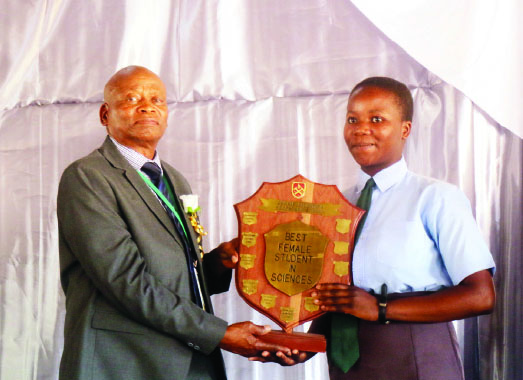
Sikhulekelani Moyo, Sunday News Reporter
LOCAL schools are making significant strides in embracing education 5.0 which require learners to be productive in different disciplines and George Silundika High School is no exception.
The school has been involved in various projects which are meant to strengthen the school’s revenue streams while also complementing the diet of its learners.
Located in Umguza District in the sprawling Matabeleland North Province, George Silundika High School has taken up the challenge brought by the adoption of innovation to produce goods and services, sanctified it and made it a dream come true through various strategies that anchor and define the country’s heritage-based Education 5.0.
The school is one of the Zimbabwe Foundation for Education with Production (ZIMFEP) schools and has placed much emphasis on producing well-rounded and highly equipped individuals who can fit in all spheres of life.
Speaking at the recently held Speech and Prize Giving Day at the school, which ran under the theme, “Merging Education and Production,” George Silundika former headmaster, Mr Alicern Khumalo, who was the guest speaker said education with production was the thrust in the attainment of Vision 2030 whose import was that of having an upper middle-income society.
He said since the inception of ZIMFEP, significant strides have been made in fusing education with production with emphasis on producing a self-reliant citizen and institutions which are self-sustaining.
“I am pleased to note that George Silundika ZIMFEP High School has thriving projects, which include gardening, poultry, beef production, piggery and goat production,” said Mr Khumalo.

“It is with pride that this school merges education with production in these production areas, where learners actively participate so that they learn to produce on their own.”
Mr Khumalo urged learners to grab the opportunity and learn practical subjects. He said gone are the days when white-collar jobs were venerated. Mr Khumalo said nowadays rich people were the ones who were willing to get dirty. In Zimbabwe, sectors that have potential to improve livelihoods and the economy at large include mining and agriculture.
Mr Khumalo said entrepreneurship skills were needed for one to be successful and urged learners to start their companies and create employment for others.
George Silundika High School current headmaster Mr Abraham Neta said their curriculum was in line with Education 5.0, which is a competence-based curriculum.
“We seek to produce a complete learner who can survive under the current economic situation which requires one to have skills. With the blessing of our responsible authority, we wish to engage in partnership with private companies, who have a flair in production in order to equip our learners with the required skills.”
He said all the projects at George Silundika High School were doing well and appealed for financial assistance from all stakeholders as the school was looking at diversifying its projects.
ZIMFEP interim board member Mr Patrick Ndlovu said ZIMFEP does not preach education with production only, but believed in producing a citizen who was balanced in terms of theory and skill, one who merges education with production.
“We should not teach only for the examination but produce well skilled learners. We share a vision of education which is pro-entrepreneurship that is firmly grounded in self-reliance,” he said.
“For this to happen, learning has to blend academic with production. Have the textbook knowledge and produce, apply what you have acquired in class. As ZIMFEP we are happy to witness the transformation which is happening at our school despite the challenges.”
At a recently held graduation and prize giving at Esigodini Agricultural College, Minister of Lands, Agriculture, Fisheries, Water and Rural Development Dr Anxious Masuka said learning institutions should embrace entrepreneurship and engage in projects which would improve revenue instead of depending on Government support.
He said learners and graduates should not depend on looking for employment but should start their own projects and create employment for others. In the past, the country’s universities were teaching Education 3.0 whose thrust was teaching, research and community engagements but with Education 5.0 institutions are now focusing on innovation and industrialisation.
The country’s universities proved the impact of Education 5.0 following the outbreak of Covid-19 where they produced personal protective clothing and equipment thereby ensuring the country saved US$12 million. —@SikhulekelaniM1


 Online Reporter