

 admin
admin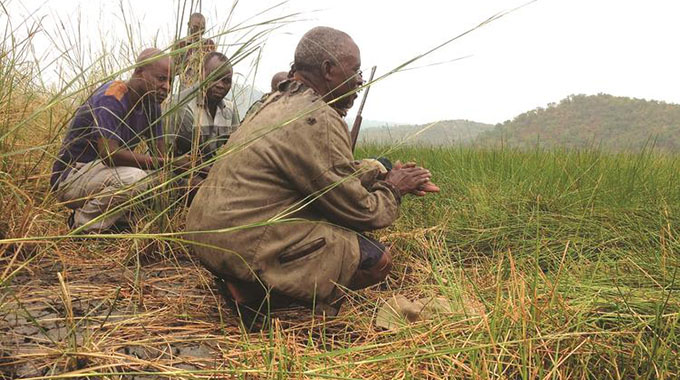
Isdore Guvamombe The SATURDAY LOUNGE
Further north of Zimbabwe in Mbire, geography and history rendered the land inhabitable and it requires for people to survive.
Unbearable heat, poor and unreliable rainfall patterns, malaria, tsetse fly, lack of infrastructure, roaming wildlife; all bring challenges to the people.
It is here where huge wrap of land forms the Kanyemba communal lands.
It is here again, where the Government of Zimbabwe, in one of its most welcome decisions, has decided to build a new town.
Moonlight slants down through the leaves and blossoms of the thicket, making whimsical coloured patterns that flicker on the ground.
On a normal night, the moon would have been magnificently crescent, but it was somehow humble and soft. Shy!
Three off-duty police officers are walking from a binge at Chapoto Village to Kanyemba Police Station in Mbire, and tree leaves crack under their heavy boots.
They are not particularly worried about the creepy-crawls, for the high-cut boots give them some comfort.
It is silly cold. A faint warm breeze stirs the sleepy leaves from the Zambezi River, bringing with it fragrance of flowering grass and trees, and a breath of something languidly inducing idleness and strangeness.
The night is unique, eerie and profound.
As they walk on a footpath and recount the day’s activities in low voices, they cast eyes on the forest, scanning for predators, and suddenly there is a ghostly figure of a man and it blocks their way.
Startled, they cast their eyes on the forest again and again, and to their surprise the ghostly figures increase in number.
Their movements are strangely omnipresent.
Everything becomes superfluous! For almost 30 minutes, the officers fight to go past these figures, but they continue to block their way.
Suddenly, the ghosts start shoving, kicking and punching again and again. Fracas, fracas and fracas. Fracas!
With sudden sluggishness, they disappear into the night, but the officers are unable to tell if they have gone underground, into the bush, skyrocketed or morphed into air.
Dear reader, this is not fiction.
It is not a script for a horror movie. It is a daily occurrence to many who dare pass through this spot, “The Ghost Point” — a spitting distance from Kanyemba Police Station.
This particular point, is a mass grave for liberation fighters and villagers murdered by the Rhodesian government and stashed into one huge pit.
Anyone at the police station today will testify that this still happens.
The mass grave is just outside the perimeter fence of the police station.
Built in Rhodesia, the police station is on the bank of Zambezi River, less than 2km west of the confluence of Zambezi and Luangwa rivers and about 4km north of the confluence of Zambezi and Mwanzamutanda rivers.
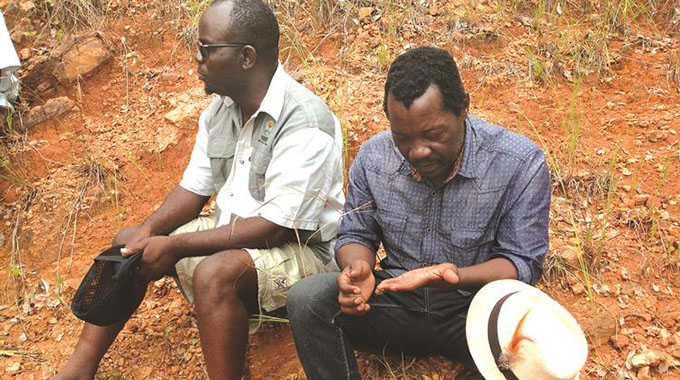
There is another mass grave south of the police station, on a valley floor, as one branches off the road to the new immigration offices.
A small concrete block stands in that valley as a mark of those who died in the struggle.
The mark at the “Ghost Point”, as locals call it, and another on the southern valley, stand guarding the police station.
The dead there must be turning and twisting in their graves probably with many questions than answers.
Kanyemba’s geographical location is important. Here, Zimbabwe Zambia and Mozambique meet on the northernmost part of Zimbabwe.
Luangwa in Zambia and Zumbo in Mozambique have long been established as towns, and recently, the Government of Zimbabwe has moved to build Kanyemba town.
Suffice to say, located upstream the Cahora Bassa Dam, Kanyemba has since the slave trade been a transit point to the Indian Ocean.
Today, a stone structure used as a holding camp for captured slaves, still stands, albeit in dilapidated state, as a stark reminder of the contribution this part of the world made to human trade.
Kanyemba was a crossing point by hand-made canoes between Zimbabwe and Zambia since time immemorial. It still is a crossing point and will be a much bigger crossing point now that the Government is building a town.
During the liberation struggle, fighters from the Zimbabwe People’s Revolutionary Army (Zipra), the military wing of Zimbabwe African People’s Union (Zapu) and Zimbabwe African National Liberation Army (Zanla), the military wing of Zimbabwe African National Union (Zanu), (now Zanu PF) used this point.
Some were captured by Rhodesian soldiers, murdered and buried in mass graves. Villagers too were captured and killed for supporting the struggle.
The same burial method was used again and again. There are also several single graves dotted around Kanyemba Police Station, itself a murder chamber.
There is need to mark all the grave sites, entomb and enshrine them as tourist attractions.
There is need to properly document what happened in Kanyemba.
There is also need for a cleansing ceremony to pacify the spirits of the dead. As we build the new town of Kanyemba, let us spare a thought for our gallant sons and daughters, murdered in cold blood and not buried properly.
The ghosts should be interpreted as a signal that they want to say something. It is a signal. Let us read the signal.
Even in world-class cities, it is a norm to erect a statues or tombs for the harbingers or the autochthons.
Those who died at Kanyemba might as well have a huge representative tomb or statue that stands imposingly as reminder of the new town’s history.
With the establishment of the new town of Kanyemba should come the construction of a museum that speaks to the slave trade and the liberation struggle.
A museum that speaks to the salt pan that was part of the reasons why Munhumutapa moved northwards to conquer Mbire before he died at Tuyuwu Tusere (the eight baobabs) in Guruve, without reaching Mbire.
The museum should speak to the history of the Chikunda people, their spirit mediums — Mvura Kanyemba and others; the Doma people; to the trade with the Lozwi and the Korekore Tande (Dande) and to the array of stone structures built by Mutota’s descendants Matope and Chikuyo etc.
It should speak to the hunting concessions at Usanaga Usanga, Masawu camps, Mushingavende and Mupedzapasi. It should speak to the fossilised forest at Kemazambara and Hangwa (Angwa) River.
When I started, this narrative I mentioned Mwanzamutanda River not as mere hyperbole, for, it is at the confluence of this river and Zambezi that the salt scoop lies.
There, a vast swath of lush-green grass – not found anywhere else in Zimbabwe – spreads far and wide, squashed on three ends by the two rivers and a mountain.
Here, women in post mendicancy, traditionally prepare salt from lush green grass straws.
The process is complex and up to today remains a highly-guarded secret of the Doma and Chikunda elders. Elderly women still do it, but it has not been commercialised.
Snippets of information say the elderly women cut the grass, stash it in new clay pots, mix with special fine soil and boil until it dries into a mothball of salt in the shape of the pot. The pot is broken, then the remaining ball is salt. In historical times, the hordes of Portuguese traders, the Chikunda and Lozvi tribes traded in the salt, believed to have medicinal properties and to be of superior quality to that from the ocean.
Ever since the end of the slave trade and the death of Nyatsimba Mutota (Munhumutapa), about 150 kilometres before reaching the salt coop he wanted to conquer, Kanyemba has not developed meaningfully, until the recent move by Government to turn it into a town.
When all is said and done, Kanyemba town can rise to be one of the country’s urban areas rich in history.


 Online Reporter