

 Online Reporter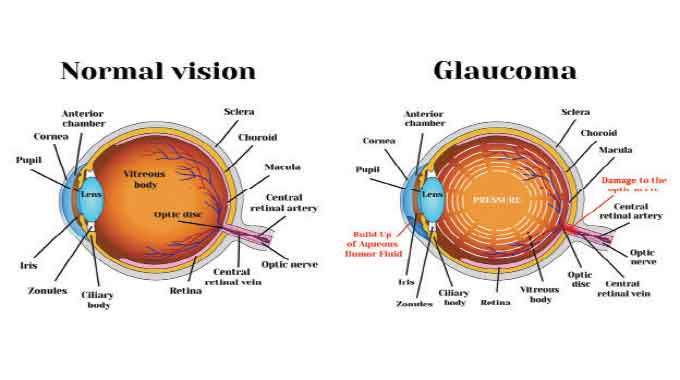
Rumbidzayi Zinyuke-Health Buzz
Imagine waking up one morning and noticing a faint blur at the edge of your vision. You rub your eyes, blink a few times and blame it on poor sleep or too much screen time.
Days pass, and the blur becomes a shadow — nothing painful, nothing dramatic, just a quiet narrowing of the world around you. You do not panic because you can still see straight ahead, still read, still walk unaided.
By the time you finally seek help, the shadow has crept so far inward that even the best treatment cannot bring back what has been lost. This is the quiet reality for many people living with glaucoma in Zimbabwe, a condition that steals vision gradually and permanently, often before its victims realise anything is wrong.
January, which marks Glaucoma Awareness Month, offers a chance to confront this slow-moving threat that continues to blind millions worldwide.
In Zimbabwe, where eye health services remain uneven and awareness is still worryingly low, the month carries great significance. Glaucoma is one of the leading causes of irreversible blindness, most often affecting adults over 40, yet its progression is so subtle that many people only recognise something is amiss when the disease has already advanced.
Glaucoma describes a group of conditions that damage the optic nerve, the delicate pathway that transmits visual information to the brain. The damage is usually linked to elevated intraocular pressure, which gradually destroys nerve fibres responsible for sight.
What makes glaucoma particularly dangerous is its stealth. It does not announce itself with pain, sudden cloudiness or dramatic visual disturbances. Instead, it chips away at peripheral vision until patients begin to feel as though they are looking through a narrow tunnel. By then, the sight lost cannot be regained.
Globally, more than 64 million people are estimated to be living with glaucoma, a number projected to rise as populations grow older. The burden is especially heavy in Africa, where glaucoma accounts for some of the highest rates of irreversible blindness.
Research has long shown that populations of African descent face a greater risk of developing the disease and often experience more aggressive forms such as primary open-angle glaucoma, which progresses slowly and without early warning signs.Regional studies estimate that about 5,6 percent of adults in Sub-Saharan Africa are affected, although the true number is likely higher because most cases remain undiagnosed.
Zimbabwe reflects this wider regional pattern. The National Eye Health Strategy 2021-2025, focused on making quality eye care accessible, reducing preventable blindness (especially cataracts, glaucoma), integrating eye health into general healthcare, and ensuring equitable access, aligning with WHO guidelines and addressing the needs of vulnerable populations like children, rural dwellers, and people with disabilities.
Reports show that glaucoma is a leading contributor to severe and irreversible visual impairment locally. Among people aged 50 and above, studies indicate prevalence rates of around 20 percent, a significantly high figure given how preventable most advanced glaucoma cases are with routine screening.
Yet for many Zimbabweans, especially those in rural areas, the idea of regular eye examinations remains distant, overshadowed by economic pressures and limited access to specialised eye care services. As a result, many individuals only present to clinics once the disease is advanced, severely restricting the effectiveness of any intervention.
Several factors raise the risk of developing glaucoma. Advancing age, family history, eye injuries, long-term use of steroid medications, and chronic conditions such as diabetes and hypertension play a significant role.
As lifestyle diseases become more common across Zimbabwe, the number of people at risk of glaucoma is expected to rise. Despite this, public understanding remains low.
Research across Africa consistently shows poor knowledge of glaucoma symptoms, risk factors, and the importance of early screening. In some studies, over 80 percent of glaucoma cases were undiagnosed before systematic screening—an indication of how quietly the disease progresses.
The consequences of late diagnosis ripple far beyond the clinical realm. Vision impairment affects independence, mobility, and employment prospects, placing heavy emotional and financial burdens on families.
In a country where social support systems are already stretched, blindness can increase vulnerability and deepen poverty. Moreover, treating advanced glaucoma is significantly more complex and costly than managing early-stage disease. Patients often require lifelong medication, some of which may be expensive, along with regular specialist reviews or even surgical intervention.
For those living far from urban centres, the time and cost of repeated visits pose additional barriers to consistent care.
Yet glaucoma, despite its irreversible nature, can be managed and controlled if detected early. Regular eye examinations remain the most important defence. Screening enables clinicians to measure intraocular pressure, study the optic nerve, and conduct visual field tests that can detect subtle changes long before the patient becomes aware of them.
For individuals aged 40 and above, especially those with risk factors, yearly eye checks are crucial. Encouragingly, Zimbabwe’s ongoing efforts to strengthen primary health care present an opportunity to integrate basic eye screenings into routine check-ups, increasing detection rates in underserved areas.
Education is therefore essential. When patients understand why treatment matters, why it must continue even when their vision seems stable, and what could happen if they default, outcomes improve significantly.
As Glaucoma Awareness Month unfolds, it provides a timely reminder that protecting vision must become a public health priority. Awareness campaigns must reach beyond January, extending to schools, workplaces, churches and community gatherings.
Health workers can help demystify the disease using simple language. Government and partners can also strengthen service delivery by expanding screening services, training more eye-care professionals and supporting outreach programmes that bring eye care closer to communities.
The story of glaucoma in Zimbabwe is ultimately one of preventable loss. Many of the individuals who end up blind from the disease never had the opportunity to detect it early or understand its risks.
As the population ages and chronic diseases become more prevalent, the number of people vulnerable to glaucoma will grow unless proactive measures are taken.
The vision one has today need not be lost tomorrow. But the first step is knowing the risk and getting their eyes checked.
This January calls on every Zimbabwean to prioritise eye health,not only for themselves, but for the families and communities that stand to be deeply affected when sight fades silently, slowly and permanently.
Feedback: [email protected]



