Online Reporter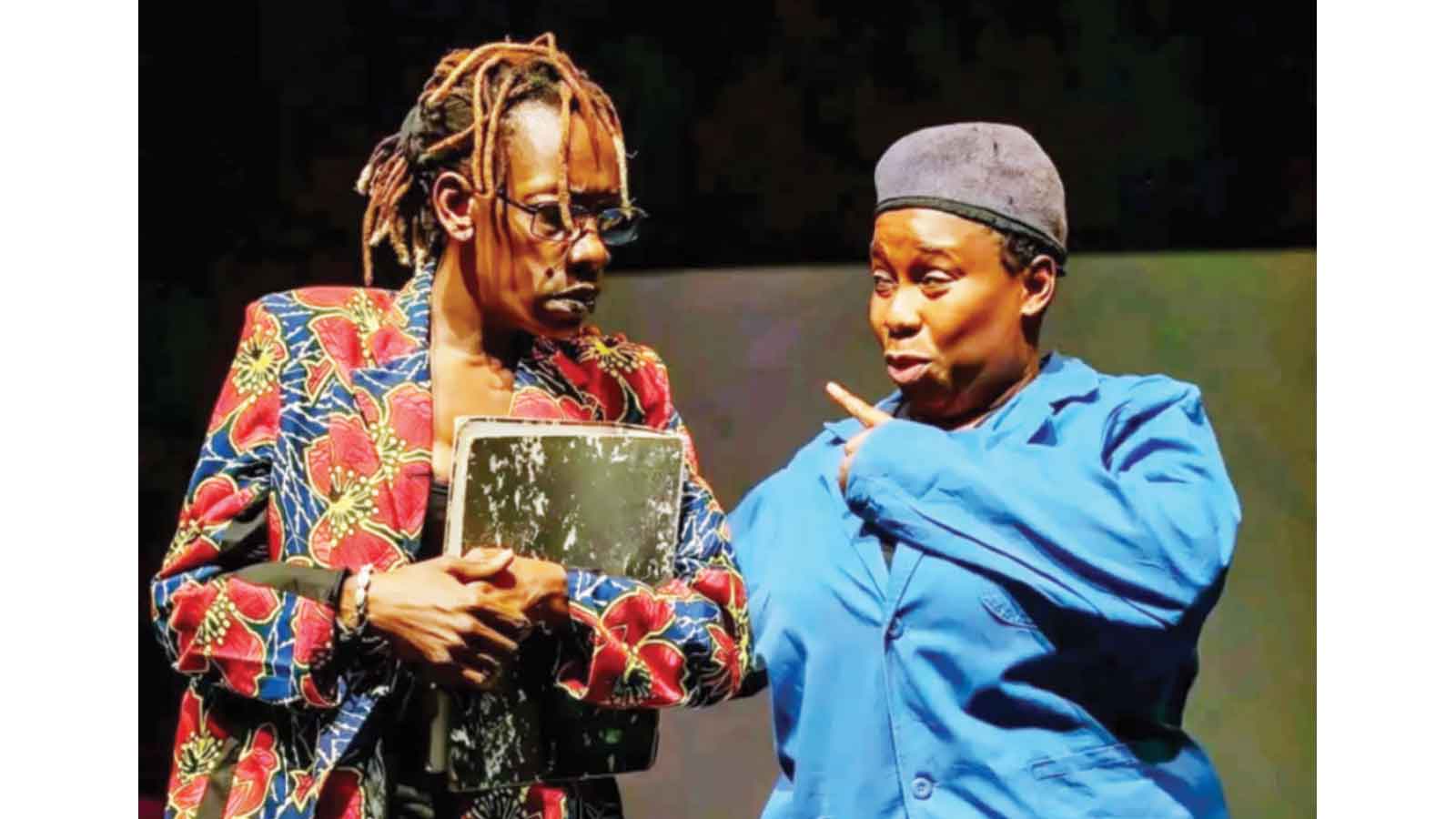
Trust Khosa
Zimpapers Arts and Entertainment Hub
Zimbabwean ritualistic theatre production, “Song Unburied”, which calls for the return of Mbuya Nehanda’s remains from an overseas museum, captured international attention at this year’s Edinburgh Festival in Scotland.
The production, which ran from August 5-16, was written by Panashe Chigumadzi and directed by theatre guru Daves Guzha.
It features a star-studded cast comprising Charmaine Mujeri, Dalma Chiwevera and Tinevimbo Chimbetete, alongside mbira player Abel Mafuleni.
The production reignited critical discussions around the repatriation of human remains and the return of cultural artefacts taken from Africa during the colonial era as trophies of conquest.
Following its final performance last Sunday at the Mecca of theatre, Guzha spoke glowingly about the production’s impact, saying the cast had managed to touch the hearts of global theatre practitioners and audiences while placing Zimbabwe’s repatriation debate firmly on the international stage.
“The play, Song Unburied, once again proves that Zimbabwean theatre can hold its shoulders high on the global stage,” said Guzha.
“Edinburgh is the Mecca of the arts, especially theatre, and our work being so warmly received is both humbling and satisfying, as the story of restitution and reparations needs to stay in the audience’s memory and be a constant reminder of things unfinished.
“Without the collaboration of the team, the production would not have been possible. Panashe Chigumadzi (playwright), Jacob Mafuleni (music), Marvin Mabhikwa (set design), and the actors Charmaine Mujeri, Dalma Chiwereva and Tinevimbo Chimbetete all played a crucial role.”
Guzha told Zimpapers Arts and Entertainment Hub that he was ready to share insights gained during the festival to benefit the sector.
“Quality over quantity is important. Paying attention to detail and, importantly, pre-production is everything.
“From a logistical perspective, Edinburgh is a great learning experience. We had 40 minutes every day to set up for our show and 15 minutes to strike the set, allowing the next show to take place.” After shining in Europe, Guzha assured theatre lovers in other countries that there was more to come.
“The production still has a lot of life in it, and we will be paying attention to a number of shows around the African continent. Hopefully, we will continue with Europe next year.
“Over and above this, we are in discussions about exploring the possibility of turning the play into a movie for a wider reach.”
With a star-studded cast and the need for continuity, Guzha could not elaborate on how he hopes to keep the ensemble intact.
“For now, it will be based on the performances we will be getting,” he said.
Being a torch-bearer in theatre, Guzha also outlined some of his plans for the remainder of the year.
“We promise a new, relevant and impactful play every month — theatre that speaks to the audience and the people, provokes thought, and keeps you on the edge of your seat.”
During its 12-day run, the production received endorsements from some of the world’s renowned theatre practitioners and critics, who described it as thought-provoking.
“An angry voice reaches out of Zimbabwe’s colonial past at the beginning of Song Unburied. The opening polemic establishes ancestral spirituality as a living force rather than background information. It also reveals where Panashe Chigumadzi’s play is most persuasive: in history carried by bodies, music and ritual,” Alec Martin commended.
He added:
“Music, movement and ritual make the past impossible to keep safely contained.”
Another critic, Donald Stewart, wrote in his review:
“Song Unburied has a very strong connection to the past. It has toured to places where there is a resonance and a culture that connects with it. Where I agree with them is that it does leave you uncomfortable and wanting to know more.”
According to its synopsis, at the heart of Song Unburied is the story of Rambisayi Mangosho, the British Museum’s first Black curator of Zimbabwean descent.
Haunted by dreams and unable to return home to bury her grandmother, Rambi is drawn into the spiritual and historical mysteries surrounding the unreturned remains of Mbuya Nehanda, Zimbabwe’s legendary anti-colonial heroine.
Guided by Tsitsi, a war veteran-turned-museum caretaker, Rambi begins a ritual journey of remembrance, resistance and reparation.
Together, they uncover a spiritual connection and a shared totem — both are vaChihera.
But as they discover Nehanda’s bones in the museum basement, they must confront the truth: the bones cannot simply be sent home — not without ritual and without consequence.
Chigumadzi’s storytelling interweaves myth, memory and modern politics in a play that is equal parts poetic and political.
To date, the play has been performed in South Africa, Malawi, Comoros and Barbados, calling for the return of Mbuya Nehanda’s remains. In African culture, it is believed that the dead will not rest until they receive a dignified burial followed by a traditional ceremony.