Online Reporter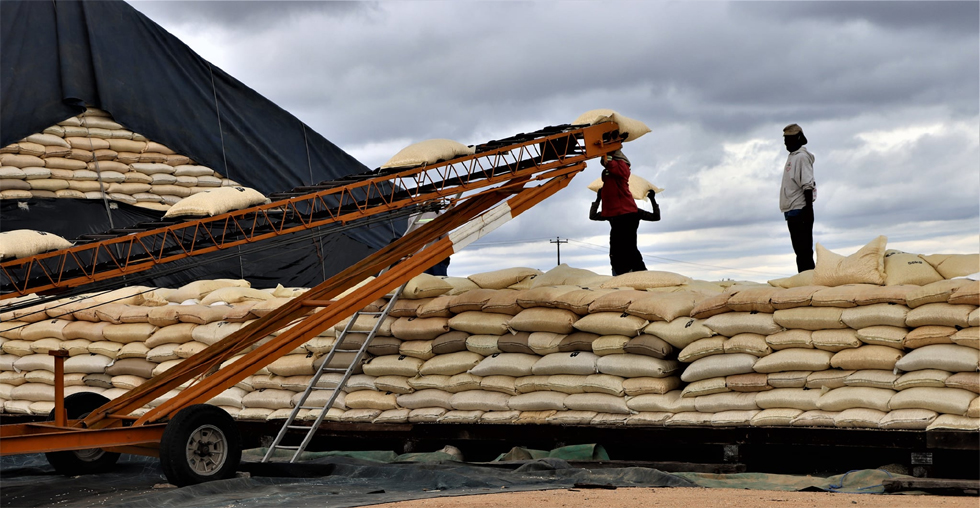
Lovemore Kadzura
Post Reporter
SMALLHOLDER farmers have hailed the decision by Grain Marketing Board (GMB) to decentralise grain buying and collection depots to all wards across the country as this will reduce transport costs.
The GMB has announced that it is establishing 1 804 mobile centres across the country to collect grain from farmers.
This follows the highly successful 2024/25 agricultural season, where all crops thrived thanks to good rains received and the availability of inputs from the Government schemes and private sector.
This season, the GMB will be paying US$367.48 per tonne of maize, the same amount it is offering for small grains, and the price is expected to attract farmers to sell their produce to the grain utility.
Soyabean is being bought at US$580 per tonne, sunflower at US$668, and sesame at US$800.
GMB chief executive officer, Dr Edison Badarai said farmers who benefited from the Presidential Inputs Scheme are expected to deliver at least 10kg to GMB to boost the local grain reserves.
“The Grain Marketing Board wishes to inform valued farmers and stakeholders that it has opened 1 804 mobile grain collection centres across all wards to ease the delivery of grain to the GMB. The collection centres shall be at ward centres used for the Presidential Inputs Scheme and Social Welfare collection.
“Farmers who benefited from Presidential inputs are expected to deliver 10kg to the GMB to create a local strategic grain reserve. At the same points, farmers can also deliver surplus grain to the GMB. Additionally, farmers who wish to swap traditional grain with maize or vice-versa should make use of these centres.
“The GMB is finalising modalities for inputs deliveries for farmers who make pre-purchases or wish to use sales proceeds/warehouse receipts to purchase inputs such as seed, fertilisers, and chemicals. The GMB, AGRITEX, and local leadership will handle logistics and communicate these locally, together with timetables for delivery for each collection centre. The Grain Marketing Board remains the buyer of last resort and appreciates farmers’ dedication and commitment as the country drives towards food self-sufficiency,” said Dr Badarai.
Headlands Small Scale Farmers Association chairman, Mr Innocent Magutakuona said farmers welcome the decentralisation of collection depots as this will lessen the costs associated with moving grain to silos.
However, he called upon the GMB to promptly pay farmers for deliveries made so that they can make early preparations for the 2025/26 season.
“We fully welcome this move of taking the GMB down to where the farmers and grain are. There is plenty of maize this season. Most farmers registered resounding success because last season all ingredients for a successful season were in place. Transport is a challenge as some farmers are very far away from depots, and their profits end up being eroded by transport costs.
“Sometimes, farmers will be left with no option but to deal with middlemen who always short change them. We call upon the GMB to expedite payments for grain delivered to them. Delaying payment demoralises farmers and also jeopardises the preparation and execution of the following season,” said Mr Magutakuona.
The secretary for Chipangayi Farmers Association, Mr Paul Sakuhuni said the decentralised buying points should be accompanied by prompt payments to farmers to avoid side marketing.
“Farmers must be paid within 72 hours after delivery. Decentralisation should be accompanied by prompt payments for the process to be successful. Once farmers get assurance that payments will be made within reasonable time frames, the GMB will be flooded with grain.
Farmers primarily prefer to deal with the GMB, but sometimes they end up dealing with unregistered buyers due to delayed payments. GMB must also fully educate farmers on moisture content, as there is a lot of confusion surrounding this aspect. We have scenarios where grain is rejected without sufficient explanation to the farmer,” said Mr Sakuhuni.