admin
admin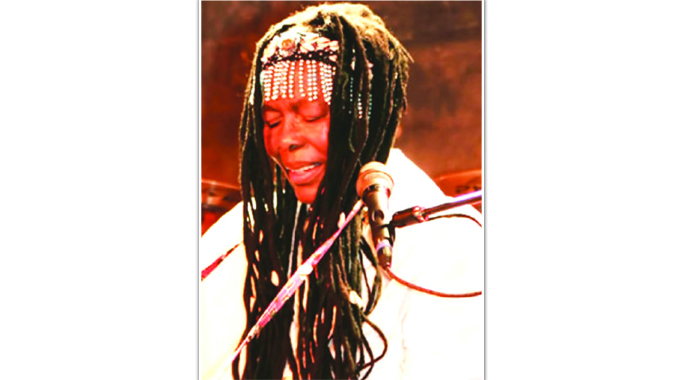
Isdore Guvamombe, Harare Bureau
She sat on a traditional reed mat rolled on the ground, legs stretched. Her back leaned on the sofa. She could have chosen to sit on the sofa but she chose the ground. Instead, I sat on the opposite sofa, looking down on her.
Dreadlocks gave her a ghostly look. The mbira instrument on her side made it look like we were in a shrine.
She had a pouch, crafted from a cow horn and from there, she poured the powdered snuff to the palm, albeit with a few knocks. From the palm her two fingers carefully picked snuff enough to feed the two nostrils.
She fed the nostrils, then with a frown she sucked up the snuff, before cleaning the nose with a piece of cloth.
We greeted and noticed we had the same ancestral lineage, the Mofu/Chihera totem. The interview started with her answering slowly and softly. The year was 1993. Since then I have followed her music, her life and communicated with her endless times.
I also learnt to play Nhamusasa on the Mbira from her.
As the nation became agog with the news of the death of Mbuya Stella Chiweshe yesterday, the twing-twang of the mbira instrument started playing in my mind.
I could feel that voice, forever dismembered by years of snuff clogging the nostrils. I remembered the dances, the respect and the Shona traditional aura that surrounded everything she touched, did or said.
I remembered how she loved her totem Chihera and how she was quick to link relations with other totems. She never wanted to call anyone by name but by totem.
I am a Mhofu myself, so she automatically became my sister. She respected me to a point I felt over respected. But she never stopped. That was her.
Off stage, Stella Chiweshe was moribund and as soft as cotton wool but on stage, she exploded with amazing speed, burying behind the lethargy of her known sloth.
More often than not, she jumped, jumped, jumped very high and stopped suddenly freezing and, then stared on the crowd.
Before the crowd could take her stance, she jumped, jumped and jumped, then ululated, before freezing. She would remain frozen for seconds, then exploded again. She was an enigma. A rarity!
For many traditional music lovers, that dancing act, eerie and profound as it was, swept many off their feet and catapulted them into a trances.
There will be no one like Mbuya Stella Chiweshe. Never!
She had two voices, the one she spoke with and another she sang with and overally, Stella had the greatest intonation in her vocal stylisation that replicated the speech format of the spirits.
But it was a combination of her mbira playing skills and the intonation that made you feel you were listening to the music of the autochthones.
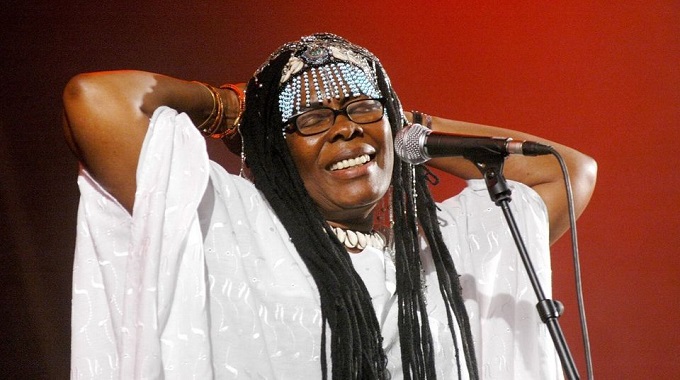
I am using the word autochthone loosely here to mean those ancient people, who emerged from the ground and started life in a particular area. In this case the Shona Zezuru.
While still there, Stella Chiweshe earned the sobriquet Mbuya, ordinarily meaning grandmother in Shona before she even got grandchildren, because the term assumed a prefix for a female spirit medium. She was spiritual grandmother.
Stella Chiweshe’s most popular rendition was Chave Chimurenga; a war cry that inspired many revolutionaries in South Africa, Zimbabwe and Namibia. It was powerful and well arranged.
But for some of us who followed her music Nhengure Shiri was epic. The twing-twang of the mbira, the ancient voice and the story telling was amazing.
Stella played mbira so well that she even did solo renditions of many of her songs, with great comfort and composure.
Like or the her, Stella Chiweshe was the first to export Zimbabwe’s traditional music to Europe, especially Germany.
Thomas Mapfumo was to follow immediately afterwards in a big way. I am not
going to compare the two for they are incomparable.
Stella was to stay there for many years, establishing a home there. She did not limit herself to Germany, she performed in USA, UK and little everywhere else.
Many of Stella Chiweshe’s songs like Nzuzu, Nhengure, Chipindura, Mudzimu Dzoka, Nehondo and Mayaya, among others made it on radio big time.
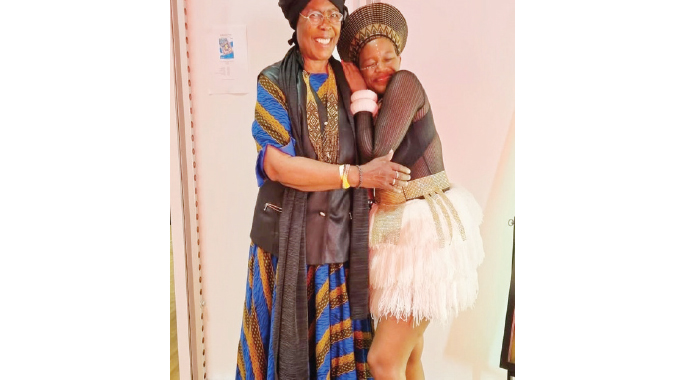
The most outstanding thing about Stella Chiweshe was her depth of character. Her charisma. Her talent. Her knowledge of African tradition and her resilience.
She was fearless. Imagine, in the late 1960s, when women were relegated to backing vocalists in the music industry, she took to the stage with a bang as the leader of the band.
She commanded her band and her skills very well. She also did solo performances. I will not end this peace without talking about Stella Chiweshe singing in English. She sang spiritual mbira in English and did it with aplomb.
The history of music in the country and indeed the history of traditional Zimbabwean music has lost a genius.
Her name, shall forever be carved in the history of this country’s music. She was sent by the ancestors and she played her part. She was a messenger of the ancestors.



 Online Reporter