Online Reporter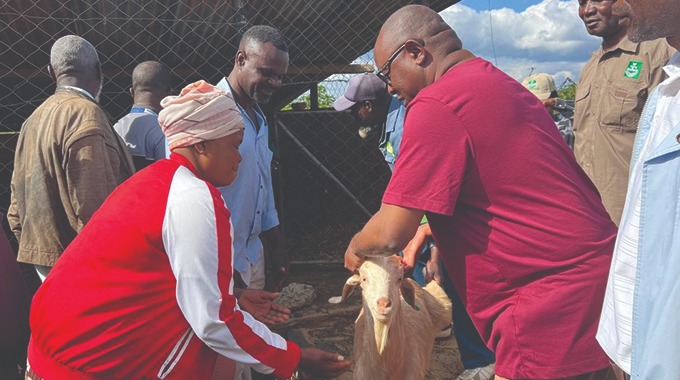
Sukulwenkosi Dube-Matutu, [email protected]
TWENTY-one farmer field schools from Matabeleland South Province will benefit from the Goat Pass-on Scheme, which was officially launched by Government on Friday in Esigodini to help boost small stock genetics and improve incomes.
Six farmer field schools goat breeders received cross Red Kalahari and Matabele breed bucks during the launch event at Esigodini Agricultural College innovation centre. The facility was established last year under the Green Climate Fund (GCF) project. Other farmer field schools will receive breed bucks soon.
The innovation centre has a feed analysis laboratory and a goat housing station aimed at improving animal health and nutrition through advanced nutritional content analysis of farm-produced fodder.
The Matabele breed is known for its adaptive ability to low plain nutrition, harsh weather conditions and medium to large body frame, low maintenance costs and good mothering ability.
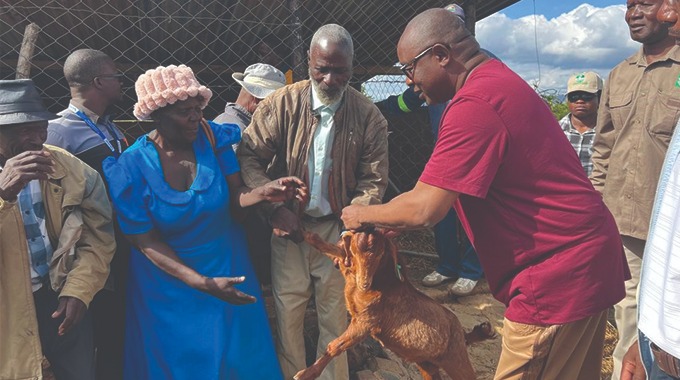
The Kalahari Red goats are characterised by a large body frame, adaptive to dry environments, large carcass weight, quality carcass and twinning ability.
Farmers who spoke to the Zimpapers news crew on site said the development marks a shift in their goat breeding projects.
One of the lead farmers, Ms Sikhumbulile Dube, from Umzingwane District said the project was expected to transform their lives.
“This buck will go a long way in improving our breed and growing our herd. The ratio for each buck is 1:25 for each breeding season meaning that we don’t expect less than 25 kids from females that will mate with this buck,” she said.
“The number can go up because some females can have twins. This means more money coming into our pockets because we will have an improved breed of goats. “Instead of selling a goat at US$50, a Kalahari- Matabele cross can be sold at US$150.”
Mr Ndabezinhle Moyo from Thuthuka Godlwayo Farmer Field School in Insiza said the project has come in handy.
Ms Sarah Nyoni from Asiqhubekeni Farmer Field School in Gwanda said they have already prepared proper housing for their goats in preparation for the bucks.

Deputy Minister of Lands, Agriculture, Fisheries, Water and Rural Development, Davis Marapira, said the pass on scheme will help uplift rural livelihoods, promote climate resilience and empower communities through sustainable livestock production.
“The innovation platform here at Esigodini Agricultural College plays a vital role in connecting research, policy and practice,” he said.
“It brings together farmers, scientists, extension officers, financial institutions and other stakeholders to co-create solutions that address real challenges in the agricultural sector.
“The goat pass-on scheme is one such innovation, rooted in local knowledge and supported by evidence-based strategies to ensure sustainability,” said Deputy Minister Marapira.
“Goats are more than just livestock as they are a lifeline for many rural households — providing meat, milk, income, and organic manure for soil fertility. They are also an entry point for empowering women and youth, who are often the primary caregivers and managers of small livestock.”
Through this pass-on scheme, he said Government was not just giving goats but passing on dignity, resilience and opportunity.
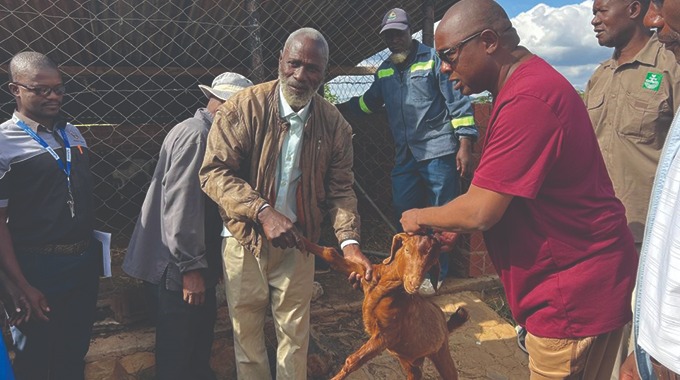
Deputy Minister Marapira commended the institution for making a significant progress under the project and urged farmers that have benefited to implement all the skills they have acquired in goat breeding.
Esigodini Agricultural College focal person for the Green Climate Fund programme, who is also animal science lecturer, Mr Zibusiso Nxumalo, said the college has also established a fodder and forage garden to address goat nutrition.
Forage crops under production include maize, sorghum, legumes, fodder trees, bush meal and palatable grass.
The college has also conducted an outreach programme where farmers have been trained on management of goats such as health, housing and handling facilities, feeds and feed management.
The institution is working with 21 farmer field schools in Umzingwane, Insiza and Gwanda.
Through training, mentorship, and scientific feed analysis, the initiative is set to improve livestock farming practices, ultimately contributing to food security and economic growth.
The innovation platform was established under the Building Climate Resilience of Vulnerable Agricultural Livelihoods in Southern Zimbabwe and funded by Green Climate Fund.
It seeks to empower communities by providing resources, training and support to mitigate climate change effects.
The programme is being implemented by Government with technical and management support from the United Nations Development Programme (UNDP). — @DubeMatutu