Talking Farming, Sifiso Ndlovu Agbetorwoka
AS goat farmers, we spend considerable time thinking about nutrition, breeding, disease control and good genetics. But there is another issue that deserves just as much attention — security.
With goat theft and predators being a concern for many farmers, an increasing number are asking whether dogs can be used to protect goat herds.
The answer is yes, but there is an important distinction that farmers need to understand.
Not every dog is a livestock guardian dog.
A herding dog is trained to move livestock. A livestock guardian dog, on the other hand, is expected to live with the livestock, bond with them and deter predators and intruders. These are two very different jobs.
Why consider a dog?
A properly selected and trained dog can become another layer of protection on the farm.
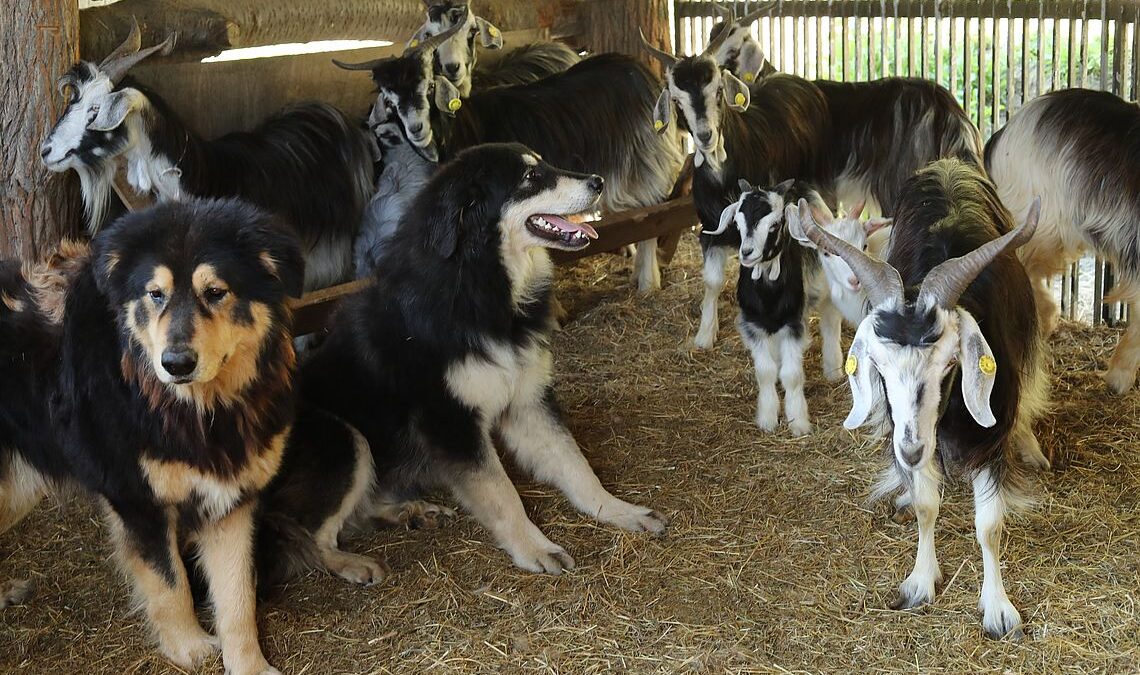
A good dog can alert the farmer when something unusual is happening, discourage strangers from approaching the herd and deter some predators. A guardian dog can also remain with goats when they are grazing or resting, particularly in more remote camps.
But farmers must remember that a dog is not a replacement for proper farm security.
Secure kraals, good fencing, regular head counts, stock registers, identification of animals, reliable herdsmen and good communication with neighbouring farmers remain essential.
Think of the dog as one layer in your security system, not the entire security system.
Guardian dog or herding dog?
This is where some confusion exists.
Breeds such as Anatolian Shepherds, Kangals, Great Pyrenees, Maremmas and similar traditional guardian breeds have been selected over generations for livestock protection.
Border Collies, on the other hand, are excellent herding dogs. They can be trained to gather goats, move them, separate them and bring them into a kraal.
That does not automatically make a Border Collie a livestock guardian.
A farmer therefore needs to first decide:
“Do I want a dog to help me move my goats, or do I want a dog to live with my goats and protect them?”
What about German Shepherds and local dogs?
This is where we need to be realistic about the Zimbabwean environment.
Purpose-bred livestock guardian dogs can be expensive and are not always readily available to the ordinary communal, small-scale or emerging commercial farmer.
Many farmers already have German Shepherds, Boerboel crosses, local dogs or other working dogs. Can they work? Some may. Some may not.
A German Shepherd is not traditionally bred as a livestock guardian, but an individual dog may be capable of alerting the farmer, patrolling the property and learning to live calmly around goats.
The same applies to local dogs and crossbreeds.
Rather than looking only at the price or pedigree of a dog, farmers should look at its individual temperament.
A dog that is confident, alert, trainable, territorial without being uncontrollably aggressive, and able to remain calm around livestock may prove extremely useful.
A very expensive dog that constantly chases goats is a liability.
The biggest mistake: throwing the dog into the herd
One of the biggest mistakes a farmer can make is buying a dog today and putting it into a herd of 100 goats tomorrow.
Please don’t do this.
The dog needs to learn: “These goats are my livestock.” And the goats need to learn: “This dog belongs here.”
With purpose-bred livestock guardian puppies, bonding with livestock is normally started when they are young. But when farmers are working with an older dog, the introduction needs to be much more controlled.
Start with a small group of calm goats — perhaps four to eight — in a secure area where the dog can be closely observed. Allow the dog and goats to become accustomed to one another.
Watch the dog’s behaviour
The farmer must become a good observer.
Good signs include the dog lying quietly among the goats, sleeping near them, moving with them and remaining interested when unfamiliar people approach.
But there are warning signs. If the dog continuously chases goats, bites tails or ears, grabs kids, knocks animals over or repeatedly attempts to hunt them, this is not acceptable guardian behaviour.
Do not assume the dog will eventually grow out of it.
Every time a dog is allowed to chase livestock, it is practising and reinforcing that behaviour. Calm behaviour should be encouraged and unwanted chasing should be stopped immediately.
Be particularly careful with goat kids
Kidding season requires extra caution.
A dog that has learned to tolerate adult goats may not automatically know how to behave around newborn kids. Young dogs can be particularly playful and may accidentally injure a kid.
For this reason, dogs should be carefully supervised around new-borns until the farmer is confident that they can be trusted.
One dog or two?
For a small herd, one properly trained dog may provide useful additional security. Larger herds and extensive grazing systems may eventually benefit from more than one guardian dog.
However, I would caution farmers against putting two untrained dogs into a herd simply because “two dogs are better than one”. Two energetic dogs can chase goats together and reinforce each other’s bad behaviour.
Train and establish one good working dog before expanding the programme.
The dog also needs good management
We sometimes forget that a working dog is also a living animal. It needs clean water, appropriate food, vaccination, parasite control, shelter and veterinary attention. A hungry, sick or heavily infested dog cannot be expected to perform effectively.
Fencing is also extremely important. A guardian dog that spends the whole night roaming neighbouring villages is not protecting your goats. In fact, it may create a new problem by chasing or attacking someone else’s livestock.
The dog needs to learn: “This is home. This is my herd. This is my territory.”
Can dogs stop goat theft?
No dog can guarantee that goats will never be stolen. A determined thief may still overcome a dog.
This is why I believe farmers should think about layers of security.
n Secure night kraals
n Regular head counts
n Ear tags or other identification
n Stock registers
n Trusted herdsmen
n Good perimeter fencing
n Night checks
n Community security WhatsApp groups
n Prompt reporting of suspicious activity
n Co-operation with neighbours and the police
n Cameras or lighting where affordable
The dog becomes an additional early-warning and deterrence system.
Could Zimbabwe develop its own livestock guardian dogs?
This is perhaps the most interesting opportunity.
Instead of telling every Zimbabwean farmer to import an expensive Anatolian Shepherd or Kangal, why don’t we begin looking at locally adapted working dogs?
Imagine a farmer who has a dog that has successfully lived with goats for several years. That dog has proven good livestock tolerance, guardian instinct, heat tolerance, endurance, good temperament, low tendency to roam and the ability to live alongside goats in local conditions.
Such a dog could potentially become part of a farmer-to-farmer breeding programme.
Over time, we could select dogs based not simply on appearance or pedigree, but on performance.
This could eventually give Zimbabwean goat farmers access to more affordable, locally adapted livestock guardian dogs.
A final word
We should not make the mistake of thinking that a big, aggressive dog automatically makes a good livestock guardian.
A good guardian is not necessarily the most aggressive dog.
We want a dog that is confident, alert and protective, but also controlled and trustworthy around livestock.
Most importantly, farmers should test the individual dog. Start small. Supervise. Correct unwanted behaviour. Reward calm behaviour. Give the dog time to bond with the goats.
And if a dog repeatedly demonstrates predatory behaviour towards livestock, remove it from the herd.
The cost of losing one valuable breeding doe or a group of kids can be far greater than the cost of the dog itself.
Ultimately, our objective is not simply to own a dangerous dog.
Our objective is to develop a dog that sees the goats as its herd and understands that predators, thieves and intruders are the problem — not the goats.
Goat farmers’ take-away
A dog is not automatically a livestock guardian because it is big, expensive or aggressive.
The winning combination is: RIGHT DOG + RIGHT TEMPERAMENT + BONDING + TRAINING + GOOD MANAGEMENT.
For Zimbabwean farmers, we should explore both purpose-bred livestock guardian dogs and carefully selected local dogs and crossbreeds.
Never put an untested dog directly into your valuable goat herd.
Start with a few goats. Supervise closely. Look for calm behaviour. Stop chasing immediately. Give the dog time to bond.
A good livestock guardian should protect your goats — not become another threat to them.
n Sifiso Ndlovu Agbetorwoka is the director – Bulembe Livestock Centre. Email: [email protected] | WhatsApp: +263775369910.