Sukulwenkosi Dube-Matutu, [email protected]
GWANDA’S chemical storage warehouse is emerging as a national model for managing hazardous obsolete pesticides, with the Environmental Management Agency (EMA) calling for similar facilities across the country to protect communities, safeguard the environment and prevent deaths linked to unsafe chemical handling.
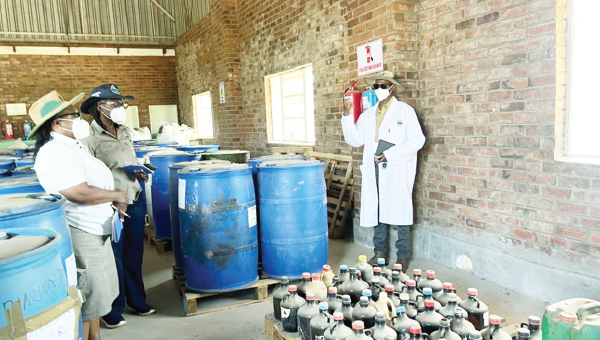
The facility, established by converting an existing warehouse, demonstrates how available infrastructure can be repurposed to address Zimbabwe’s growing challenge of safely storing and disposing of obsolete pesticides, offering a practical approach that could be replicated in every district.
About 10 tonnes of obsolete pesticides recovered from across the country are currently secured at the Gwanda warehouse, with plans underway to dispose of the stock within the next two years.
The facility was established under the ChemObs initiative, implemented by EMA in collaboration with the Ministry of Health and Child Care and the Ministry of Agriculture, Mechanisation and Water Resources Development, with funding from the United Nations Environment Programme (UNEP).
The initiative focuses on identifying, safeguarding and eventually disposing of obsolete pesticides and hazardous chemicals in an environmentally sound manner.
Addressing journalists during a recent tour of the warehouse, ChemObs project co-ordinator representing EMA, Mr Union Mapxashike, said the Gwanda facility provided a model Zimbabwe could adopt and improve as it works towards a permanent national solution.
He said a national inventory identified 14 tonnes of obsolete pesticides, of which 10 tonnes were recovered and moved to the warehouse. Most of the chemicals were found on farms.
“The ultimate of this project is to introduce sound measures of controlling pesticides and others chemicals as a country. This facility that we have here is a model that can guide on how we can manage obsolete chemicals,” he said. “This is a temporary measure that we can probably adopt and perfect as a nation as we continue to look for a permanent solution for storage and disposal of obsolete chemicals.
“We’ve got chemicals, which we call obsolete chemicals. These are chemicals that are no longer needed or can’t be used, have expired or can’t be identified. We realised that as a country we’ve a lot of such chemicals.
“Some were left behind by previous owners of farms. Some are chemicals that have been stored for a long time and have expired.”
Mr Mapxashike said the warehouse was an interim risk-reduction measure, warning that the chemicals remained a threat to human health and the environment if improperly handled or disposed of.
He said the long-term solution required the safe treatment or destruction of existing stockpiles, alongside a sustainable national system for managing hazardous chemicals.
“The work under the project encompasses locating and documenting obsolete chemicals; safe collection, sorting, repackaging, labelling and transportation; controlled temporary storage; eventual treatment or de-struction; and improvements to chemicals management that help prevent future stockpiles.
“The principal outstanding milestone is final disposal through an environmentally sound method.
Depending on chemical composition and available technology, specialist treatment or destruction outside Zimbabwe may be required,” he said.
The proposed replication of the Gwanda model across districts would bring the country closer to a coordinated system for identifying, collecting and safely securing obsolete chemicals before they contaminate the envi-ronment or fall into the wrong hands.
EMA education and publicity manager, Mrs Amkela Sidange, said establishing similar chemical storage ware-houses in every district would strengthen the country’s response to the problem.
She said EMA had converted an existing warehouse in Gwanda into a chemical storage facility, demonstrating a practical starting point for wider adoption.
Mrs Sidange said public awareness was equally important, urging the media to help communities understand the dangers associated with obsolete chemicals.
“We have had incidences of people mistaking these obsolete chemicals to edible food and in some cases lives have been lost. We’ve cases where chemicals have been disposed into water bodies leading to the death of animals and people.
“As Ema we’re saying we need to create that narrative for the country so that we seek the risk posed by these obsolete chemicals as they are a threat to the environment and public health. Some of these chemicals are be-ing sold to unsuspecting communities who go on to use them. We need people to be informed of the chemicals they are using,” she said.
Mr Mapxashike urged farmers to buy only the pesticides they need rather than stockpiling excess quantities that could expire before use. He also called on stakeholders to store pesticides properly and familiarise them-selves with the laws regulating their use.
Stakeholders with obsolete pesticides were encouraged to alert authorities for collection, while EMA continues educating communities on best practices in pesticide management.
Obsolete chemicals include expired, banned, deregistered or degraded substances that may pose serious risks through soil and groundwater contamination or the release of hazardous compounds into the air.
While the Gwanda warehouse provides a temporary solution, its broader significance lies in offering Zimbabwe a practical model for stronger chemicals management. Expanding similar facilities, improving handling prac-tices and ensuring the safe final disposal of stockpiles will be critical to turning the initiative into a sustainable national response.