Bruce Ndlovu, [email protected]
ON a Sunday morning in Mbare, the sound of Passno Percy Molife’s violin rose above the choir, carrying hymns through the United Methodist Church. Away from the pulpit, the same man could be found with a paintbrush in hand, teaching his daughter a lively swing dance or helping children whose needs extended far beyond the classroom.
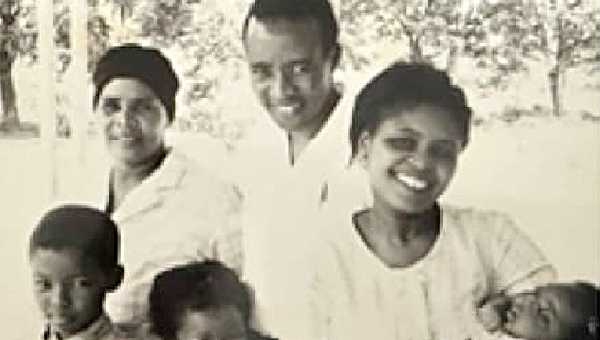
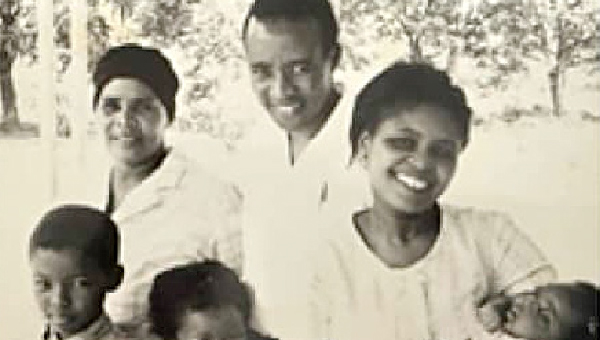
For much of his life, PP Molife was known first and foremost as an educationist, a man who helped shape Zimbabwe’s schooling system over four decades. Yet despite his illustrious achievements in this field, to define him by his profession alone would be to miss the many other lives he lived.
During the course of his life, Molife was the artist, the musician, the dancer and the tireless champion of society’s overlooked.
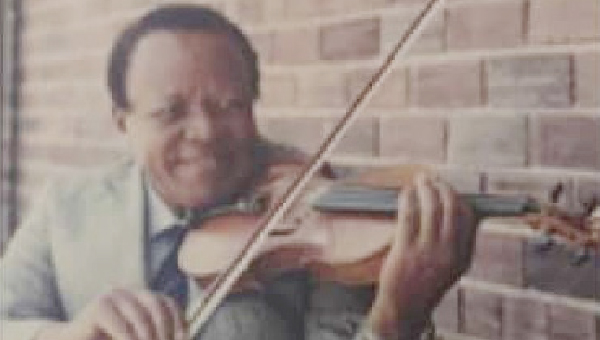
Molife, who died in Harare on August 25 at the age of 96, was a man whose curiosity and sense of duty rarely stopped at the end of the working day.
Born in Shurugwi on January 22, 1930, the eldest of nine children, Molife grew up with an appreciation for the arts and a willingness to teach himself new skills. His childhood interests included cycling, painting and music, pursuits that would remain part of his life long after he had established himself as a respected educationist.
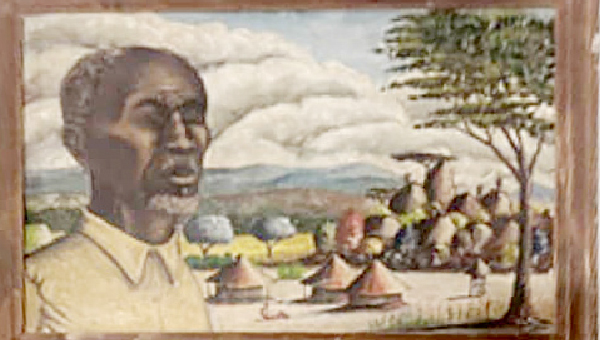
Painting was one of his earliest passions. This in itself was remarkable, as he ventured into this field without formal training, teaching himself to work with paint and brushes, producing pictures inspired by his surroundings and family history. Some of his works depicted scenes in Domboshava, including one featuring his grandfather, a traditional chief.
He continued painting into middle age, but another later on, another artistic pursuit would eventually take centre stage.
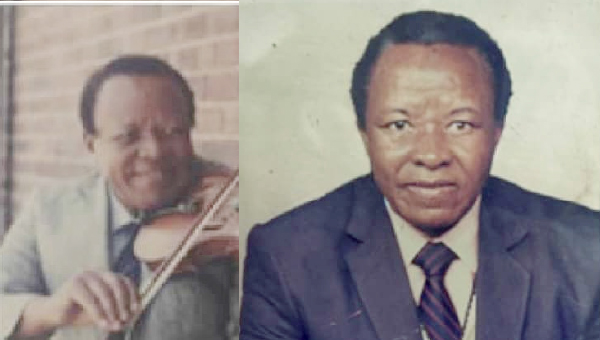
The violinist and dancer
Although Molife had played the violin since boyhood, he only began taking it seriously after settling in Harare. An encounter with Italian musician Lucci Balarini would proved decisive and after their meeting, he began visiting Balarini’s home for evening lessons after work. He practiced relentlessly, applying the same discipline that had served him in the classroom and eventually becoming a highly accomplished violinist.
For decades, his music became part of Sunday worship at the United Methodist Church in Mbare.
With his family seated in the front pews, he played above the choir, accompanying hymns with a skill developed over years of practice.
While it was not his field of work, for Molife music was not merely a Sunday pastime. He practised almost every day, and it took arthritis, which affected the dexterity of his fingers in his late eighties, to finally force him to put down his bow. It was a retirement he reportedly accepted with far less enthusiasm than he had his departure from formal employment.
His musical interests extended beyond the violin, as he was also proficient on the guitar and piano, and passed some of that knowledge on to his children.
In the mid-1970s, he taught his daughter Lindelwa to play the piano on the family instrument. He also introduced her to the Lindy Hop, a high-energy swing dance that originated in African-
American ballrooms in Harlem, New York, in the late 1920s.
It was an unexpected side to a man whose professional life demanded structure and seriousness.
Yet in his choice of hobbies, Molife’s interests revealed someone who believed that life had room for both discipline and pleasure.
A journey shaped by racism
Due to his keen intellect and studious nature, Molife found himself at Fort Hare University in the late 1940s.
At the time, the university was the a nursery for some of Africa’s greatest political minds, nurturing some of continent’s future leaders, including Nelson Mandela, Oliver Tambo, Robert Sobukwe, Seretse Khama, Kenneth Kaunda, Julius Nyerere, Joshua Nkomo and Robert Mugabe. It was in this distinguished environment that Molife pursued his studies, graduating in 1952 with a Bachelor of Science degree awarded by Rhodes University.
Molife’s adventurous spirit was also evident in 1963, when he travelled to Western Australia on a Commonwealth scholarship to pursue postgraduate studies in education at Claremont Teachers College in Perth.
At the time, he was headmaster at Nyadiri Mission near Mutoko and the scholarship offered an opportunity to broaden his knowledge, but getting to Australia proved to be an experience shaped by the racial discrimination of the era.
As a perfect illustration of the absurdity of the time, apartheid restrictions prevented him from taking the direct route through Johannesburg’s Jan Smuts Airport, while Australia’s White
Australia Policy imposed discriminatory restrictions on non-white travellers.
His journey therefore took him from Harare to Kampala, then Nairobi, before continuing through Burma and Bombay on the way to Perth. What should have been a straightforward trip became a long international detour, as the politics of race dictated the route any one passenger could use.
Once in Australia, however, Molife made the most of his time. He travelled by train across the continent, visiting Kalgoorlie, the Great Barrier Reef and the Blue Mountains. In a particularly unusual move, he also qualified as a driving instructor, entirely on his own initiative.
During his travels, he encountered rural schools where a single teacher managed several year groups in one classroom. The arrangement was a practical response to the challenges of educating children in sparsely populated areas.
Molife recognised that the approach could offer useful lessons for a country where resources were limited and the need for schools was growing. He returned home with ideas that would later help inform his work in education.
His journey was a striking example of how he responded to obstacles: rather than allowing racial barriers to define the experience, he used the opportunity to learn, explore and prepare himself for the challenges awaiting him at home.
Beyond the classroom
Molife’s contribution to education extended well beyond teaching science. After serving as a headmaster, he became a schools inspector in 1965 and later rose through the ranks to become a regional director in the Ministry of Education.
He was involved in establishing schools, inspecting teaching standards and helping expand access to education. Following Zimbabwe’s Independence in 1980, the country faced the enormous task of accommodating rapidly growing numbers of pupils. Molife was among the educationists who helped build the system needed to meet that demand.
He retired from the Ministry in 1995, but retirement did not end his relationship with the classroom. He continued offering private tuition in science subjects from his Mount Pleasant home before returning to formal teaching as a Biology teacher at Gateway High School in Harare.
He had also played a role in establishing the Gateway schools, making his return to the classroom a continuation of work he had helped set in motion. Perhaps the most revealing part of Molife’s life was the time he gave to people whose struggles were often overlooked.
Soon after returning from South Africa, he sought out disability pioneer Jairos Jiri, whose association had been founded in Bulawayo in 1950. Molife became a close and committed supporter, accompanying Jiri on fundraising missions to cities across Europe and the Americas.
He also worked with the Child Protection Society, which runs Chinyaradzo Children’s Home in Highfield, and St Giles Medical Rehabilitation Centre in Milton Park, Harare. After leaving the Ministry of Education, he served as director of St Giles for several years.
His commitment was not confined to meetings, fundraising trips or administrative duties. He took his grandchildren to St Giles during school holidays and to Chinyaradzo, exposing them to the lives of children who needed care and support.
Through these visits, he taught his own progeny that service to others was a responsibility, not simply an act of charity.
A life that refused to stand still
Even in his personal life, Molife displayed the determination and independence that marked his professional career.
In 1978, he bought a house in Mount Pleasant while Rhodesia’s racially discriminatory residential laws were still being dismantled. Although he had lawfully purchased the property, the family could not immediately move in because the repeal of the Land Tenure Act was incomplete.
Rather than quietly accept the delay, he challenged the State, arguing that his family should not suffer because the authorities had failed to complete the process of changing their own laws.
The State eventually accommodated the family at the Monomotapa Hotel until they could occupy their home. A favourite family story from that period recalls how Molife’s children arrived at school with breakfasts and lunches prepared by the hotel’s chefs.
It was a small but revealing episode in a life shaped by principle, persistence and an unwillingness to accept unnecessary obstacles.
After officially retiring, he continued teaching and serving others, showing little interest in the idea that age should bring an end to purposeful activity.
Molife died at his Mount Pleasant home on August 25, 2026, aged 96, leaving behind generations of pupils, a loving family and a legacy of service.
He will be remembered as the educationist who helped shape Zimbabwe’s schools, but also as the painter, violinist, dancer and humanitarian who enriched lives beyond the classroom. From the hymns he played in Mbare to the vulnerable children he supported at St Giles and Chinyaradzo, his life was defined by a remarkable breadth of talent and compassion.
The violin may have fallen silent, but the lessons he taught, in classrooms, through music and by example, endure.