Online Reporter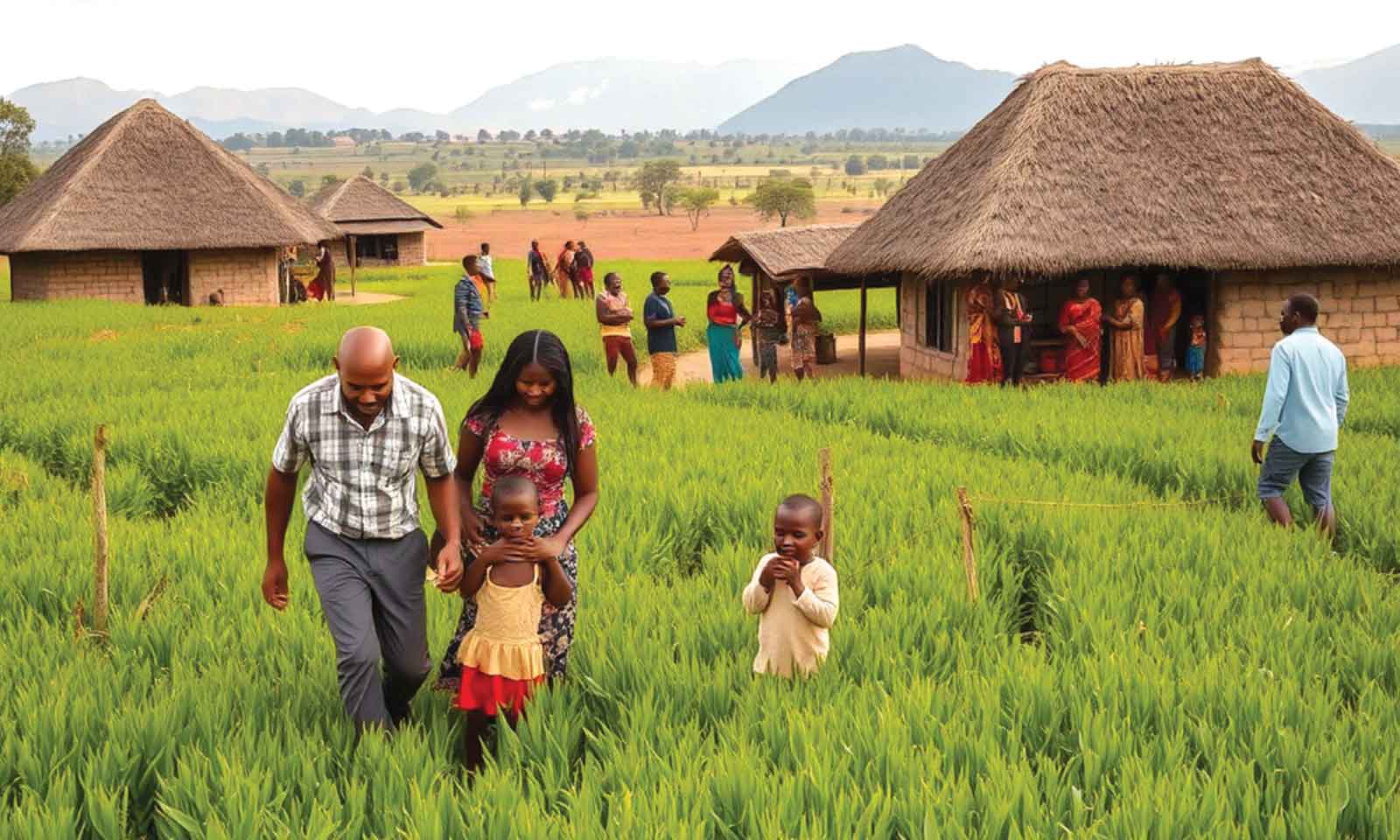
Dr Grace Musandirire
Building Generational Wealth
Last week, I wrote about Zimbabweans in the diaspora and encouraged them to come back home to invest in business and national development.
This week, I wish to speak to us as parents, those of us living and working in towns and cities, about an equally important but often neglected pillar of generational wealth: returning to our rural homes and taking our children with us.
Many of us grew up in the rural areas. That is where we were raised, disciplined, taught values, and introduced to life. Our parents lived there with us. Our identity was shaped there. Yet, once our parents passed on, many of us quietly abandoned those places. We stopped going back. We convinced ourselves that town had become our new home, forgetting that town is where we stay, not where we come from.
As parents, we remain in urban areas while our rural homes slowly turn into ruins. Homesteads are left empty, fields are no longer cultivated, and family land lies idle. Over time, others begin to encroach, assuming that the rightful owners will never return. When we finally remember to go back, boundaries have shifted, disputes have arisen, and reclaiming what is rightfully ours becomes painful and costly. All this happens while we are alive, present, and capable of protecting our inheritance.
We must ask ourselves a hard question. If we do not return home now, when will our children ever know where they come from?
Today, many children say, “We are going to see our parents,” meaning they are visiting them in town. The idea of going kumusha, the real home, has faded. As parents, we have unknowingly reinforced this confusion. When our children come to see us, we receive them in town, entertain them in town, and send them back without ever saying, “Let us continue the journey. Let us go home.”
Town houses are not home. Flats and lodges are not home. Home is where your umbilical cord is buried, where your clan history lives, and where your inheritance lies.
We must intentionally plan that when our children visit us, we proceed with them to the rural areas. There, we must show them the homestead we inherited from our parents. We must introduce them to relatives, neighbours, and elders.
We must teach them our customs and values. We must show them the traditional leadership, the chiefs, headmen, and village heads, so they understand how life is governed there.
This knowledge is not optional. It is preparation.
It is far better to struggle to buy a house in town but have land in the rural areas that belongs to you by inheritance. Rural land gives opportunity without the heavy costs of urban property.
One can build without paying for land. One can farm, rear animals, and create sustainable livelihoods.
Ironically, we often hear people say they have no space to start projects like poultry, piggery, rabbits, ducks, goats, cattle, sheep, or crop production, yet they own vast idle land in the rural areas.
This contradiction reflects how disconnected we have become from our roots.
Rural homes are not places of poverty. They are places of potential. With vision, rural land can host income-generating projects that feed families, educate children, and preserve wealth for generations. When we abandon these spaces, we abandon opportunity.
This message also speaks to those in the diaspora.
Many return home for holidays but choose to stay in expensive hotels or apartments, spending thousands while their rural homes remain untouched.
They forget the huts they slept in as children, the fields they worked in, and the land that still carries their name. That land is waiting.
It has not rejected them.
If we do not take our children back now, the next generation will be completely disconnected.
They will have no emotional attachment, no sense of ownership, and no motivation to protect or develop rural property.
That loss will be our doing.
Generational wealth is not only about money in bank accounts.
It is about land, identity, knowledge, culture, and continuity. Wealth that is not rooted is easily lost.
I therefore urge every parent whose children are coming to visit them this holiday season to plan deliberately. Do not stop in town. Continue the journey. Go home. Show your children where you come from. Show them their land. Even if you are a daughter-in-law or son-in-law, home is still home. Inheritance is not cancelled by marriage or distance.
Let us revive our rural homes.
Let us protect what our parents left us. Let us invest where it matters.
And most importantly, let us ensure that our children know where they belong.
That is how generational wealth is built. Not only for today, but for tomorrow and beyond.
Author Profile
Dr Grace Musandirire is a Zimbabwean entrepreneur, business mentor, and generational wealth advocate. She is the Managing Director of Graceland Waters Resort and the founder of several business initiatives focused on empowering families, women, and communities through sustainable enterprise. She writes and speaks passionately about legacy building, entrepreneurship, and wealth transfer across generations.