

 Online Reporter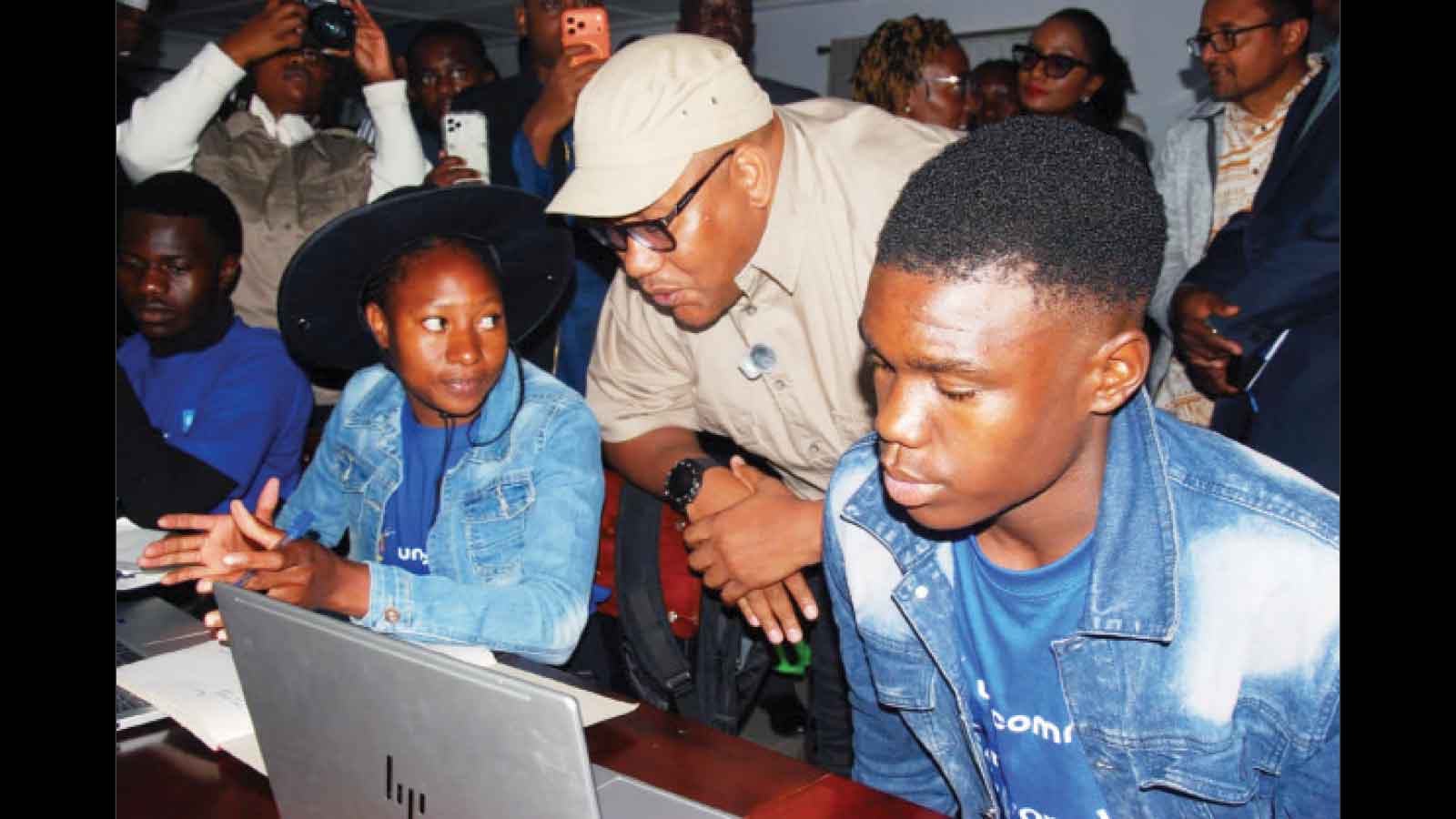
Sekai Manyere in GOKWE
GOVERNMENT, in partnership with the United Nations Development Programme and Uncommon.Org, has launched an Artificial Intelligence, Digital and Innovation Hub at Nyamuroro Vocational Training Centre in Gokwe North.
Minister of Youth Empowerment, Development and Vocational Training Tinoda Machakaire, who was represented by Deputy Minister Kudakwashe Mupanhanga, said the hub would provide young people in rural communities with access to digital skills, artificial intelligence, coding, innovation and opportunities in the digital economy.
“The launch is more than the opening of a training facility,” he said.
“It opens the gateway through which young people in rural Zimbabwe can access digital skills, artificial intelligence, coding, innovation, and the opportunities of the digital economy.”
In a speech read on his behalf, Minister Machakaire said the facility was the first AI Digital Innovation Hub established by the ministry in a rural area, adding that its location in Gokwe North was deliberate.
“Zimbabwe’s digital transformation must not be confined to our cities and urban centres.
“It must reach our villages and rural communities so that no young person is left behind because of where they live,” he said.
The hub has already enrolled 52 young people from Gokwe North who have commenced lessons.
“To our 52 pioneer learners, this hub belongs to you. As the first cohort, you have been given an opportunity that many before you did not have. I urge you not to come merely to obtain certificates, but to acquire skills that can transform your lives,” he said.
Minister Machakaire said the initiative came at a time when Zimbabwe was seeking to address youth unemployment and inactivity. He said approximately 49,2 percent of young people were not in education, employment or training, according to the 2025 ZimCET survey.
The Minister explained that the national target is to reduce this proportion of youth not in education, employment, or training from 49,2 percent to 15 percent by 2030.
He urged development partners, the private sector and communities to support similar initiatives.
“One hub is an important beginning, but it cannot be the end; we need more partnerships, more young people trained, more rural communities connected to the digital economy,” said Minister Machakaire.
UNDP resident representative Dr Ayodele Odusola said the project was designed as an opportunity platform to generate employment, entrepreneurship and locally relevant solutions.
“Success of what we are doing today is not measured by the number of computers that have been installed, but the capabilities that are going to emerge from here, including the employment opportunities that are going to be created, the entrepreneurs that are going to be trained and the locally relevant solutions that are going to be introduced to address challenges that are facing our communities across Zimbabwe,” he said.
He said digital innovation should reach communities across the country rather than remain concentrated in urban centres.
“Access to digital innovation cannot be limited to all our major urban centres, but it should be something that is accessible to all communities across all 10 provinces in Zimbabwe,” he said.
Dr Odusola said the next phase would focus on expanding skills, innovation, entrepreneurship and job creation.
“Today’s commissioning is just the beginning; it’s not an end, so the next phase is for us to move from infrastructure to utilisation and also moving to expanding skills, innovating, training entrepreneurs and generating jobs,” he said.
UNDP funded the renovation of the facility and procurement of 32 laptops, interactive boards and other equipment, while the Ministry of Information, Communication Technology, Postal and Courier Services provided 20 additional laptops.
Uncommon.Org deployed instructors to support the programme.
Director Michelle Gwatiringa said the project demonstrated that innovation belonged to every community.
“Together, we are demonstrating that innovation is not confined to our cities, but it belongs to every community across Zimbabwe,” she said.



Could someone explain who uses AI and how AI is used and on what it is used in Gokwe? Can politicians stop this NONSENSE please? Let’s give these youngsters something that is real and easy to understand. AI tools are only helpful to people who are already experts in their respective activities. Where does a student apply AI tools? What does he or she learn from Meta creating content or writing reports for him or her? Is the whole nation blind to this danger.