daniel chigunwe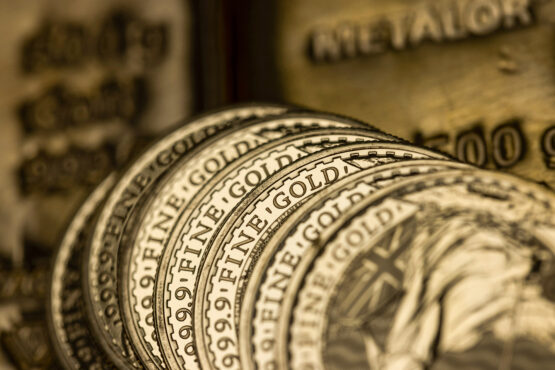
The gold price fell back some US$10 per ounce after hitting a new record of US$2 589 per ounce on Monday, but investors and gold lovers expect it to continue its upward march to another new high.
“There is a lot of uncertainty in the world now,” says Rael Demby, CEO of The South African Gold Coin Exchange and The Scoin Shop.
“One thing I can be certain about is that the uncertainty is not going to go away.”
Demby says history has shown that gold always thrives in times of uncertainty. Recent events have proved this.
Gold started its strong run in 2022, jumping from around US$1 700 to US$2 000 per ounce when Russia invaded Ukraine.
Gold really started to run in October 2023 when Palestinian militant group Hamas attacked Israel, which fuelled growing conflict in the Middle East.
It is still getting worse, with fears that attacks from and in Iran, Lebanon and Yemen could escalate into a regional war that could draw other countries in too. The explosion of nearly 3 000 radio pagers carried by Hezbollah members in Lebanon is ratcheting aggression up another notch, and the outlook for the gold price a few dollars.
Upside
Gregory Shearer, head of base and precious metals strategy at JP Morgan, says in a report to clients that the broker has upgraded its gold price targets for this year and 2025.
“Economic and geopolitical uncertainty tend to be positive drivers for gold, due to its safe-haven status and ability to remain a reliable store of value.
“It has low correlation with other asset classes, so can act as insurance during falling markets and times of geopolitical stress,” says Shearer, noting that data also shows there has been a reluctance by physical holders to sell gold.
“A general aversion to short bullion financially, despite the (outsized) rally, underscores gold’s structurally bullish drivers outside of US interest rates,” he adds.
“Gold’s resurgence has come earlier than expected. We have been structurally bullish gold since the fourth quarter of 2022 and with gold prices surging past US$2 400 in April, the rally has come earlier and has been much sharper than expected.
“It has been especially surprising given that it has coincided with (US) Federal Reserve rate cuts being priced out and US real yields moving higher due to stronger labour and inflation data in the US.
“Amid fraying geopolitics, increased sanctioning and de-dollarisation, we observe an increased appetite to buy real assets,” he says.
JP Morgan expects the gold price to average US$2 500 per ounce until year-end and to increase to an average of US$2 600 in 2025 — and says the risk of the prediction being wrong would be to the upside. Research by the SA Gold Coin Exchange tallies with this view, with Demby being a bit more optimistic.
“Gold is on a upward trajectory and we see it above $2 600 per ounce at the end of the year.
“Dedollarisation is happening. Brics countries have indicated that a Brics currency will partly be backed by gold,” says Demby. Central banks have been big buyers of gold over the last few years. Russia and Turkey have been buying more gold than they ever did.”
Data from the World Gold Council shows that central banks around the world purchased 1 037 tonnes of gold in 2023, led by China.
Central bank buying, net of sales, exceeded 290 tonnes in the first quarter of 2024.
The World Gold Council says it is the fourth strongest quarter of purchases since the buying binge began in 2022.
It points out that gold purchases increased by 5percent compared to the previous quarter despite the sharp increase in the average price quarter on quarter.
Rand hedge
Gold has treated local investors in gold coins, bars and gold shares very well too, despite the recent strengthening of the rand against the US dollar.
The gold price increased by 11percent in rand terms over the last six months compared to the rise of 19 percent in dollar terms — as the rand strengthened from R18,75 in March to the current R17,58 per dollar. — Moneyweb


 Online Reporter