Online Reporter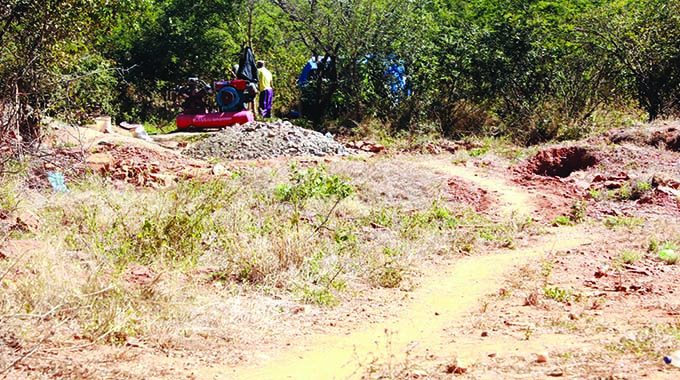
Sunday News Reporter
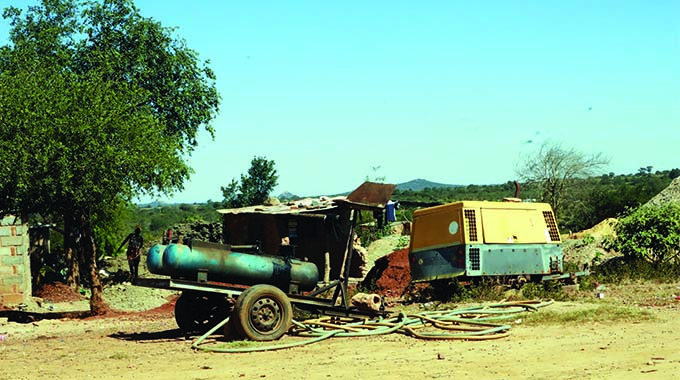
HIDDEN behind a dense thicket of shrubs, tall grass, and trees, four illegal gold miners toiled away, just a short distance from Wanezi High School in Insiza District, Matabeleland South Province, on Thursday afternoon.
Oblivious to a white pick-up vehicle passing along a dusty trail, they continued loading gold ore into worn-out cement bags.
It was only when the vehicle made a brief stop that the illegal miners, commonly known as omakorokoza, noticed its presence and quickly vanished into the bush. But not before the Sunday News photographer captured images of their illegal activity.
Wanezi High School, a Brethren-In-Christ Church (BICC)-owned educational institution established in 1962, is under siege from illegal miners who have set up camp on the school’s 3 000-hectare farm.
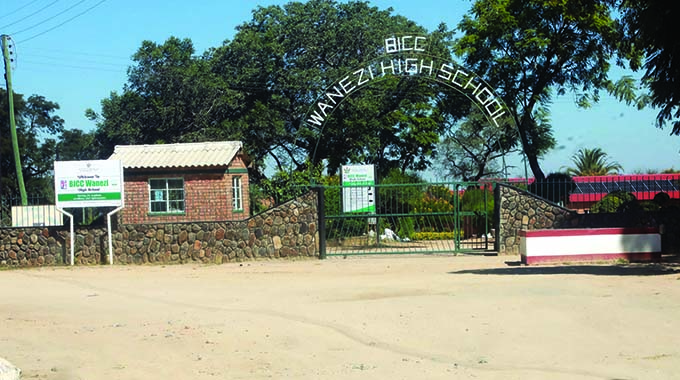
The expansive farmland, still largely untouched, is now showing signs of land degradation as increasing numbers of gold panners invade the area in search of the precious metal.
Concerned villagers fear that the deep pits left by the panners pose a serious threat to their livestock, which risk falling into the trenches.
While acknowledging that even local youths are involved in the activity, Mrs Lucia Mathe expressed concern about the environmental destruction.
“The farm belongs to Wanezi High School, but there is no fencing around it. Our cattle also wander in there to graze, but we’re worried about the open pits left by the miners. Yes, our children are also digging for gold here, but it’s better for them to work near home than go to areas where there are constant fights and deaths,” said Mrs Mathe.
Another villager, Mr Thabani Magagula, who was buying groceries from a small tuck shop outside the Wanezi High School main gate, voiced fears that the influx of panners could attract outsiders, leading to violent conflicts over mining claims.
“We’ve seen it happen in places like Filabusi Centre here in our district, where armed gangs fight over mining rights. Locals won’t just sit back while outsiders come and dig for gold, which often ends in violence. These fights end up affecting villagers who might get caught in the crossfire. The problem is that gold panners don’t value human life when it comes to digging rights,” he said.
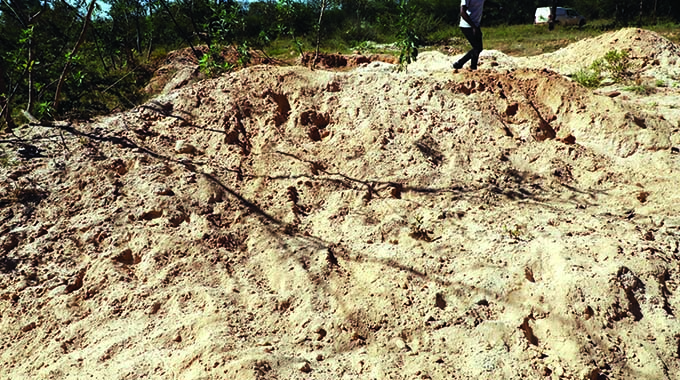
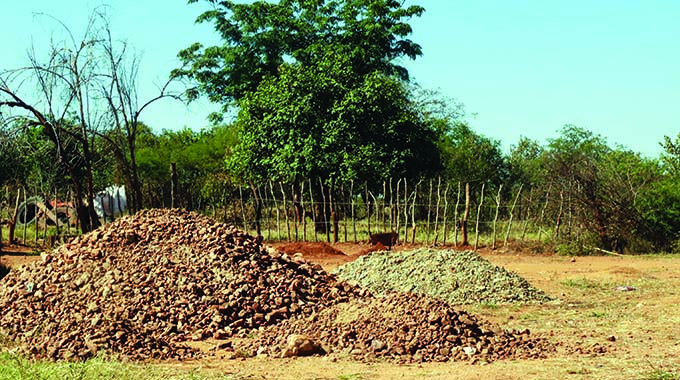
The gold mining pits on the Wanezi High School farm are scattered throughout the area and vary in size and depth. In some spots, they are less than two metres deep, likely abandoned early when no gold was found.
But it is those pits that haunt villagers like Mrs Mathe, especially during the rainy season when they fill with water.
“Imagine what happens if a cow falls into one of those pits, it could break its legs or die from hunger while its owner searches everywhere,” she said.
Earlier in the week, a team of inspectors from the Environmental Management Agency (EMA) visited the school farm on a fact-finding mission to assess the extent of the damage.
“One miner was fined for non-compliance with EMA regulations and ordered to stop operations. If the order is ignored, EMA will issue further penalties, and persistent offenders will be taken to court,” said EMA’s Matabeleland South provincial manager, Mr Decent Ndlovu.
Mr Ndlovu described how miners using metal detectors pose a challenge to law enforcement.
“They dig indiscriminately and leave open pits, causing massive land degradation. Those using metal detectors are particularly difficult to trace because they move constantly,” he said.
BICC officials have since engaged EMA and the Zimbabwe Republic Police (ZRP) in efforts to remove the illegal miners.
“On Monday, we will visit the school farm with the authorities to show them the extent of the damage. We hope the issue will be resolved after this meeting,” said an official, who declined to be named.
The spokesperson for the Ministry of Primary and Secondary Education, Mr Taungana Ndoro, could not be reached for comment.
The chief executive officer of the Zimbabwe Miners’ Federation, Mr Wellington Takavarasha, has previously stated that mines must be located at least one kilometre away from residential areas, both urban and rural.
“A blasting licence issued by the Ministry of Mines and Mining Development stipulates that any mining activity must occur at least one kilometre from human settlements to ensure safety during blasting,” he said.
Wanezi High School joins a growing list of educational institutions battling an influx of illegal gold panners, including the National University of Science and Technology (Nust) in Bulawayo.
Nust had to enlist police assistance to curb the illegal activity after panners invaded the university’s main campus. Last year, six Bulawayo men were arrested and prosecuted for conducting illegal gold panning operations on university grounds.
The arrests followed a raid by the ZRP — including the canine unit — which descended on the site where dozens of miners were digging. While most fled, six were caught and sentenced to six months in prison.
In Bulawayo, suburbs such as Mqabuko Heights, Killarney, Queenspark, and Mahatshula are also under threat from illegal gold panners, who are encroaching onto residential areas in their relentless search for gold.