

 Online Reporter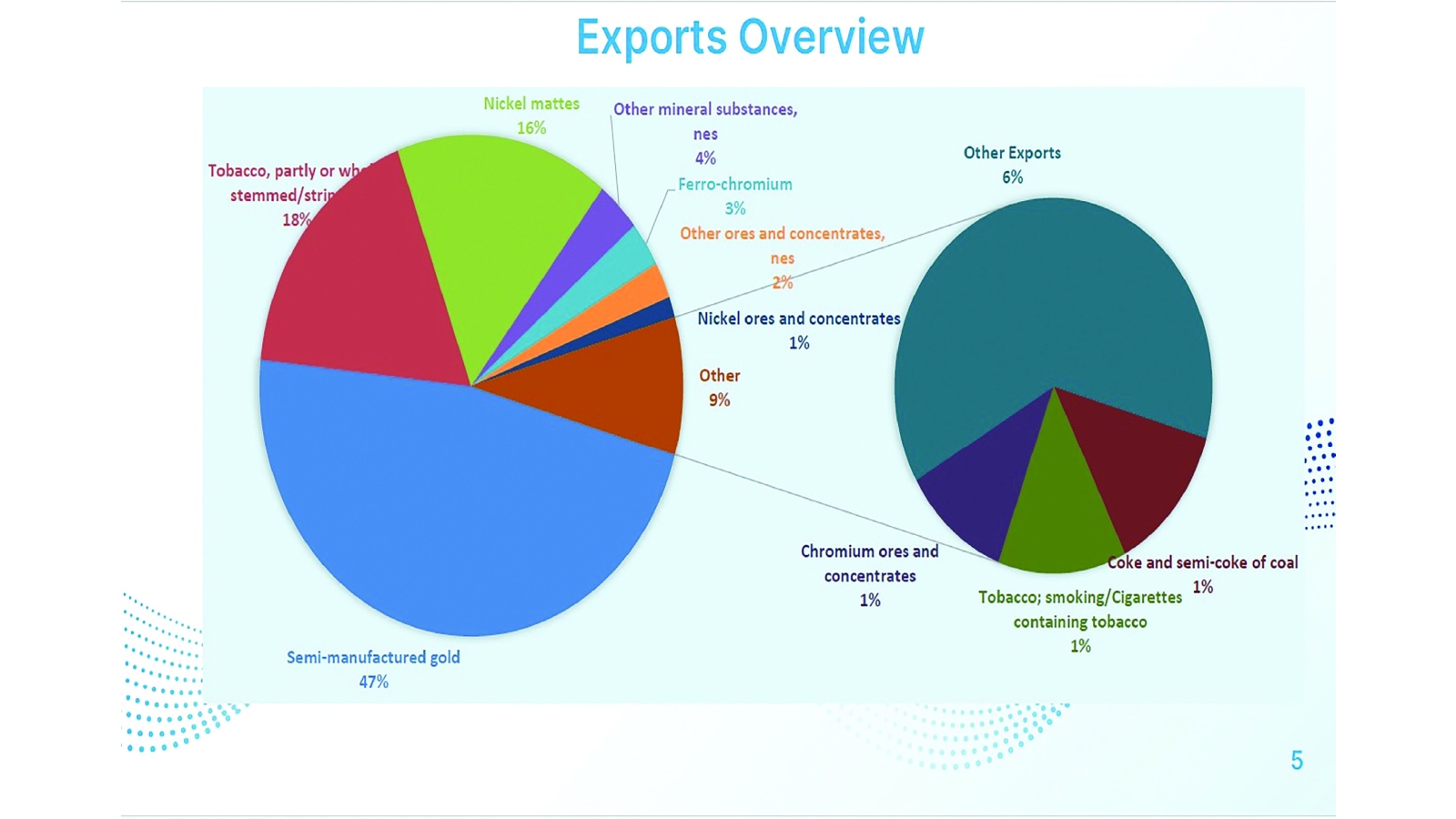
Nelson Gahadza
Zimpapers Business Hub
Zimbabwe’s highest gold royalty rate has kicked in after global prices for the precious metal climbed to a new record of US$5 100 an ounce yesterday, the threshold that triggers the topmost rate under the tiered royalty regime.
Finance, Economic Development and Investment Promotion Minister Professor Mthuli Ncube introduced the new royalty system through the 2026 National Budget to optimise fiscal inflows from rising global prices while maintaining incentives for strong production.
Under the new framework, once spot prices exceed US$5 000 per ounce, a 10 percent royalty will apply to large-scale miners.
The gold royalty is charged at 3 percent for prices up to US$1 200, rising to 5 percent for prices between US$1 201 and US$2 500 per ounce and 10 percent when prices surge past US$5 000 per ounce.
Before the 2026 national budget was finalised, mining companies expressed concern that the proposed doubling of gold royalties would erode margins and derail investment plans.
“Introducing a 10 percent royalty at just above US$2 500 an ounce is more than twice the current rate in many of the world’s top mining jurisdictions,” the Chamber of Mines of Zimbabwe said in a submission to the Treasury.
The chamber argued that such a policy threatened Zimbabwe’s competitiveness and could discourage both existing and potential investors.
Caledonia Mining Corporation, which is advancing its Bilboes gold project, once said that the higher royalty, combined with a proposed tax on capital expenditure, would force it to reassess the project’s economics and potentially delay development.
However, following lobbying by legislators, miners and industry bodies, the Treasury raised the royalty trigger point to US$5 000 per ounce.
At the time of the proposed new royalty system, gold was trading around US$4 000 an ounce, and Minister Ncube’s concession was widely welcomed.
Prices have perhaps climbed far too fast, bringing the 10 percent royalty threshold into effect.
Small-scale miners are, however, not affected as they are liable to a lower royalty rate of up to 2 percent, recognising their tighter margins and overbearing role in overall production.
Gold now accounts for more than half of Zimbabwe’s mining export receipts, cementing its role as a cornerstone of foreign currency earnings.
Zimbabwe’s 2025 export performance showed significant growth, with total foreign currency earnings jumping to US$16,2 billion, driven by strong mineral exports (gold, platinum, and PGMs) and agriculture, despite monthly fluctuations, according to the RBZ.
The industry has been on a remarkable growth trajectory; with deliveries reaching a record 46,7 tonnes in 2025, a 28 percent increase from the previous year and well above the Government target of 40 tonnes.
The gold subsector, as Zimbabwe’s leading foreign currency earner, used to back the Zimbabwe Gold (ZiG) currency, contributes about 12 percent to gross domestic product (GDP) and supports over 300 000 livelihoods in the artisanal mining sector.
Globally, gold has been propelled by a combination of geopolitical tensions, central bank purchases and investor appetite for safe-haven assets amid currency volatility.
Market analysts predict continued gains as central banks diversify reserves and interest rate cuts make non-yielding assets like gold more attractive.
The soaring prices also present an opportunity for the Treasury and the Reserve Bank of Zimbabwe (RBZ) to augment reserves.
The RBZ expects the momentum to continue this year, alongside strong platinum group metal prices.
Economist Mr Namatai Maeresa said the taxation policy reflected a delicate balancing act.
“On the one hand, the Government needs to capture more value from its natural resource endowment to finance public services and stabilise the economy,” he said.
He added that the additional revenue from higher royalties and improved tax compliance could also provide much-needed fiscal breathing room, helping to fund infrastructure, social services and debt obligations.



