Online Reporter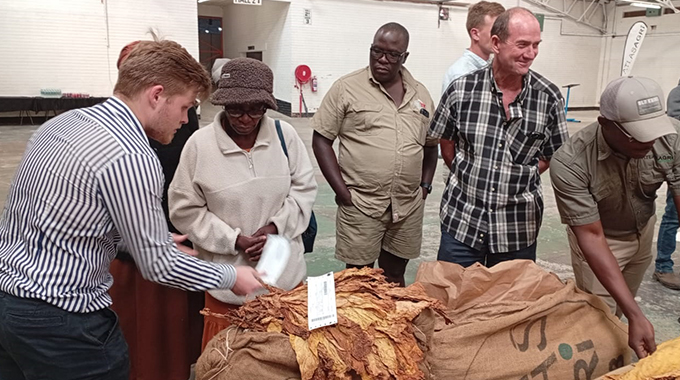
Raymond Jaravaza, [email protected]
THE inaugural tobacco auction floor in Bulawayo, catering for tobacco growers in the Matabeleland region, held yesterday at the Zimbabwe International Conference and Exhibition Smart City, offered rich pickings for first-time and established growers with the best quality golden leaf fetching US$3,80 per kilogramme.
The lowest quality tobacco was sold at US$0,80 on the first day of the sale, which attracted 16 growers who delivered 510 bales of tobacco from farms and communal land ranging from Umguza, Mangwe and Bubi, among other places.
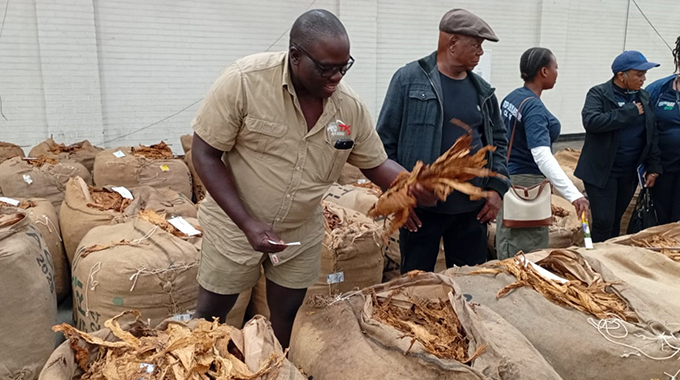
According to the Tobacco Industry and Marketing Board (TIMB), a total of 325 growers, who are a combination of established and first-time tobacco farmers, are into tobacco farming in the Matabeleland North and Matabeleland South provinces.
The 325 growers are producers of naturally cured Virginia (NCV) tobacco.
NCV tobacco is a sustainable, eco-friendly farming method practised in the Matabeleland region that eliminates the need for firewood or coal by using sunshades and drying racks to dry the golden leaves.
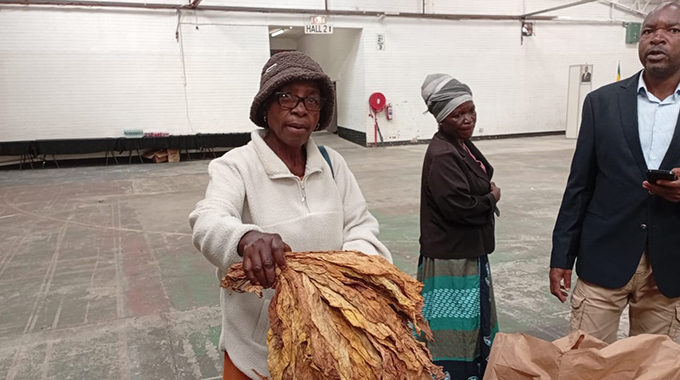
It provides a high-value, lower-cost alternative to traditional Fire-Cured Virginia (FCV) tobacco with identical chemical composition and smoking characteristics, empowering smallholder farmers in the region.
When tobacco growing was introduced to Marula villagers in the 2023/24, only 17 communal farmers heeded the call to switch from traditional small grains and maize to commercial tobacco farming and that figure has now ballooned to more than 320 farmers, according to figures released by the TIMB.
At a national level, as of March 31, at least 3,445,300 kilogrammes of tobacco had been sold at auction floors.
“The best quality tobacco was sold for US$3,80 and we expect farmers to bring more bales to the new auction floor as they harvest more tobacco. As its peak, we expect the auction floor to have at least 1,000 bales per sale, given that more farmers will continue harvesting their crop and bringing it to Bulawayo,” said tobacco specialist Mr Rodreck Munyaradazi Musiyiwa.
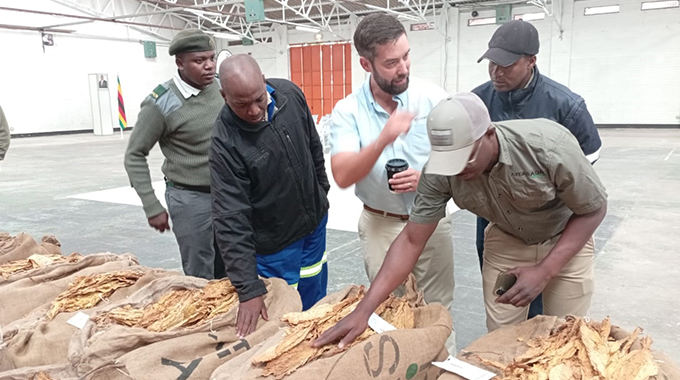
Mr Mollen Ncube, a farmer from Umguza, said he delivered four bales harvested from half a hectare of land.
“My tobacco sold for US$2,60 and I’m happy with that because I will be able to repay the loan that I took from the tobacco contractor that has been working with us and still make a good profit. I still have more tobacco in the fields that will be harvested over the next three weeks,” he said.
For Ms Nomalanga Mlilo, another first-time tobacco farmer from Marula in Mangwe District, the gamble to set aside two hectares for tobacco production has paid off.
“I wanted to have an idea of how much my tobacco would fetch at the auction floor, so I brought six bales and I’m happy that my tobacco was given a good grade,” she said.
“Tobacco farming is labour-intensive from planting seedlings to harvesting the crop and drying in barns and drying racks, but the money that we as farmers earn is worth the time we spend in the fields.”
TIMB chief executive officer Mr Emmanuel Matsvaire said the tobacco volumes that were delivered to the Bulawayo auction floor were encouraging.
“Today (yesterday), we are opening sales of 510 bales of tobacco and the volumes reflect early deliveries from a rapidly expanding grower base in Matabeleland. This season, 325 growers are participating across the two provinces of Matabeleland North and Matabeleland South, cultivating a total of 390 hectares — a significant increase from 122 growers and 84 hectares last season,” he said.
“Looking ahead, we aim to scale production to 1,000 hectares next year, reflecting strong confidence in the region’s potential.”
Mr Matsvaire said yield expectations for this season were 1,800 kilogrammes per hectare for small-scale growers and 3,000 kilogrammes per hectare for commercial growers.
“The largest farm is at present 45 hectares, while the smallest is 10 hectares, demonstrating a growing mix of smallholder and medium-scale commercial production.
“We have also introduced climate-smart technologies to enhance efficiency and sustainability in areas such as the Marula tobacco production project, where a solar-powered barn has reduced curing cycles from 21 days to between eight and 12 days, depending on weather conditions, improving output and reducing reliance on traditional fuel,” he said.
Mr Matsvaire said in another project run by a smallholder farmer, two solar-powered boreholes have been capacitated to ensure water for seedlings, mitigating one of the greatest risks, water availability, to tobacco growth in the region.