tawandamusarurwa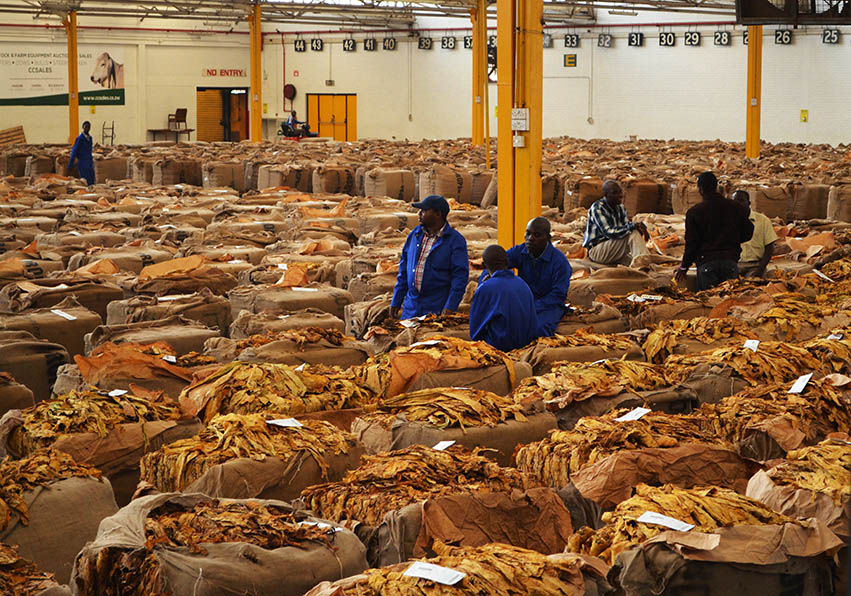
Oliver Kazunga
THIS year’s tobacco deliveries reached a record 294 million kilogrammes worth US$890 million, and farmer organisations attribute the current success to good agronomic practices and robust supportive measures by Government.
Before the latest record haul, deliveries rose to a record 259 million kg in 2019.
Last year, 212 million kg valued at US$600 million were sold.
Contract sales, which account for 95 percent of deliveries, are, however, expected to continue until the end of this month, when final mop-up sales will be conducted.
Zimbabwe Commercial Farmers’ Union (ZCFU) president Dr Shadreck Makombe said the Government has been ensuring that growers get their inputs on time.
“Farmers are improving by the day, in terms of good agronomic practices . . . most of the farmers who are into tobacco have been doing it for some years,” he said.
“Coupled with the fact that the contractors as well have improved in terms of the packages . . . it’s no longer haphazard.
“In the past, for example, some contractors would not give farmers working capital . . . the capacitation now is well-oiled or tailor-made to suit the needs so that at least whatever is going to be done, farmers are, to an extent, better prepared and equipped.”
The Government has chipped in with supportive policies. Tobacco farmers presently retain 85 percent of the earnings in foreign currency, up from 75 percent last year, while the balance is paid in the local currency at the prevailing official exchange rate.
Dr Makombe said the Government is ensuring that contractors do not shortchange farmers.
“The farmers themselves now know what they are expected to do and are making sure that is done to improve the crop,” he said.
Zimbabwe, through the Tobacco Value Chain Transformation Strategy, seeks to increase tobacco output to 300 million kg by 2025, as well as enhance value addition and beneficiation to around 30 percent through the production of cigarettes.
Overall, the tobacco industry is expected to grow to US$5 billion by 2025.
Tobacco is one of the country’s largest foreign currency earners.
So far, the country has exported over 98 million kg of flue-cured tobacco valued at US$502 million since the start of the selling season.
The country exports the golden leaf to over 60 countries across the world, among them China, the United Arab Emirates, South Africa, Tanzania, Egypt, Mali, Botswana, Yemen, the United States and Eritrea.
Zimbabwe Farmers’ Union (ZFU) executive director Mr Paul Zakariya said the tobacco sector is well-organised in terms of production and marketing.
“The sector is perfectly organised. For instance, if you are to be contracted, you know which contractor is contracting you and you also know where you are going to sell. So, there is no confusion in that particular commodity in as far as production and marketing are concerned,” he said.
“There has been a growing perception that tobacco pays, so that has attracted more growers . . . and the prices have been firming over the last three seasons, including this particular one.”
Upcoming season
Preparations for the planting of the next tobacco crop have started.
For the irrigated crop, all the land preparation has been done, with the nurseries having been developed.
Beginning mid-month into early September, transplanting will take place.
Those without irrigation facilities will start planting at the beginning of the 2023/2024 summer cropping season. The bulk — between 95 percent and 97 percent — of Zimbabwe’s tobacco is grown under the contract system, and distribution of inputs has already begun.
Latest data from the Tobacco Industry and Marketing Board (TIMB) show that a total of 688 076 grammes of tobacco seed have been sold (enough to cover 114 680 hectares), compared to 646 780 grammes (sufficient to plant 107 797ha) in the same period last year.
Threats
Of late, ZFU has observed that production costs have been going up, a factor that could potentially discourage existing tobacco growers and prospective farmers.
“Production costs have been going up, particularly over the last two months. With what happened with our currency and so on, most prices went up, even in United States dollar terms, so that is speaking negatively to this coming season,” said Mr Zakariya.
He said the authorities need to promote farmer viability in the next cropping season.
ZFU is currently part of a team that is co-ordinated by the Ministry of Lands, Agriculture, Fisheries, Water and Rural Development to participate in the tobacco value chain.
“Our role is lobbying and advocacy, so you will see that we have already discussed these issues in our working group as a way of trying to open the eyes of many and even influence the authorities to pay attention to these very pertinent issues that are coming from the growers themselves,” added Mr Zakariya.
“We engage with Government and all the necessary stakeholders. And if we are to see increased value coming into the country and improved production locally, we need to adjust the current model of tobacco production financing so that it is financed locally.”



 Online Reporter