Vusumuzi Dube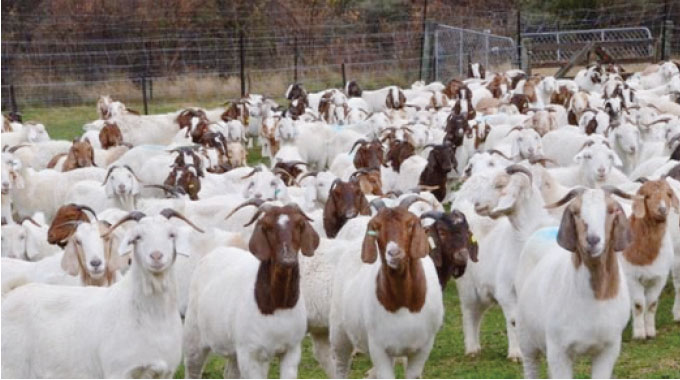
ONE of the important key indicators of an effective animal production unit is the prevention of mortality for the young ones, be they kids or calves. If a farmer is able to reduce mortality for the young ones in his production unit, the result is a very significant organic growth of the herd or flock.
While a farmer has a role in making sure there is very little or no mortality at all for young ones, the mother carries a much larger responsibility and role to that end.
The ability of the mother, be it a cow or doe, to look after its offspring and raise it to maturity is called, mothering ability. This is a very important attribute and this week, we discuss it with particular attention on goats.
A doe with good mothering ability will do all it can to protect and provide for the kid, such that it lives and grows to maturity.
Admittedly, some of the causes of kid mortality might be beyond its control but significant causes are eliminated or prevented by the doe’s good mothering ability.
A good farmer will cull a doe with poor mothering ability to prevent further losses as a result of kid mortality. One example of poor mothering ability by the doe is rejection of the kid itself.
Such does will show no interest at all in the newborn kid and even refuse to nurse or care for it. Farmers know that every newly born kid has to suckle and get colostrum from its mother, which will help in fighting diseases and infections.

A good doe will lick its kid to remove membranes from nostrils and allow it to breathe naturally. The licking also allows the mother to register its kid and create a bond, which enables the kid and the doe to identify each other even within a flock with many does and kids.
This is the first mothering instinct that should be exhibited naturally in a goat with good mothering ability. If a goat gives birth and rejects its kid that could be a sign of poor mothering ability unless there are extenuating circumstances. Related to rejection, is abandonment of the kid by the doe.
Some does will leave the kids and go out to forage for extended periods almost forgetting that there is a young one that needs to be fed.
This is abandonment and is a sign of bad mothering ability. A good doe will go and forage and come back within about three hours to nurse its kid. This time will depend on several factors, which we will discuss next time.
In some cases, a doe can be aggressive to its kid as shown by kicking and butting or even biting the kid. Farmers have probably had one or two goats in their flock, which needed to be restrained by stockmen for the kid to nurse. Left on its own, the doe refuses the kid to nurse.
While this is a sign of poor mothering ability, it could be a result of premature intervention by the stockmen before the mother and kid could establish the bond earlier on alluded to.
It is good practice to allow the doe and kid to have a “mother and child” moment after birth before whisking away the kid to the pens. Inadequate milk production could also be a sign of poor mothering ability by the doe.
While this could also be a result of many factors such as nutrition status and the general health of the doe, some does will still produce very little milk, which cannot satisfy the kid, even if they have good nutritional and health conditions. As a result of this poor milk production by the doe, the kid will generally have a poor growth rate and unthrift.
As a selection guide, farmers should cull does with poor mothering ability as these tend to require extra assistance and attention from the farmer for them to raise their kids to maturity.
A doe with good mothering ability should be able to protect, nurse and care for its kid in a manner that reduces unnecessary mortalities and loss to the farmer. Uyabonga umntaka MaKhumalo.
Mhlupheki Dube is a livestock specialist and farmer. He writes in his own capacity. Feedback [email protected] <mailto:[email protected]> cell 0772851275


 Online Reporter