

 admin
admin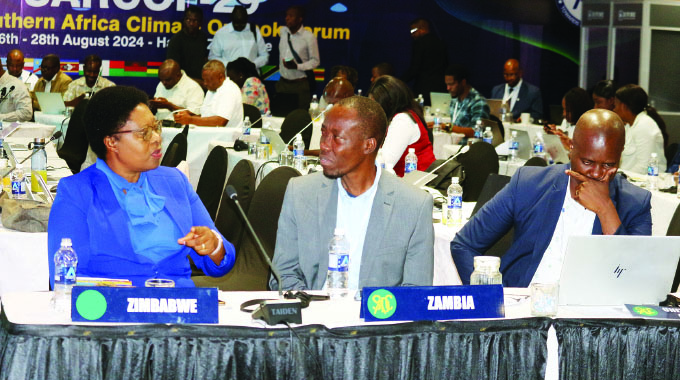
Mutsawashe Mashandure
Herald Reporter
THE bulk of the SADC region is likely to receive good rainfall in the coming 2024-2025 summer cropping season, bringing hope to the region which was battered by one of the worst El Nino-induced droughts in years during the previous season.
A statement released at the end of the 29th Annual Southern Africa Climate Outlook Forum (SARCOF), forecasts that the bulk of the SADC region is likely to receive normal to above normal rainfall in the October to December (OND) 2024 period, including Mauritius and central Madagascar, apart from north-western part of Democratic Republic of Congo where above-normal rainfall is expected.
“The remainder of the region is likely to have normal to below normal rainfall during this period of the 2024/25 season, including the island states of Comoros and Seychelles.
“The period January to March (JFM) 2025 is expected to have normal to above normal rainfall for most of the region except for, south-western fringes of South Africa, south-eastern and western most of DRC, north-western Angola, Tanzania, northern Zambia, northern Malawi, northern Mozambique and central western tip of Madagascar where normal to below-normal rains are expected, including Comoros and Seychelles,” according to the regional climate outlook report.
Northern Madagascar is likely to receive above normal rainfall during this period of the 2023/24 rainfall season while the temperature outlook for the entire 2024/25 rainfall season is expected to be mostly above long-term averages over the whole SADC region.
The report was presented following the 29th annual Southern Africa Regional Climate Outlook Forum (SARCOF-29) which was held virtually from 26 to 28 August this year.
The latest regional forecast tallies with the World Meteorological Organisation (WMO) and other global weather bureaus that earlier forecast that a La Nina weather event was forming in the Pacific Ocean, something that could increase chances of wetter conditions in Zimbabwe and other countries in southern Africa during the 2024/25 cropping season.
Vast swathes of the region, including Zimbabwe, Angola, Botswana, the Democratic Republic of Congo, Mozambique and Namibia, are currently grappling with a prolonged dry spell due to the El Nino phenomenon experienced last season.
The El Nino weather pattern has affected agricultural production and other key sectors like tourism, industry and energy production.
Due to the weather phenomenon, Zimbabwe, Zambia and Malawi have all launched appeals for food aid to support millions of food insecure people.
“The outlook is broadly consistent with the forecasts generated with the multi-model ensemble of international dynamical climate forecast models presented by the World Meteorological Organisation,” the report said.
“In summary, increased probability of normal to above normal conditions is forecast consistently across the October to March 2024/25 period for the central part of SADC region (Zambia, Botswana, Zimbabwe and central Mozambique) as well as small island states of Mauritius.”
Regional experts said there were good chances of normal to below normal conditions during the October to December (OND) period for south-western Zambia, Zimbabwe, Botswana and north-east South Africa.
Below normal rainfall is expected to expand to cover northern DRC and northern Tanzania by the December to February (DJF) period.
In the remaining areas, including Madagascar, there were better prospects for normal conditions.
“The forecast probabilities are broadly consistent with the known influence of La Niña on the regional climate,” the report said.
A national forecast for Zimbabwe is expected to be made in the coming few days as the country steps up efforts to prepare for the summer crop.
La Ninas are normally associated with wet conditions for Zimbabwe and the entire southern Africa sub-continent, but a local weather expert cautioned that they sometimes don’t result in widespread rain.
Climate experts further say that La Nina events are also associated with heightened risk of cyclones — tropical storms which bring winds, heavy rains, damage and destruction to countries such as Zimbabwe, Mozambique, Malawi, Madagascar, Mauritius and others in the region.
Tropical storms have caused severe humanitarian impacts in Madagascar, Mozambique, Malawi and Zimbabwe including deaths and injuries, infrastructure damage and a range of long-lasting socio-economic impacts.
Zimbabwe and most other SADC countries recorded the lowest rainfall in decades in the 2023-2024 cropping season resulting in increased food insecurity and water shortages across the region.
Zimbabwean agronomists warned that excessively wet conditions could negatively affect crop growth with farmers facing leaching as a major problem.
“Incessant rains or abnormally high amounts of rain can leach nutrients, especially nitrogen, from the soil. Nitrogen added to the soil in the form of granular fertiliser is especially vulnerable to leaching,” an expert said.
“And if this occurs, farmers either have to incur the additional cost of reapplying fertiliser or experience the reduction in crop yield associated with nutrient deficiency.”
In light of this problem of leaching, experts said it was vital for farmers to work closely with agricultural extension workers to minimise losses and boost yields.
Other experts said application of organic matter on Pfumvudza plots as well as adding manure, compost and other organic soil amendments onto plants could help slow the release of plant nutrients, thus reducing overall impact on crop health and growth.



 Peter Tanyanyiwa
 Online Reporter