dyton mupawaenda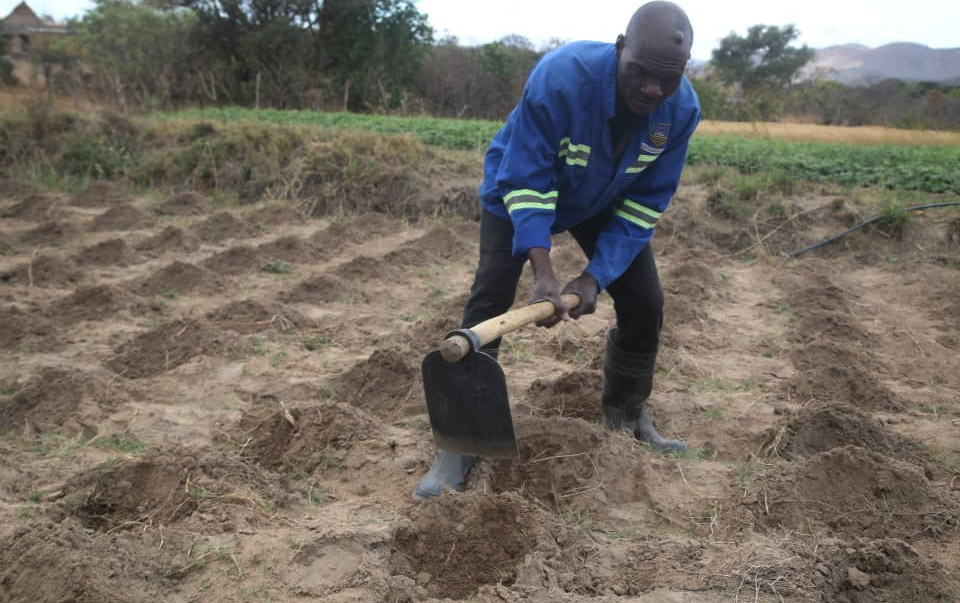
Theseus Shambare
SMALLHOLDER farmers under the Pfumvudza/Intwasa programme in most parts of the country have completed land preparations, raising hopes for another productive season.
Farmers have also started receiving inputs under the Presidential Inputs Scheme, with seed, fertiliser and chemicals already dispatched to provincial and district depots ahead of the rains.
Under the Pfumvudza/Intwasa model, the Government provides inputs and extension support to smallholder farmers practising conservation agriculture — a climate-smart farming method that boosts yields even under erratic rainfall conditions.
So far, farmers have prepared over 9,2 million Pfumvudza plots, surpassing the national target of nine million.
This reflects growing enthusiasm and adoption of the model across communal and resettlement areas.
Agricultural and Rural Development Advisory Services chief director Mrs Medlinah Magwenzi told The Sunday Mail that preparations were at an advanced stage.
“Our summer plan is progressing well. We are supporting three million households, each with three plots, giving us nine million Pfumvudza/Intwasa plots.
“The extra 200 000 are voluntary adoption plots created by farmers who realised the benefits of the system,” she said.
Some farmers now manage more than 20 plots, turning the model into a semi-commercial enterprise.
“Inputs such as maize seed, small grain seed, fertiliser and cotton chemicals are already in depots. By end of October, all beneficiaries will have received their allocations,” she said.
Maize will dominate in wetter Regions 1 and 2, while sorghum and millet will be promoted in the drier Regions 4 and 5 to strengthen drought resilience.
Permanent Secretary in the Ministry of Lands, Agriculture, Fisheries, Water and Rural Development Professor Obert Jiri said the Government was complementing the Presidential Inputs Scheme with other financing initiatives.
“We have the National Enhanced Agricultural Productivity Scheme through CBZ, AFC, NMB and other banks to support larger producers,” he said.
“We also have private sector contractors under the Food Crop Contractors Association and the ARDA (Agricultural and Rural Development Authority) joint venture programme targeting 500 000 tonnes of summer grains from 100 000 hectares (ha).”
The Meteorological Services Department projects normal to above-normal rainfall, though the onset of the rains might be delayed by up to a month.
“It is a neutral year,” said Ms Rebecca Manzou, the department’s director.
“Rainfall will be erratic but generally favourable.”
In order to make the much-needed switch from rain-fed agriculture, Zimbabwe will put 223 000ha under irrigation this summer through the Accelerated Irrigation Rehabilitation and Development Plan, launched in 2021.
The plan targets 496 000ha by 2030 using the country’s 10 700 dams.
Nine major dams under construction — including Lake Gwayi-Shangani, Kunzvi and Semwa — will bring an additional 40 500ha of irrigated land into production.
Zimbabwe Farmers Union secretary-general Mr Paul Zakariya welcomed the early preparations but urged transparency.
“We applaud the early delivery of inputs and the focus on climate-smart farming, but timely distribution and fair compensation remain critical,” he said.



 Online Reporter