

 Chronicle Editor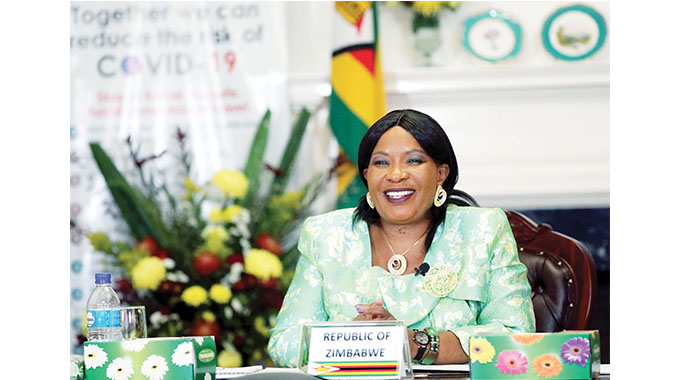
Stephen Mpofu, Perspective
COLONIAL Rhodesia’s satanic strongmen went all the hog dividing and weakening Africans so that settlers might rule this country ad infitum.
But as an African saying goes that “what (if bad) does not come to an end portends worse things to come”, or something to that effect.
It was no doubt in response to the wise saying in point above, which is valid to a very large extent, that sons and daughters of the soil denied themselves, took arms and went into the bush to end the pejorative “periphery” stigmatisation by the white racists of rural areas where most of our black people lived while whites dwelt in urban settlements with blacks as their poorly paid servants.
Today, 41 years into uhuru, it cannot be doubted that lingering beliefs still exist among some Zimbabweans in the countryside to the effect that they still live in the periphery because of the developmental and other challenges they continue to face and which translate into a divide between them and urban populations that are now predominantly black with the seat of Government still urbanised in Harare after most whites left the country at independence because they found it impossible to be ruled by people they previously likened to dogs, as it were.
To the contrary, our First Republic and Second, current, Republic governments, our black governments, have performed gargantuan tasks since independence on April 18 1980 to improve the lot of us, so that, in all fairness, all and sundry must realise that our own rulers could not end overnight the marginalisation of our people developmentally by whites for all those many years that our motherland was under racist colonial rule.
In fact, aluta continua and the various programmes being undertaken by the Government namely the upgrading of roads infrastructure, improvements to water sources for crop irrigation and domestic use and to agricultural performance with Intwasa/Pfumvudza which enabled our people to produce so much that imports of maize will not take place this year, thereby saving much-needed foreign currency for other, important national developmental projects.
Add to the above the deputisation of central Government power by provincial councils, popularly known as devolution and everyone including our enemies cannot but be convinced that Zimbabweans are on the way towards a brave new future.
The setting up of community radio stations currently underway in various provinces under the auspices of the Second Republic should be seen as another progressive move by our Government to end developmental bottlenecks wherever they might be in existence in the country.
The rural radio stations concerned should be seen as being intended to anchor and amplify the developmental and national unification voice of a government of the people, by the people, for the people.
Which is why calls have been made — and which must of necessity be heeded — that those who man the electronic media in question must be helped to improve their performance for effectiveness and with that improved lives in those formally so-called peripheral areas.
In other words, those running the community radio stations must identify specific challenges that face communities in their developmental initiatives so that solutions may be applied speedily to improve the lives of the people in the various districts where radio stations are in operation.
Sadly, however, a report this week from Zaka District in Masvingo province does not paint a good image of some people operating community radio stations.
A former school teacher, who preferred anonymity charged: “Some of these new community radio stations peddle peripheral reports about, for instance, married women running off with other men instead of reporting about cattle that are dying from disease.”
He did not specify the areas of the livestock losses that he claimed but stressed that the community radio stations must tell the truth, nothing but the truth about challenges faced by the people in rural areas so that solutions may be found speedily enough.
Another report of livestock losses to the foot and mouth disease was received by this writer yesterday from the Pambe area of Mwenezi District. However, the extent of the disease outbreak could not immediately be established.
This writer strongly believes that community radio stations also have a pivotal role to play in the renaissance of Ubuntu/Hunhu and support of the First Lady, Amai Auxillia Mnangagwa, who has been busy in various provinces trying to revive and promote our African cultural practices, the kind of nourishing foodstuffs that our people should eat for better health, for instance.
These same stations must also promote the role that Zimbabwean women and the girl child must play and be seen to play in our modern society.
On the other hand, community radio stations must never ever pander to divisive tribalism or regionalism either, as to do so would be playing to the hands of former colonial rulers who divided and weakened our people in a bid to rule us in perpetuity.
Neither should community radio stations spend valuable time on cheap propaganda against the majority in power by small political powers that are stooges of imperialists seeking to divide, weaken and indirectly rule our country in order to exploit its vast natural resources.
Zimbabwe is and must forever be for Zimbabweans until the return of our Lord and Saviour Jesus Christ.



 Online Reporter